

 English
 русский
 Español
 عربى

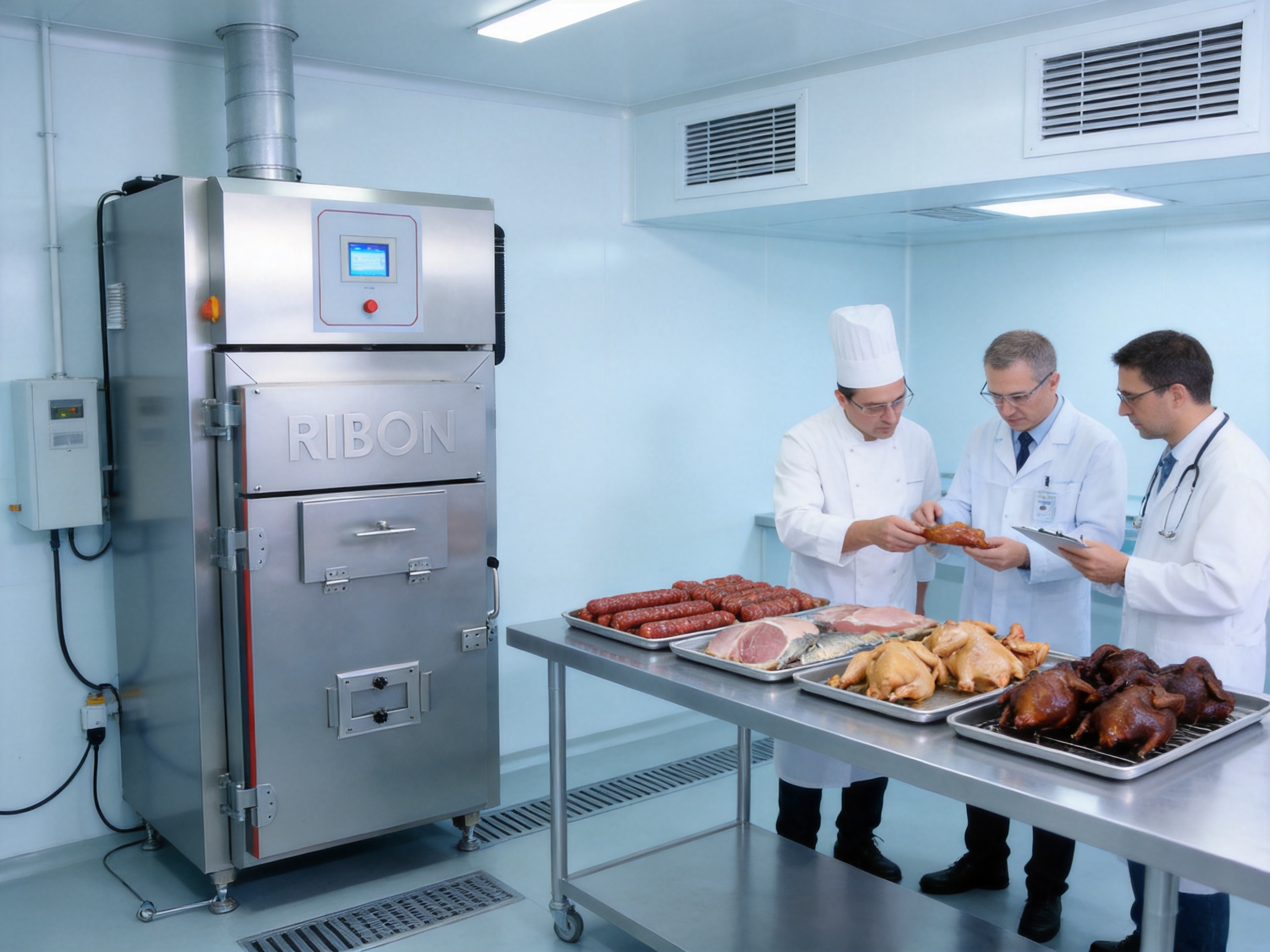
Modern food laboratories, restaurants, culinary development centers, and small-scale meat processors need equipment that can reproduce results accurately while remaining practical, hygienic, and easy to operate. A lab smokehouse is designed for this purpose. It combines drying, smoking, cooking, and baking in one controlled processing unit, allowing users to test recipes, develop new products, prepare specialty foods, and produce consistent small batches.
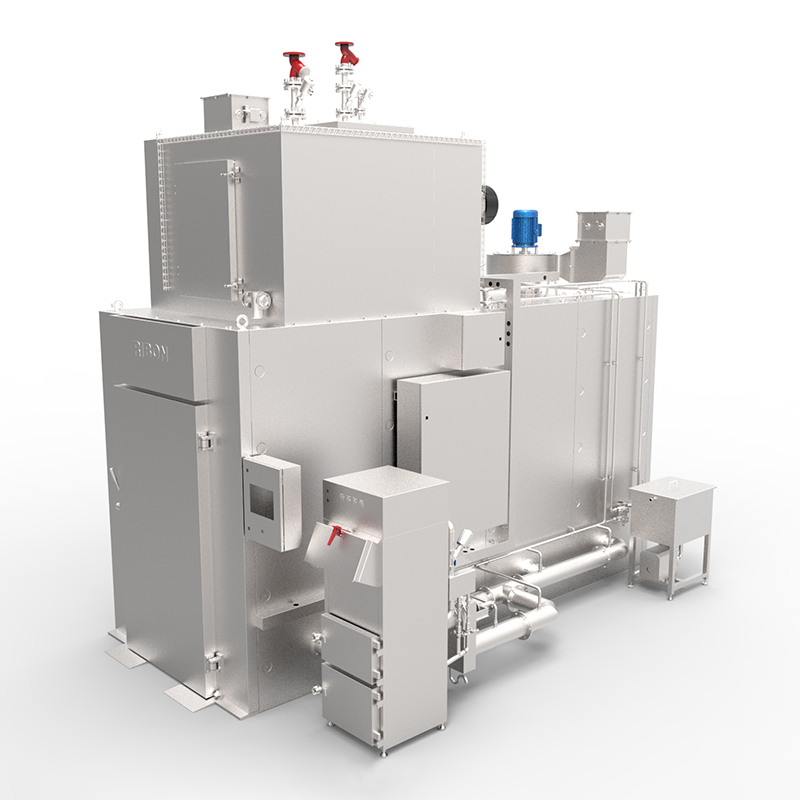
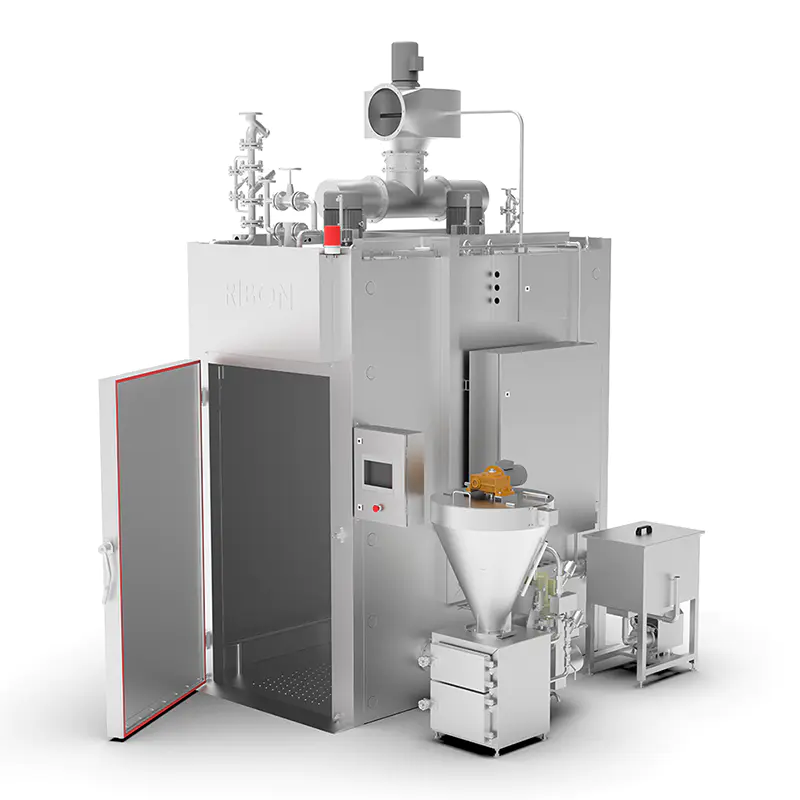
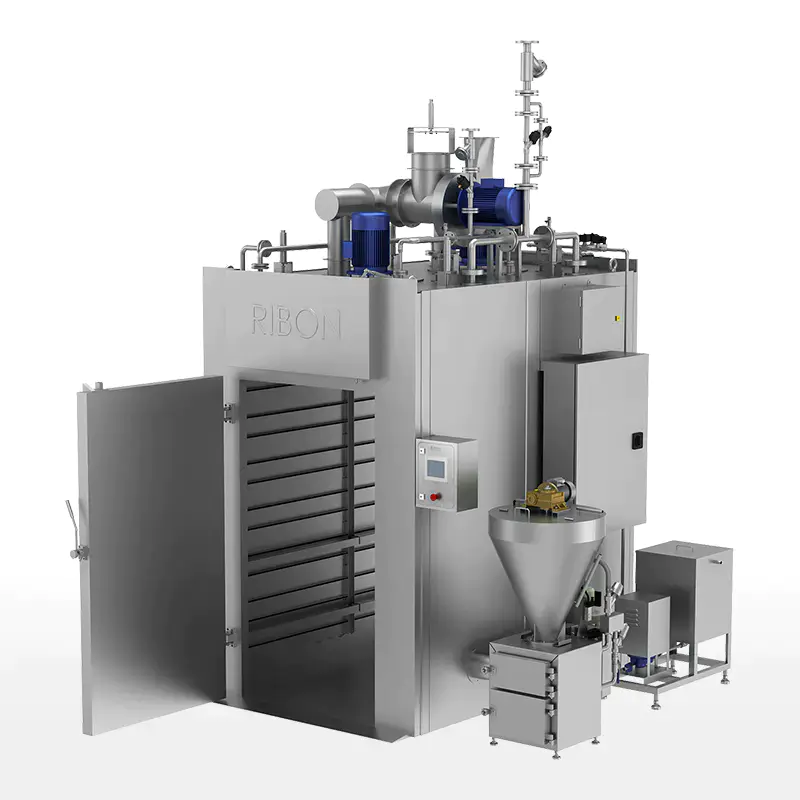
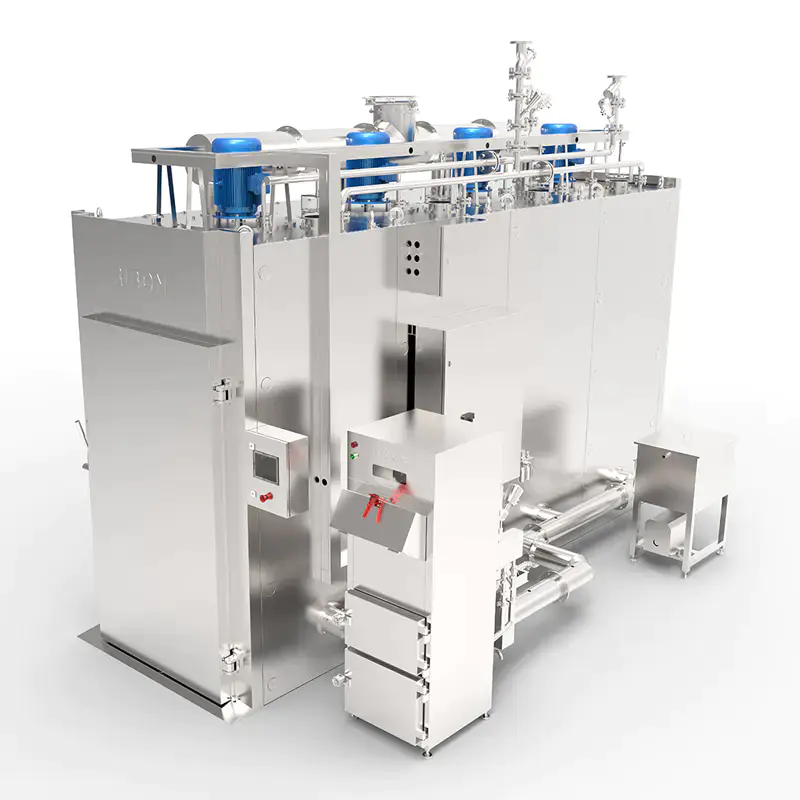
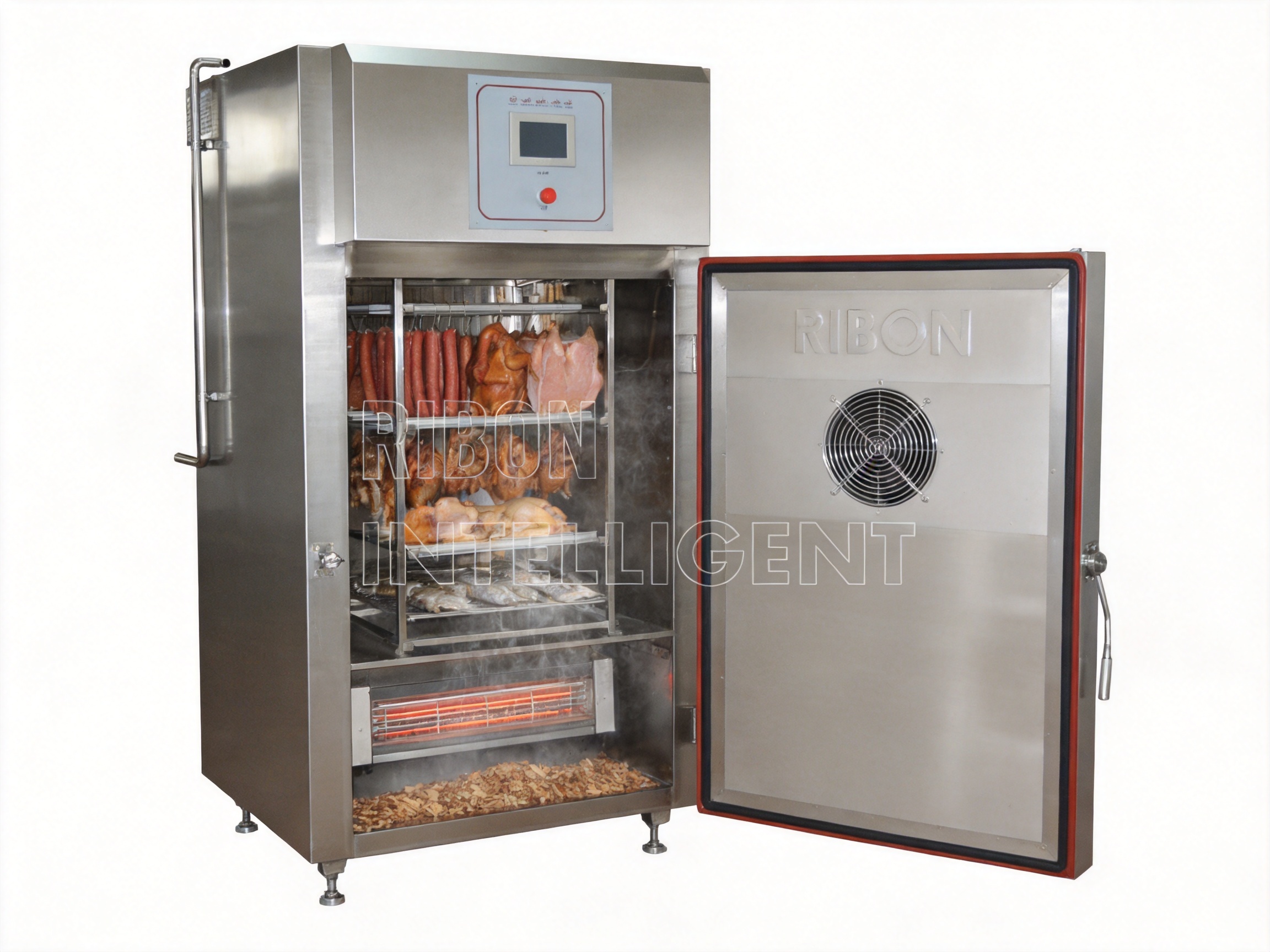
The Lab Smokehouse described in this article is designed for processing ham, sausage, poultry, fish, and other food products. Its compact laboratory-oriented format provides many of the functions found in larger industrial smokehouses while making the equipment suitable for research, product development, restaurant production, and demonstration kitchens. Its PLC and touch-screen control system, stainless steel construction, internal woodchip smoke generator, automatic cleaning system, and efficient air circulation fan contribute to reliable and repeatable processing.
Available in the RYXY1-M-D and RYXY1-M-DL configurations, the smokehouse can support different production requirements. The standard model performs drying, hot smoking, cooking, and baking, while the extended model also provides cold smoking. Both models have a nominal capacity of 25 kg and use electric heating, automatic PLC control, and internal woodchip smoke generation.
This combination of functions gives the equipment an important advantage over single-purpose ovens, separate smoking cabinets, or manually operated traditional smoking systems. Instead of transferring products between several machines, operators can complete multiple processing stages within one controlled chamber. This improves workflow efficiency, reduces handling, and makes it easier to reproduce a successful product formula.
Content
- 1 Why a Laboratory Smokehouse Is Important in Modern Food Processing
- 2 Integrated Drying, Smoking, Cooking, and Baking
- 3 Two Configurations for Different Processing Requirements
- 4 PLC and Touch-Screen Control for Repeatable Processing
- 5 Stainless Steel Construction and Hygienic Design
- 6 Efficient Fan System for More Uniform Products
- 7 Internal Woodchip Smoke Generation
- 8 Automatic Cleaning and Daily Sanitation
- 9 Advantages Over Single-Purpose and Manually Controlled Equipment
- 10 Manufacturing Strengths and Engineering Approach
- 11 Applications in Laboratories, Restaurants, and Pilot Production
- 12 Product Quality and Process Consistency
- 13 Service Life and Factors Affecting Longevity
- 14 Installation and Transport Considerations
- 15 How to Select the Appropriate Model
- 16 Operating Principles for Best Results
- 17 Q&A: Common Questions About the Lab Smokehouse
- 17.1 What products can be processed in the smokehouse?
- 17.2 What is the capacity of the smokehouse?
- 17.3 What is the maximum operating temperature?
- 17.4 Which model should be selected for cold smoking?
- 17.5 How is smoke produced?
- 17.6 Is the machine manually operated?
- 17.7 Does the smokehouse include a cleaning system?
- 17.8 Why is the fan important?
- 17.9 Is stainless steel construction beneficial?
- 17.10 How long can the smokehouse last?
- 17.11 Can the smokehouse be moved by hand?
- 17.12 What electrical supply is required?
- 17.13 Can it replace a complete industrial smokehouse line?
- 17.14 What should be considered before installation?
- 18 Conclusion
- 19 References
- 20 Product: Lab Smokehouse
Why a Laboratory Smokehouse Is Important in Modern Food Processing
Product development is an essential part of the meat-processing industry. Manufacturers regularly create new sausage recipes, improve smoked ham, test poultry marinades, evaluate fish-processing methods, and adapt products to changing consumer preferences. These activities require equipment that can provide controlled and repeatable conditions rather than relying on variable manual methods.
A laboratory smokehouse provides a bridge between recipe development and commercial production. It enables food technologists and chefs to examine how temperature, smoking time, drying conditions, air movement, and cooking stages influence the final product. Once a suitable formula is established, the process can be transferred more confidently to larger production equipment.
Traditional smoking methods may produce attractive flavors, but they can be difficult to standardize. Outdoor or manually controlled smoking systems may experience temperature fluctuations, uneven smoke distribution, and inconsistent moisture removal. These variations can affect color, texture, yield, flavor, and food safety. A programmable smokehouse addresses these challenges by bringing the main processing variables under automatic control.
The Lab Smokehouse is particularly suitable for facilities that need versatility without installing a complete industrial production line. A restaurant can use it to prepare smoked specialties. A training center can demonstrate professional meat-processing techniques. A research department can compare different recipes. A small processor can make premium products in controlled batches. These applications all benefit from a system that combines several thermal and smoking functions in one machine.
Integrated Drying, Smoking, Cooking, and Baking
The central advantage of the Lab Smokehouse is its multifunctional design. The chamber can be used for drying, hot smoking, cooking, and baking. The RYXY1-M-DL version also supports cold smoking, which expands the range of products and processing styles that can be tested.
Drying
Drying is often an important preliminary stage in meat processing. Removing surface moisture can help smoke adhere more evenly to the product and can contribute to better color development. Controlled drying may also help create the desired casing texture for sausages and improve the surface characteristics of ham, poultry, or fish.
Because drying takes place inside the controlled chamber, operators can establish a repeatable process rather than depending on room temperature, ambient humidity, or uncontrolled airflow. The internal fan supports air circulation, helping to promote more consistent conditions throughout the chamber.
Hot Smoking
Hot smoking combines smoke exposure with elevated-temperature processing. It is commonly used for sausages, ham, poultry, and fish products that require both smoke flavor and cooking. The Lab Smokehouse uses an internal woodchip smoke generator, allowing smoke to be produced within the equipment instead of requiring a separate external smoke source.
Internal smoke generation helps simplify installation and operation. It also allows the smoke function to be integrated into the programmed processing sequence. Users can set the required stages and manage the process through the PLC and touch-screen control system.
Cooking
Cooking requires controlled heat and consistent circulation. Uneven chamber conditions can result in differences in product texture or cooking progress between pieces placed in different positions. The smokehouse is equipped with a highly efficient fan to support uniform air movement and improve product consistency.
The specified operating temperature range reaches up to 180°C. This provides flexibility for different cooking and thermal-processing requirements, although the appropriate temperature and time must always be determined according to the product, formulation, product size, food-safety procedure, and applicable regulations.
Baking
The baking function allows the equipment to be used for selected meat products that require a dry-heat finishing stage. This can be useful during recipe development when a manufacturer wants to compare smoked, baked, and combined processes in the same chamber.
Using one machine for multiple thermal functions reduces the need for separate equipment. It also makes it easier to compare test batches because the same chamber, fan system, control interface, and cleaning procedures can be used for different recipes.
Cold Smoking
The RYXY1-M-DL model adds cold-smoking capability and provides a temperature range beginning at 15°C. Cold smoking is used for products where smoke flavor and color are desired without applying the higher temperatures associated with cooking. This feature gives laboratories and specialty food producers greater flexibility when developing premium products.
Cold smoking requires careful control of temperature, time, product preparation, and food-safety conditions. Operators should follow validated procedures and product-specific requirements. The equipment provides the operating capability, while the final process must be established by qualified food-processing personnel.
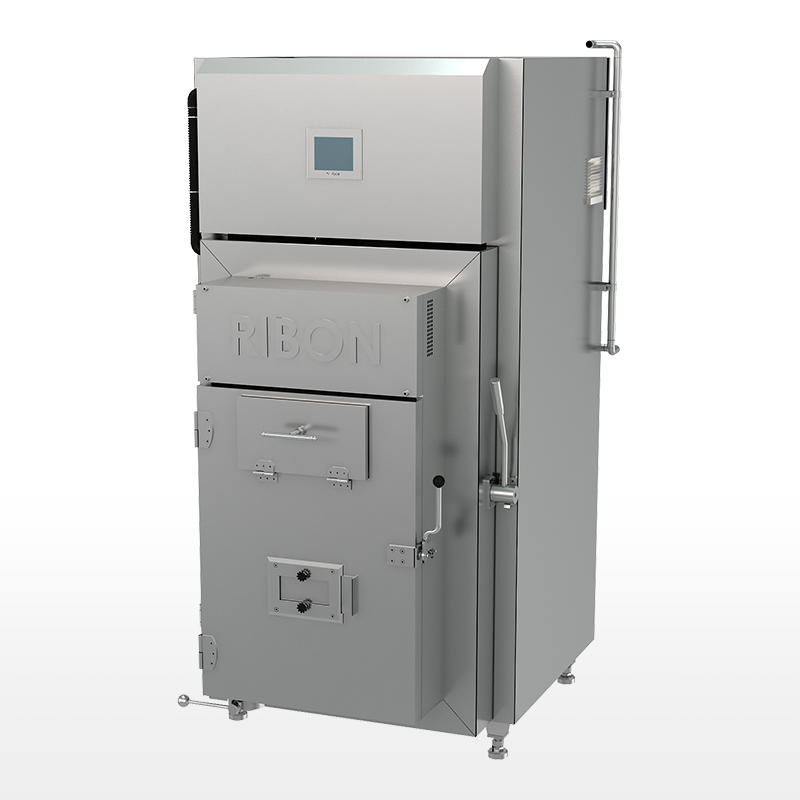
Lab Smokehouse
Two Configurations for Different Processing Requirements
The two listed models are designed around different functional needs. Selecting between them depends primarily on whether cold smoking is required and on the preferred power and temperature range.
Specification |
RYXY1-M-D |
RYXY1-M-DL |
Processing functions |
Drying, hot smoking, cooking, and baking |
Drying, cooking, baking, hot smoking, and cold smoking |
Smoke source |
Internal woodchip smoke generation |
Internal woodchip smoke generation |
Control system |
Automatic PLC and touch-screen control |
Automatic PLC and touch-screen control |
Heating method |
Electric heating |
Electric heating |
Electrical specification |
380V/50Hz/3-phase, adjustable as required |
380V/50Hz/3-phase, adjustable as required |
Power |
12 kW |
15 kW |
Temperature range |
45–180°C |
15–180°C |
Nominal capacity |
25 kg |
25 kg |
The RYXY1-M-D model is suitable for users whose main applications involve drying, hot smoking, cooking, and baking. Its 12 kW electric heating system provides a practical configuration for standard laboratory and restaurant work.
The RYXY1-M-DL model is intended for users who need broader process flexibility. Its 15 kW power rating and lower listed minimum temperature support cold-smoking applications in addition to the functions available on the standard model. Both units retain the same nominal 25 kg capacity, automatic control approach, and internal woodchip smoke-generation concept.
The electrical specification is listed as 380V/50Hz/3-phase, with adjustment available as required. Because electrical standards differ between locations, purchasers should confirm the required voltage, frequency, phase configuration, installation conditions, and local electrical regulations before ordering.
PLC and Touch-Screen Control for Repeatable Processing
Manual operation can be useful for traditional cooking, but it makes repeatability more difficult. An operator may need to adjust heating, smoke, airflow, and time by observation. Even experienced personnel can produce different results from one batch to the next when process conditions are not recorded and controlled precisely.
The Lab Smokehouse uses a PLC and touch-screen control system. A programmable logic controller coordinates the operating sequence, while the touch screen gives the operator a clear interface for setting and monitoring the process. This arrangement supports the creation of repeatable programs for different products.
A typical program may include a drying stage, a smoking stage, a cooking stage, and a final baking or finishing stage. The exact sequence depends on the product recipe. Once a validated program has been established, operators can use the same settings for subsequent test batches, reducing variation caused by manual adjustment.
Automatic control also supports better process documentation. In a laboratory or product-development environment, it is important to know how a batch was processed. Recording temperature, time, smoke stages, and other operating conditions helps technical staff compare results and identify the reasons for differences between samples.
The touch-screen interface can also simplify operator training. New users can follow a defined program instead of learning every adjustment through trial and error. This does not eliminate the need for proper training, but it can make daily operation more organized and consistent.
Benefits of Programmable Operation
Programmable operation offers several practical benefits:
First, it improves consistency between batches. Repeated product tests can be processed under comparable conditions, making evaluation more meaningful.
Second, it reduces dependence on individual operator judgment. Skilled operators remain essential, but the equipment provides a more stable framework for applying their knowledge.
Third, it allows the user to develop separate programs for different products. A sausage recipe may require a different drying and cooking sequence from a fish product or smoked poultry item.
Fourth, it supports more efficient training and handover between shifts. A documented program can be used by multiple operators rather than being known only by one experienced employee.
Finally, automatic control helps make the equipment suitable for both experimental work and routine small-batch production. The same machine can support product development during one shift and prepared menu production or commercial sampling during another.
Stainless Steel Construction and Hygienic Design
The smokehouse uses fully welded stainless steel construction. Stainless steel is widely used in food-processing equipment because it is durable, resistant to corrosion, and relatively easy to clean. A fully welded structure also helps create a robust enclosure capable of withstanding repeated heating, cooling, washing, and daily handling.
Compared with painted mild steel or lower-grade construction materials, stainless steel offers important advantages in a humid and demanding food-processing environment. Smoke, water, cleaning chemicals, salt, grease, and thermal cycling can all affect equipment surfaces over time. Stainless steel helps reduce the risk of corrosion when the correct grade, cleaning practices, and maintenance procedures are used.
Welded construction can also reduce gaps and exposed joints where food residue or moisture might accumulate. Hygienic design is not determined by material alone, but a well-executed welded structure provides a strong foundation for sanitation.
Users should still follow the manufacturer’s cleaning instructions and select cleaning chemicals compatible with stainless steel. Chloride-rich chemicals, excessive concentrations, prolonged contact, or abrasive tools may damage stainless surfaces. Routine inspection is also important because welds, seals, hinges, handles, and internal components are exposed to repeated use.
The stainless steel design supports the requirements of laboratories and restaurants, where appearance, cleanliness, and ease of maintenance are especially important. It also contributes to a professional working environment and can support a longer service life when the machine is operated correctly.
Efficient Fan System for More Uniform Products
Air circulation is a critical factor in drying, smoking, cooking, and baking. Without sufficient movement, hot or smoky air may remain concentrated in one part of the chamber. Products placed near the heating source may process differently from products located farther away.
The Lab Smokehouse is equipped with a highly efficient fan to promote consistent air circulation. Improved circulation helps distribute heat and smoke throughout the chamber, supporting more uniform treatment of products positioned on different racks or levels.
Uniform airflow can contribute to more consistent color, surface drying, smoke absorption, and cooking conditions. This is especially valuable in laboratory work because product comparisons are more reliable when each sample receives a similar process environment.
Fan efficiency also matters for practical operation. A well-designed circulation system can help the chamber reach operating conditions more effectively and maintain a stable environment during the process. The exact result depends on loading, product arrangement, moisture content, rack design, and selected program settings.
Operators should avoid overloading the chamber or blocking airflow paths. A 25 kg nominal capacity does not mean that products can be arranged without regard to spacing. Proper loading practices are necessary to make full use of the fan system and to achieve the best possible process consistency.
Internal Woodchip Smoke Generation
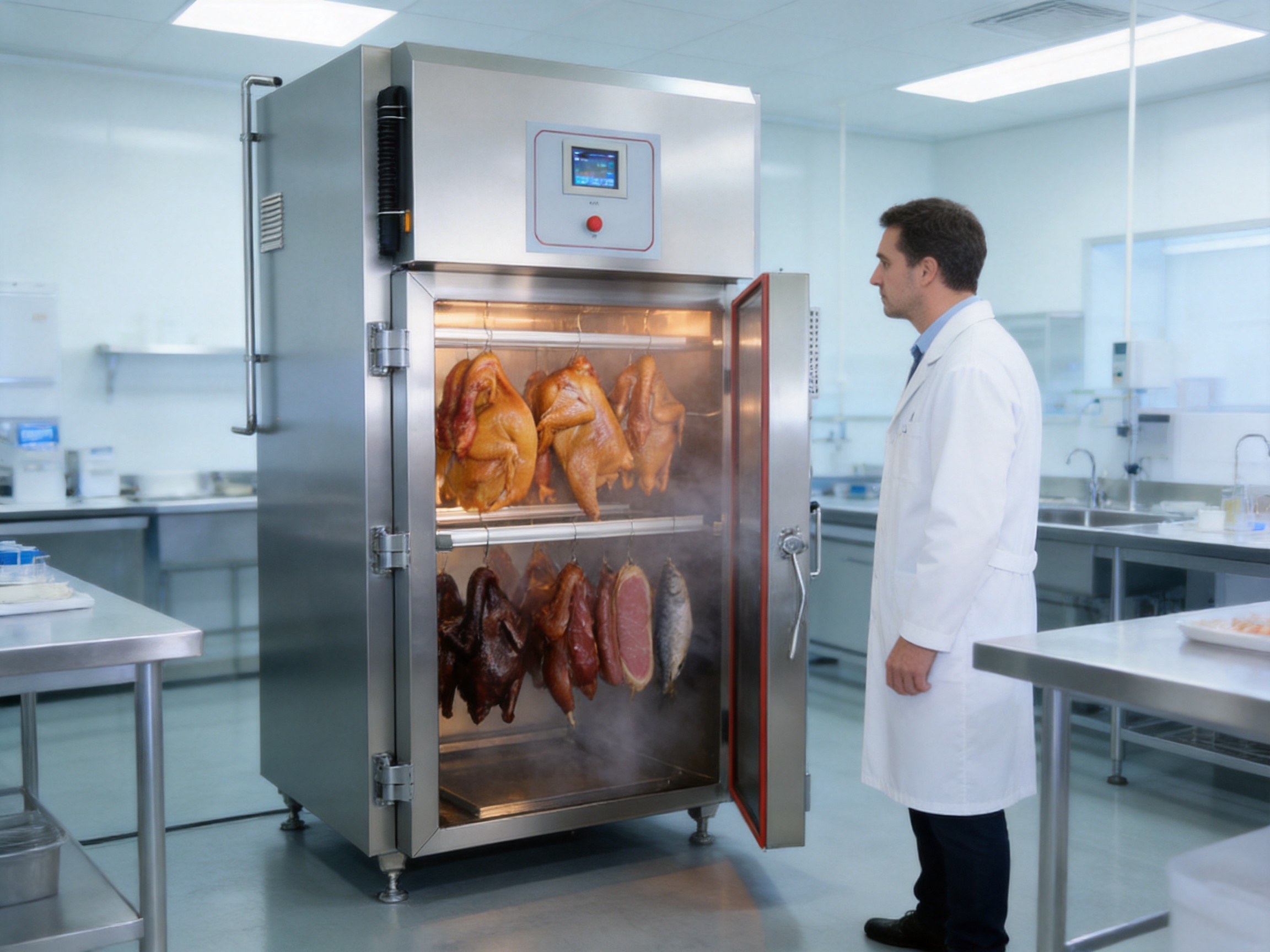
The smokehouse uses an internal woodchip smoke generator. This design produces smoke within the equipment and avoids dependence on a separate external smoke-generation unit. Integrating smoke generation into the main chamber makes the system more compact and can simplify the overall installation.
Woodchip smoke is suitable for developing traditional smoked flavors and colors. Different wood types may produce different aroma profiles, although users must select approved materials and follow applicable food-processing practices. Woodchips should be clean, dry, and appropriate for food smoking. Treated, painted, contaminated, or chemically processed wood must never be used.
Internal smoke generation can be particularly useful in a laboratory because it allows technicians to compare smoke intensity, smoking time, and product response within a controlled environment. The smokehouse can support trials involving different formulations, casings, marinades, product dimensions, and smoking schedules.
Compared with an open-fire or improvised smoking arrangement, the internal generator provides a more organized method of introducing smoke. It keeps the smoke-producing function within the equipment and allows it to be included in the automatic operating sequence.
Smoke generation must be maintained correctly. Residue should be removed according to the cleaning procedure, and the generator should be inspected for buildup or damage. Proper ventilation and installation are also essential. The equipment should be placed in a suitable working area with the required exhaust and utility provisions.
Automatic Cleaning and Daily Sanitation
Cleaning is one of the most important factors in meat-processing equipment performance and service life. Residual fat, protein, smoke deposits, and moisture can affect hygiene, product quality, odors, and component condition. The Lab Smokehouse includes a complete automatic cleaning system to help simplify sanitation after processing.
Automatic cleaning does not remove the need for inspection or manual attention, but it can make routine sanitation more consistent and less labor-intensive. A defined cleaning sequence helps ensure that internal surfaces receive regular treatment instead of relying only on occasional manual washing.
For best results, operators should remove product residues promptly after each processing cycle. Racks, trays, hooks, seals, drains, smoke-generation components, and chamber surfaces should be checked regularly. Areas that collect grease or condensate require special attention.
The cleaning program should be selected according to the type and amount of residue. Some products create more fat, while others produce more smoke deposits or sticky seasoning residue. Cleaning frequency may also need to increase when the equipment is used heavily or when products with strong seasonings and high fat content are processed.
Regular sanitation supports product quality as well as equipment life. Deposits can become difficult to remove when allowed to harden. They may also contribute to corrosion or interfere with sensors, fans, heating elements, and moving components. A clean chamber is easier to inspect and allows potential problems to be identified earlier.
Recommended Maintenance Practices
Operators should clean the smokehouse after use and follow the recommended chemical and temperature settings for the automatic cleaning system.
They should inspect door seals, hinges, latches, racks, hooks, drains, fan components, heating elements, and smoke-generator parts at regular intervals.
Electrical connections and control components should be kept dry and protected from unnecessary exposure to water or cleaning chemicals.
Any unusual noise, temperature fluctuation, smoke leakage, error message, or change in cleaning performance should be investigated promptly.
Moving parts should be lubricated only with suitable products and according to the manufacturer’s instructions.
Preventive maintenance should be scheduled according to frequency of use rather than waiting until a component fails.
Advantages Over Single-Purpose and Manually Controlled Equipment
The Lab Smokehouse competes with several types of equipment, including ordinary convection ovens, separate smoking cabinets, traditional smokehouses, and larger industrial smoke-cooking systems. Its advantages are most apparent when a user needs multiple functions in a relatively compact, controlled unit.
Compared with a Standard Oven
A standard oven may provide heating and baking, but it normally does not provide integrated woodchip smoke generation or a dedicated smoking program. The Lab Smokehouse combines these capabilities with drying, cooking, and optional cold smoking. This allows users to develop a wider variety of products without purchasing several separate machines.
Compared with a Traditional Smoking Cabinet
A manually operated smoking cabinet may create smoke, but its temperature control, airflow, and process repeatability can be limited. The Lab Smokehouse adds PLC automation, touch-screen operation, electric heating, efficient fan circulation, and automatic cleaning. These features make it more suitable for controlled product development and repeatable small-batch processing.
Compared with Separate Processing Machines
Using separate equipment for drying, smoking, cooking, and baking increases handling. Products must be transferred between machines, which consumes labor and may increase the risk of contamination or damage. An integrated smokehouse allows several stages to take place in one chamber, reducing transfers and simplifying the workflow.
Compared with Larger Industrial Systems
Large industrial smokehouses can provide higher capacities, but they may be excessive for laboratories, restaurants, pilot plants, and small specialty producers. The 25 kg capacity of this model is more appropriate for testing, demonstrations, menu production, and limited commercial batches. It provides many essential functions without requiring the footprint or investment associated with a full-scale industrial line.
Compared with Lower-Grade Equipment
Equipment constructed with less durable materials may have a lower initial purchase price, but it can be more vulnerable to corrosion, deformation, difficult cleaning, and premature component wear. Fully welded stainless steel construction, integrated cleaning, and programmable control support a more professional and durable solution.
These comparisons do not mean that one machine is suitable for every application. The best choice depends on capacity, product type, facility layout, utilities, labor, regulatory requirements, and investment plans. However, for users seeking a flexible 25 kg smokehouse with automatic control and multiple process functions, the Lab Smokehouse offers a balanced solution.
Manufacturing Strengths and Engineering Approach
The quality of a smokehouse depends not only on its feature list but also on how the machine is designed, fabricated, assembled, tested, and supported. A reliable equipment manufacturer must combine mechanical engineering, food-processing knowledge, electrical control expertise, stainless steel fabrication, and customer service.
The manufacturer of this equipment has specialized in meat-processing machinery since 2003. Its product focus includes smokehouses, vacuum tumblers, cutting equipment, deboning lines, and related meat-processing solutions. This specialization provides a practical understanding of how individual machines fit into broader production workflows.
Experience across several types of meat-processing equipment can be valuable during smokehouse development. A smokehouse must accommodate product loading, rack handling, sanitation, thermal control, smoke circulation, and integration with other preparation and packaging steps. Knowledge of tumbling, cutting, deboning, and other upstream processes can help inform the design of a more useful overall solution.
Stainless Steel Fabrication
Manufacturing begins with suitable materials and accurate fabrication. Stainless steel panels, frames, internal supports, doors, and chamber components must be cut, formed, aligned, and welded carefully. Weld quality influences strength, hygiene, appearance, and long-term resistance to moisture and cleaning operations.
Fully welded construction requires attention to dimensional accuracy and finishing. Distortion must be controlled during welding so that doors, seals, racks, and internal components fit correctly. Surfaces should be finished in a manner that supports cleaning and reduces the possibility of residue accumulation.
Integration of Mechanical and Electrical Systems
The smokehouse combines a chamber, heating system, fan, smoke generator, automatic cleaning system, sensors, PLC, touch screen, and electrical controls. These components must operate together as one system. Poor integration can lead to unstable temperatures, inadequate smoke distribution, difficult operation, or excessive maintenance.
A specialized manufacturer can coordinate these systems during design and assembly. Control logic must correspond to the actual mechanical functions of the machine. Safety-related conditions, process stages, heating, airflow, smoke generation, and cleaning operations must be considered as part of the complete equipment architecture.
Process Optimization
The manufacturer states that its technologies and solutions have been continuously optimized. For a smokehouse, process optimization may involve improving air circulation, simplifying control settings, refining the cleaning sequence, strengthening the chamber, and making daily operation more convenient.
Continuous improvement is particularly important in food-processing machinery because users operate in different environments and process many product types. Feedback from restaurants, laboratories, processors, and international customers can help identify opportunities to improve usability, maintenance access, energy use, and product consistency.
Application-Oriented Manufacturing
A practical machine should be designed around real production requirements rather than isolated technical specifications. The Lab Smokehouse reflects this approach by combining common processing functions in one unit, providing two configurations, supporting automatic cleaning, and offering adjustable electrical specifications as required.
Application-oriented manufacturing also means recognizing that different customers may have different utilities, layouts, product loads, and operating habits. Technical discussions before purchase can help confirm the correct model, electrical arrangement, installation space, exhaust requirements, loading method, and cleaning procedure.
Applications in Laboratories, Restaurants, and Pilot Production
Food Research and Development
Research teams can use the smokehouse to test new meat and seafood products. Controlled programs make it possible to compare different ingredients, smoke durations, cooking temperatures, drying stages, and product sizes. The 25 kg capacity is suitable for meaningful trial batches without requiring full industrial production quantities.
Restaurant Production
Restaurants can use the machine to produce smoked meats, poultry, fish, sausages, and specialty menu items. The automatic control system can help the kitchen repeat a successful recipe, while the stainless steel construction and automatic cleaning system support daily professional use.
Training and Demonstration
Culinary schools, food-processing training centers, and equipment demonstration facilities can use the smokehouse to teach drying, smoking, cooking, baking, and cold-smoking principles. The touch-screen interface provides a practical way to demonstrate programmable food-processing sequences.
Small and Specialty Processors
Specialty producers often need flexible equipment for premium products, seasonal items, or limited product runs. The smokehouse can help these businesses develop and produce products without immediately investing in a large industrial smoke-cooking line.
Product Sampling
Before launching a new product, a manufacturer may need to create samples for internal evaluation, customer presentations, retailer approval, or market testing. The smokehouse provides a controlled method for preparing samples with consistent appearance and flavor characteristics.
Product Quality and Process Consistency
Consistency is one of the most valuable outcomes of controlled processing. Customers expect a product to look, taste, and perform similarly each time they purchase it. Variations in smoke exposure, cooking temperature, moisture removal, and airflow can produce noticeable differences between batches.
The Lab Smokehouse addresses consistency through several coordinated features: PLC control, touch-screen operation, electric heating, efficient fan circulation, internal smoke generation, stainless steel construction, and automatic cleaning. No single feature guarantees a perfect result, but together they establish a more stable processing environment.
Consistent processing also improves product development. If a test batch fails, technicians can review the recipe and process settings with greater confidence. If conditions change unpredictably, it becomes difficult to determine whether the ingredients or the equipment caused the result.
Operators should create clear procedures for loading, product spacing, rack position, program selection, smoke material, cleaning, and unloading. These procedures should be validated for each product. The machine provides the control platform, but proper results depend on correct formulation, preparation, loading, and process verification.
Service Life and Factors Affecting Longevity
A well-maintained stainless steel smokehouse can provide many years of service, and properly cared-for equipment may remain useful for more than a decade. However, the actual service life depends on construction quality, operating frequency, maintenance, environment, cleaning practices, and adherence to operating limits.
Construction quality is a primary factor. Fully welded stainless steel construction provides durability and corrosion resistance, but it must be supported by sound fabrication, suitable components, accurate assembly, and proper finishing.
Maintenance has a direct effect on longevity. Cleaning after use, checking seals, inspecting heating elements, maintaining the fan, monitoring the smoke generator, and protecting electrical components can prevent small problems from becoming major failures.
Frequency of use also affects wear. A smokehouse operating several times each day will experience more thermal cycles, cleaning cycles, and mechanical activity than a unit used once a week. Heavy use does not necessarily lead to premature failure when preventive maintenance is performed consistently.
Environmental conditions should be considered. High humidity, salt-laden air, extreme temperatures, poor ventilation, and exposure to corrosive chemicals may shorten the life of the equipment. An indoor installation with suitable temperature, drainage, ventilation, and humidity control is generally more favorable.
Correct operation is equally important. Users should not exceed the recommended capacity, obstruct airflow, operate outside the specified temperature range, use unsuitable smoke materials, or apply incompatible cleaning chemicals. Overloading can reduce product consistency and place additional stress on heating, fan, and control systems.
Electronic components, including the PLC and touch-screen interface, should be protected from moisture, impact, excessive heat, and unauthorized adjustments. Electrical inspections should be carried out by qualified personnel, especially when the equipment is used in a wet processing area.
Installation and Transport Considerations
The smokehouse is a substantial food-processing machine rather than a lightweight countertop appliance. Its stainless steel chamber, heating system, fan, smoke generator, control system, and cleaning equipment contribute to its total weight. Whether it can be moved by hand depends on the exact dimensions, accessories, packaging, and site conditions.
For delivery and installation, users should generally plan for suitable handling equipment such as a pallet jack, forklift, lifting device, or other approved method. The exact transportation procedure should be confirmed using the manufacturer’s final dimensional and weight information.
Before delivery, the installation site should be checked for door widths, ceiling height, floor strength, access routes, drainage, ventilation, electrical supply, and service clearance. Adequate space should be left around the machine so that operators can load products, perform cleaning, inspect components, and carry out maintenance safely.
The electrical supply must match the selected model and local requirements. The listed configuration is 380V/50Hz/3-phase, with adjustment available as required. A qualified electrician should verify the supply, protective devices, grounding, isolation, cable sizing, and local compliance requirements.
Smoke and exhaust management should also be considered. The installation environment must provide appropriate ventilation for the intended operation. Smoke, heat, moisture, and cleaning vapor should not be allowed to accumulate in the working area.
How to Select the Appropriate Model
The first selection question is whether cold smoking is required. If the application only needs drying, hot smoking, cooking, and baking, the RYXY1-M-D model may be appropriate. If the user plans to develop cold-smoked products, the RYXY1-M-DL model provides the broader functional range.
The second question concerns available electrical capacity. The standard model is listed at 12 kW, while the extended model is listed at 15 kW. The facility should confirm that its electrical infrastructure can support the selected unit and any other equipment operating simultaneously.
The third question involves batch size. Both models have a nominal 25 kg capacity. Actual loading depends on the product shape, rack arrangement, required spacing, moisture content, and process objective. Users should evaluate the number of products per batch rather than relying only on total weight.
The fourth question concerns the intended operating environment. Restaurants, laboratories, pilot plants, and specialty processors may have different requirements for mobility, ventilation, cleaning frequency, operator access, and program management.
The fifth question is service and support. Customers should discuss spare parts, technical documentation, installation, operator training, maintenance schedules, electrical adaptation, and after-sales support before purchase.
Operating Principles for Best Results
Operators should begin by preparing the product according to a validated recipe. Product dimensions, weight, moisture, casing type, formulation, and loading arrangement all influence the process. The machine program should be selected or created according to these factors.
Products should be arranged with sufficient spacing to allow air and smoke to circulate. Overcrowding can create uneven drying, color, and cooking. Similar products should generally be processed together so that the program is appropriate for the entire load.
The smoke generator should be loaded only with approved woodchips and operated according to the manufacturer’s instructions. Smoke intensity should be evaluated as part of product development, since excessive smoke can produce an undesirable flavor or overly dark surface color.
Temperature and time should be verified for each product category. The maximum operating temperature of 180°C does not mean that every product should be processed at that temperature. A suitable process must consider product safety, quality, texture, yield, and applicable regulations.
After the batch is complete, products should be handled according to the recipe and cooling requirements. The chamber should then be cleaned without unnecessary delay. Operators should inspect the equipment before the next batch and report any abnormal condition.
Q&A: Common Questions About the Lab Smokehouse
What products can be processed in the smokehouse?
The equipment is designed for ham, sausage, poultry, fish, and other suitable products. Its functions include drying, hot smoking, cooking, and baking. The RYXY1-M-DL model also supports cold smoking.
What is the capacity of the smokehouse?
Both listed configurations have a nominal capacity of 25 kg. Actual capacity depends on product type, product dimensions, rack arrangement, and the spacing required for proper airflow.
What is the maximum operating temperature?
The listed maximum temperature is 180°C for both models. The RYXY1-M-D model has a listed range of 45–180°C, while the RYXY1-M-DL model has a listed range of 15–180°C.
Which model should be selected for cold smoking?
The RYXY1-M-DL model is the suitable configuration when cold-smoking capability is required. It provides a listed temperature range beginning at 15°C and includes cold smoking in its stated functions.
How is smoke produced?
Both models use internal woodchip smoke generation. This integrates the smoke source into the smokehouse and supports a compact, organized processing arrangement.
Is the machine manually operated?
The smokehouse uses automatic PLC and touch-screen control. Operators can manage processing programs through the interface, while the PLC coordinates the programmed sequence.
Does the smokehouse include a cleaning system?
Yes. The equipment is described as having a complete automatic cleaning system. Manual inspection and supplementary cleaning may still be required depending on the product, residue, operating frequency, and sanitation procedure.
Why is the fan important?
The efficient fan promotes air circulation inside the chamber. This helps distribute heat and smoke more consistently and supports more uniform processing when the chamber is loaded correctly.
Is stainless steel construction beneficial?
Yes. Fully welded stainless steel construction provides durability, corrosion resistance, and a surface suitable for hygienic food-processing applications when proper cleaning and maintenance procedures are followed.
How long can the smokehouse last?
A well-maintained smokehouse from an experienced manufacturer can serve for many years and may exceed a decade of service. Actual longevity depends on construction, use frequency, cleaning, environment, maintenance, and correct operation.
Can the smokehouse be moved by hand?
The exact transport method depends on the final dimensions and weight. Because the unit contains a robust stainless steel chamber and several integrated systems, users should normally plan for suitable handling equipment rather than assuming it can be moved manually.
What electrical supply is required?
The listed electrical specification is 380V/50Hz/3-phase, adjustable as required. The final electrical arrangement should be confirmed before purchase and installed by qualified personnel according to local regulations.
Can it replace a complete industrial smokehouse line?
The machine is intended for laboratory, restaurant, pilot, demonstration, and small-batch applications. It provides multiple functions in one unit, but larger industrial operations may require higher-capacity systems or a complete automated production line.
What should be considered before installation?
Users should confirm access routes, floor conditions, ventilation, drainage, electrical supply, service clearance, cleaning arrangements, and handling equipment. The installation area should support safe loading, operation, sanitation, and maintenance.
Conclusion
The Lab Smokehouse is a flexible solution for laboratories, restaurants, pilot plants, training centers, and specialty meat processors that need controlled small-batch processing. By combining drying, smoking, cooking, and baking in one machine, it reduces the need for separate equipment and simplifies product-development workflows.
Its main advantages include automatic PLC and touch-screen control, a maximum temperature of 180°C, fully welded stainless steel construction, efficient fan circulation, internal woodchip smoke generation, and a complete automatic cleaning system. The RYXY1-M-DL model adds cold-smoking capability and a wider low-temperature range, making it suitable for an expanded selection of meat and fish products.
The equipment is also supported by the manufacturing experience of a company focused on meat-processing machinery since 2003. Its specialization in smokehouses, vacuum tumblers, cutting equipment, deboning lines, and related solutions provides a strong foundation for application-oriented design and integrated food-processing expertise.
For the best return on investment, users should select the appropriate model, confirm site and utility requirements, establish validated product programs, maintain proper loading practices, and follow a disciplined cleaning and preventive-maintenance schedule. When these factors are managed carefully, the Lab Smokehouse can provide a reliable platform for product innovation, consistent small-batch production, and professional food processing.
References
1. Product specifications and technical information supplied for the Lab Smokehouse, including model configurations, capacity, temperature range, power, control system, heating method, and smoke-generation method.
2. Manufacturer information concerning the development and production of meat-processing machinery, including smokehouses, vacuum tumblers, cutting equipment, deboning lines, and related processing solutions.
3. General principles of hygienic design for stainless steel food-processing equipment.
4. General practices for thermal processing, smoking, drying, cooking, and sanitation in meat and seafood production.
5. General preventive-maintenance principles for electrically heated food-processing machinery with programmable controls.