

 English
 русский
 Español
 عربى

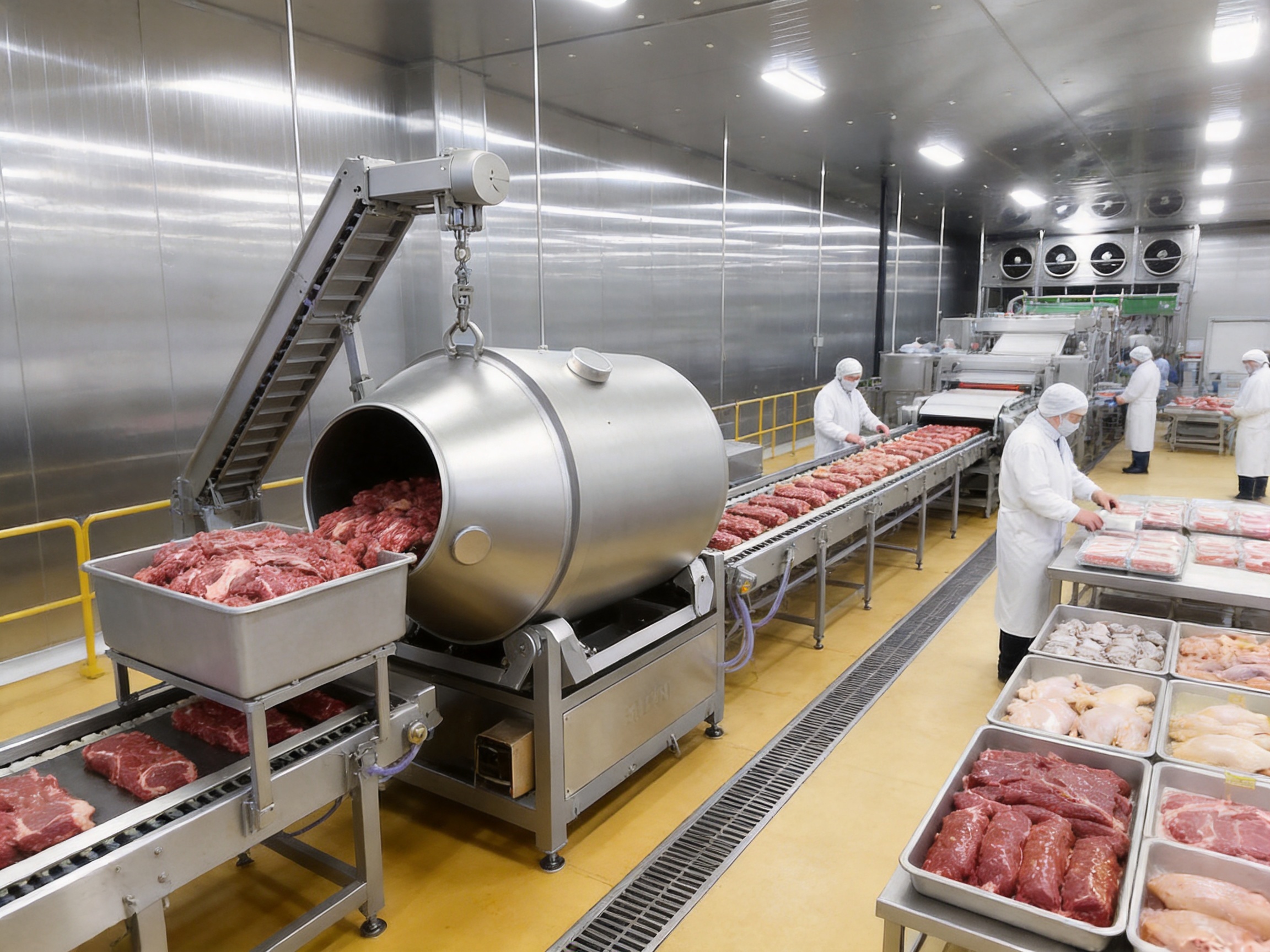
Modern meat processors need more than a mixing vessel. They need equipment that can improve marinade absorption, protect product quality, increase yield, support repeatable production, and integrate efficiently into a demanding processing line. A hydraulic vacuum tumbler is designed to address these requirements by combining controlled vacuum treatment, mechanical massaging, paddle-driven movement, variable drum speed, and hydraulic tilting in one industrial machine.
The hydraulic vacuum tumbler described in this article is engineered for large-scale meat processing operations, including the preparation of beef, pork, poultry, seafood, sausages, deli meats, and other value-added products. Its operating principle is based on the controlled movement of meat and brine inside a rotating drum. During processing, products are repeatedly lifted, turned, massaged, and gently threshed by internal paddles. Vacuum and natural-pressure conditions can be applied alternately or continuously, helping the brine penetrate more efficiently and supporting the extraction and dissolution of soluble meat proteins.
This combination of vacuum treatment and mechanical action can improve product binding, flavor distribution, tenderness, appearance, and cooking performance. At the same time, the hydraulic frame makes loading, unloading, and drum positioning more convenient for industrial users. The result is a versatile machine intended to support consistent production while reducing unnecessary manual handling.
Content
- 1 What Is a Hydraulic Vacuum Tumbler?
- 2 Core Processing Principle
- 3 Major Features of the Equipment
- 4 Technical Specifications
- 5 Advantages Over Conventional Tumbling Equipment
- 6 Advanced Manufacturing Capability
- 7 Quality Control for Critical Components
- 8 International Electrical Components
- 9 Product Applications in Meat Processing
- 10 Potential Applications Beyond Meat
- 11 Manufacturing Scale and Production Strength
- 12 Installation and Process Planning
- 13 Hygiene and Maintenance Considerations
- 14 How the Tumbler Supports Process Optimization
- 15 Selection Guide for Buyers
- 16 Q&A
- 16.1 What is the primary purpose of a hydraulic vacuum tumbler?
- 16.2 How does vacuum improve the tumbling process?
- 16.3 What drum speeds are available?
- 16.4 Can the machine process poultry and seafood?
- 16.5 What is the maximum vacuum level listed for the models?
- 16.6 What is the purpose of the hydraulic tilting system?
- 16.7 What paddle options are available?
- 16.8 Does the equipment include cooling?
- 16.9 How does automated manufacturing benefit the equipment?
- 16.10 Why are internationally recognized electrical components useful?
- 16.11 Can the tumbler be used for pharmaceutical or cosmetic products?
- 16.12 How should buyers choose between the three models?
- 17 Conclusion
- 18 References
- 19 Product: Hydraulic Vacuum Tumbler
What Is a Hydraulic Vacuum Tumbler?
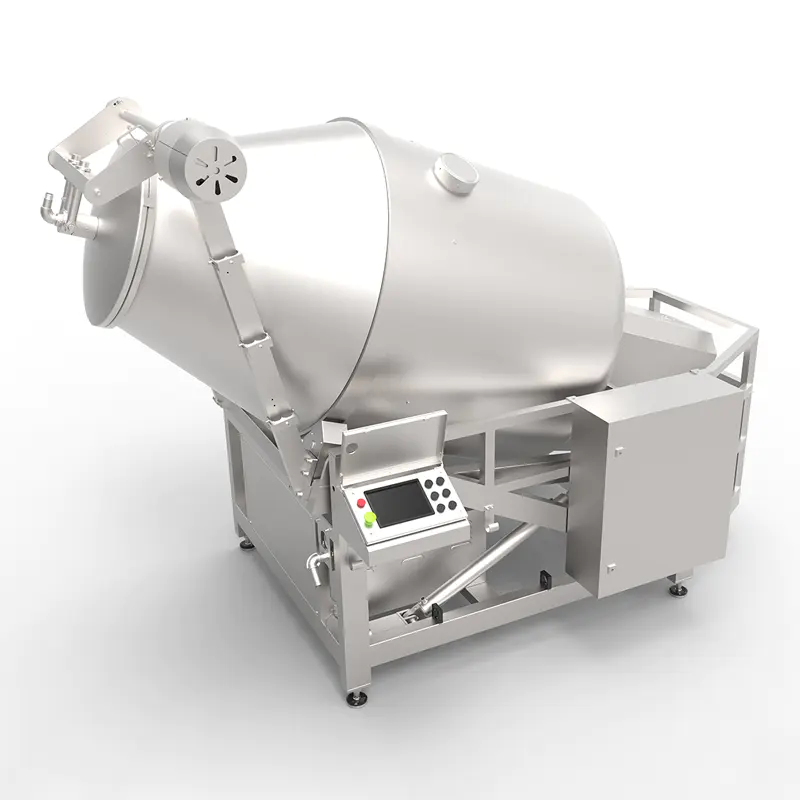
A hydraulic vacuum tumbler is an industrial meat-processing machine used to marinate, tenderize, massage, and condition meat products under controlled pressure conditions. The machine generally consists of a stainless-steel rotating drum, internal paddles or carriers, a vacuum system, a drive motor, a programmable control system, and a hydraulic mechanism for tilting the frame or drum.
Unlike a basic mixer, the tumbler is designed to create a carefully controlled processing environment. The drum rotation causes the product to move through a series of lifting and falling actions. Internal paddles guide the product and help distribute brine, seasonings, and functional ingredients throughout the load. When vacuum is applied, air is removed from the drum and from spaces within the meat structure. This supports more efficient contact between the product and the processing solution.
The machine can operate using continuous vacuum or breathing rotation. In breathing operation, vacuum and natural pressure are alternated according to a programmed cycle. This pressure variation can encourage the movement of marinade into the product while allowing the operator to adjust the treatment to the characteristics of the raw material.
The hydraulic system adds another important capability. The drum or frame can be tilted through a range of angles, allowing operators to select a suitable position for dynamic marination, loading, and unloading. The available tilting range is from 0 to 20 degrees. This flexibility is especially useful when different products require different movement patterns or when the production line uses different loading arrangements.
Core Processing Principle
The performance of a vacuum tumbler depends on the interaction of four key factors: mechanical movement, vacuum, time, and temperature. Each factor can be controlled or adjusted to suit the raw material and the desired finished product.
Mechanical Massaging and Threshing
As the drum rotates, the meat is lifted by the internal paddles and then allowed to fall or slide. This produces a controlled massaging action. The movement distributes brine across the product surface and helps loosen the muscle structure without relying exclusively on high-speed mechanical mixing.
For suitable products, the mechanical action can also encourage the extraction of soluble proteins from the meat. These proteins are important in the formation of a cohesive matrix during cooking. A better protein extraction process can support improved binding, sliceability, moisture retention, and overall product structure.
The intensity of the treatment depends on several factors, including drum speed, paddle design, filling level, product size, product temperature, and processing duration. Because these factors can be adjusted, the same basic machine can be adapted for different recipes and product categories.
Vacuum and Pressure Alternation
Vacuum processing removes air from the drum and reduces the pressure surrounding the product. This can help reduce air pockets and increase contact between the meat and brine. In breathing mode, the machine alternates between vacuum and natural pressure. This repeated pressure change can support the movement of the processing solution into the meat structure.
Vacuum treatment may also reduce foaming and help create a denser, more uniform product. For products that will later be cooked, sliced, or packaged, reduced air entrapment can improve appearance and consistency. The vacuum level specified for the equipment is approximately -0.085 MPa.
Controlled Drum Rotation
The drum speed can be adjusted from 2 to 12 revolutions per minute through a frequency inverter. This broad speed range allows processors to select gentle movement for delicate products or more active movement for products requiring stronger massaging and extraction.
Low-speed operation may be appropriate for fragile poultry portions, seafood, or products that can be damaged by excessive impact. Higher speeds may be useful for tougher cuts, larger pieces, or recipes that require more intensive protein extraction. The ability to adjust speed is a major advantage over fixed-speed equipment because it allows the process to be matched to the product rather than forcing every recipe to use the same mechanical treatment.
Adjustable Drum Inclination
The hydraulic frame allows the drum to be adjusted between 0 and 20 degrees. Inclination changes the way the product travels through the drum. A level drum and a tilted drum can produce different lifting, sliding, and falling patterns, which can influence marinade distribution and treatment intensity.
The equipment uses inclined arc-shaped carriers inside the drum. These carriers are positioned at approximately 12 degrees and are intended to support effective marinade absorption. By combining the internal carrier geometry with adjustable external inclination, the operator gains more control over dynamic marination.
Major Features of the Equipment
PLC and Touch-Screen Control
The hydraulic vacuum tumbler is controlled by a programmable logic controller and touch-screen interface. This arrangement allows operators to manage key process parameters, including rotation speed, vacuum cycles, operating time, and other programmed functions.
Recipe-based control can help reduce operator variation. Once a process has been validated, the settings can be recorded and repeated for future batches. This is important for industrial processors that need stable flavor, texture, yield, and appearance across multiple production shifts.
A touch-screen interface also improves visibility. Operators can monitor the status of the machine and identify process stages more easily than with a collection of basic switches. In a properly configured production environment, the control system can contribute to better traceability and more consistent standard operating procedures.
Continuous Vacuum or Breathing Rotation
The machine supports continuous vacuum processing as well as breathing rotation. Continuous vacuum may be selected for products that benefit from a stable low-pressure environment. Breathing rotation can be selected when pressure alternation is preferred to assist brine movement and product conditioning.
The availability of both modes makes the tumbler more adaptable than a machine restricted to a single vacuum cycle. Processors can compare recipes, adjust treatment intensity, and create product-specific programs based on raw material characteristics.
Frequency-Inverter Speed Adjustment
Speed adjustment from 2 to 12 rpm is achieved with a frequency inverter. This provides smooth control rather than limiting the operator to one or two preset speeds. The frequency inverter can also support more controlled starting and stopping, reducing sudden mechanical stress on the drive system and product load.
Variable-speed operation is particularly valuable for companies producing multiple product types. A delicate seafood product, a whole-muscle beef item, and a heavily seasoned pork product may require significantly different movement profiles. One adjustable machine can accommodate these differences more effectively than a fixed-speed unit.
Hydraulic Tilting System
The hydraulic system provides controlled movement of the frame and drum. It can support drum tilting during production and assist with discharge after the processing cycle. Hydraulic operation is useful for heavy industrial equipment because it can deliver substantial lifting force in a controlled manner.
Tilting also improves operational flexibility. Different loading levels and product types can be handled using different drum positions. When the batch is complete, the operator can use the hydraulic system to help guide the finished material toward the discharge point, reducing the need for manual intervention.
Multiple Loading Options
The equipment can be configured with different loading solutions. A movable hydraulic loading device can be used where flexible positioning is needed. A rail-type loading device can be selected where containers or bins move along a defined route.
The choice of loading arrangement should be based on the plant layout, raw-material container design, available floor space, batch size, and connection to upstream and downstream equipment. Providing more than one loading option allows the tumbler to be integrated into different factory layouts.
Interchangeable Paddle Designs
Optional V-shaped and blade-shaped paddles are available for different products and process objectives. Paddle geometry affects how the product is lifted, folded, compressed, and released during drum rotation.
V-shaped paddles may be selected for one type of product movement, while blade-shaped paddles may be more suitable for another. The correct configuration can help balance mixing efficiency with product protection. This is important because excessive mechanical action can damage fragile products, while insufficient movement can result in uneven marination.
Water-Sealed Vacuum Pump
The vacuum system uses a water-sealed vacuum pump. This pump design is widely used in industrial applications where reliable vacuum generation is required. The water-sealed configuration can be suitable for processing environments in which moisture and washdown conditions are present.
As with any vacuum system, proper water quality, maintenance, sealing, and operating procedures are important. Regular inspection of hoses, valves, seals, and pump components helps preserve vacuum performance and reduce unplanned downtime.
Optional Cooling Function
An optional cooling function can be provided for recipes that require temperature management during tumbling. Temperature control is important in meat processing because excessive temperature rise may affect texture, microbial control, emulsion stability, and final yield.
Cooling capability is especially useful when the product undergoes extended processing, when the raw material is sensitive to temperature, or when the recipe includes high-intensity mechanical treatment. The exact cooling requirement should be determined according to the product, process duration, plant conditions, and food-safety program.
Hydraulic Vacuum Tumbler
Technical Specifications
The equipment is offered in several industrial sizes. The following table summarizes the principal specifications for the available models.
| Specification | RGR-1700HY | RGR-2500HY | RGR-3500HY |
|---|---|---|---|
| Driving power | 2.2 kW | 3 kW | 4 kW |
| Vacuum pump power | 3 kW | 4 kW | 5.5 kW |
| Hydraulic power | 2.2 kW | 2.2 kW | 2.2 kW |
| Drum capacity | 1,700 L | 2,500 L | 3,500 L |
| Maximum loading | 1,000 kg | 1,500 kg | 2,100 kg |
| Drum speed | 2–12 rpm | 2–12 rpm | 2–12 rpm |
| Vacuum level | -0.085 MPa | -0.085 MPa | -0.085 MPa |
The three models provide a range of production capacities while maintaining the same fundamental process concept. The appropriate model depends on the required batch size, target throughput, available installation space, loading arrangement, and integration with other equipment.
Advantages Over Conventional Tumbling Equipment
Improved Marinade Distribution
Conventional non-vacuum mixers may distribute brine across the exterior of a product but provide less assistance in moving the solution into the meat structure. Vacuum processing helps reduce air resistance and promotes closer contact between the product and brine. Combined with rotating movement and internal carriers, this can create a more even distribution of flavor and functional ingredients.
More uniform distribution can reduce batch-to-batch variation. It may also reduce the need for excessive brine addition to compensate for uneven absorption. The actual result depends on formulation, raw material quality, injection level, temperature, processing time, and other production variables, but the machine provides the process controls needed for optimization.
Higher Potential Yield
The combination of vacuum, massage, and protein extraction can support improved retention of processing solution. Soluble proteins released during treatment can contribute to binding and moisture retention during cooking. This may improve finished yield and reduce losses during slicing or thermal processing.
Yield improvements are not automatic and must be verified through production trials. However, the equipment is specifically designed to create the mechanical and pressure conditions associated with efficient brine infiltration and protein extraction. This gives processors a strong platform for developing higher-yield recipes.
Greater Product Consistency
Repeatable settings are essential for commercial food production. Manual mixing and inconsistent vacuum treatment can lead to differences in flavor, texture, appearance, and moisture retention. PLC-based control, variable-speed operation, programmable vacuum cycles, and defined processing times provide a more stable process environment.
Once a recipe is established, the same operating parameters can be used for future batches. This supports quality assurance, production planning, and customer confidence.
Adaptability to Different Products
A single fixed process is rarely suitable for every meat product. Different raw materials have different fiber structures, fat levels, moisture contents, and sensitivities to mechanical action. The hydraulic vacuum tumbler addresses this issue through adjustable speed, selectable paddle designs, variable vacuum modes, adjustable drum inclination, and optional cooling.
This adaptability can help processors expand their product portfolio without purchasing a separate machine for every recipe. It also supports seasonal products, private-label manufacturing, and customized formulations.
Reduced Manual Handling
Large industrial batches can be difficult and labor-intensive to move manually. Hydraulic loading and tilting solutions reduce the physical effort required from operators. This can improve workplace ergonomics and help maintain a smoother flow between material handling stages.
Reduced manual handling can also support hygiene management. Every additional manual transfer creates an opportunity for spillage, contamination, product damage, or production delay. Properly integrated loading and unloading systems can help limit these risks.
Better Integration into Industrial Lines
The available loading options allow the machine to be configured for different factory layouts. A movable hydraulic loader may be appropriate for flexible batch movement, while a rail-type loader may support a more structured production route.
Integration can include upstream injection, weighing, cutting, blending, or preparation equipment and downstream filling, forming, cooking, cooling, slicing, or packaging equipment. The tumbler can serve as a central conditioning stage within a broader meat-processing solution.
Advanced Manufacturing Capability
Equipment performance depends not only on the design concept but also on manufacturing accuracy. Large rotating drums must maintain structural strength, dimensional accuracy, balance, and reliable sealing. Inadequate manufacturing control can result in vibration, premature wear, inconsistent vacuum performance, and costly maintenance.
Automated Laser Cutting
Related components are cut using fully automated laser-cutting equipment. Laser cutting provides a high level of dimensional accuracy and repeatability. Precise component geometry is important for drum construction, support structures, covers, mounting points, and other parts that must fit together correctly during assembly.
Automated cutting also reduces variation caused by manual fabrication. Consistent dimensions support more efficient assembly and help ensure that replacement parts remain compatible with the original equipment design.
For a vacuum tumbler, fabrication accuracy affects more than appearance. It can influence door fit, sealing surfaces, paddle alignment, frame geometry, and the relationship between the drum and drive system. Precise cutting therefore contributes to long-term operating reliability.
Fully Automated Welding
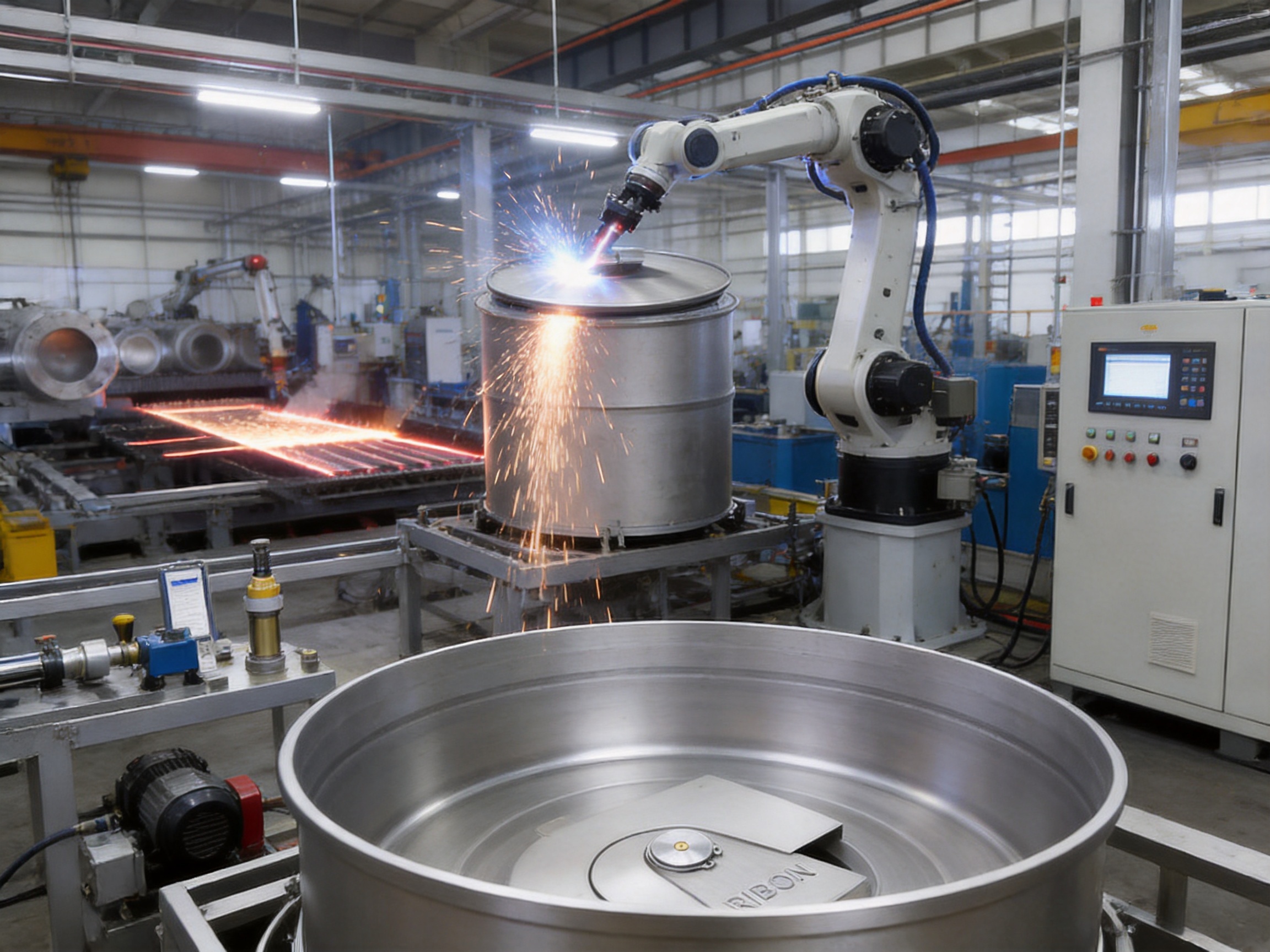
The drum and lid are welded using fully automatic welding machines with gas-shielded welding technology. Automated welding helps maintain a consistent weld path, heat input, and penetration profile across repeated assemblies.
Gas-shielded welding is selected to achieve deeper penetration than conventional argon arc welding in the specified manufacturing process. Strong, consistent welds are essential because the drum must withstand repeated loading, rotation, vacuum cycles, cleaning, and pressure changes over its service life.
High-quality welding also supports hygiene. Smooth and continuous welds are easier to inspect and clean than irregular welds with excessive spatter, undercut, or surface discontinuity. In food-processing equipment, hygienic design and maintainable surfaces are important considerations alongside structural strength.
Drum Balancing
Drum balancing is performed after drum welding has been completed. Welding can introduce small changes in mass distribution or geometry. If these changes are not identified and corrected, the finished drum may produce vibration during operation.
Balancing helps improve operational stability. A stable drum can reduce stress on bearings, drive components, supports, and the surrounding structure. It can also create a more comfortable working environment by reducing noise and vibration.
Balancing is particularly important for large-capacity models because the drum itself is substantial and the product load may reach 2,100 kilograms. A controlled balance process helps ensure that the equipment performs reliably at industrial scale.
Quality Control for Critical Components
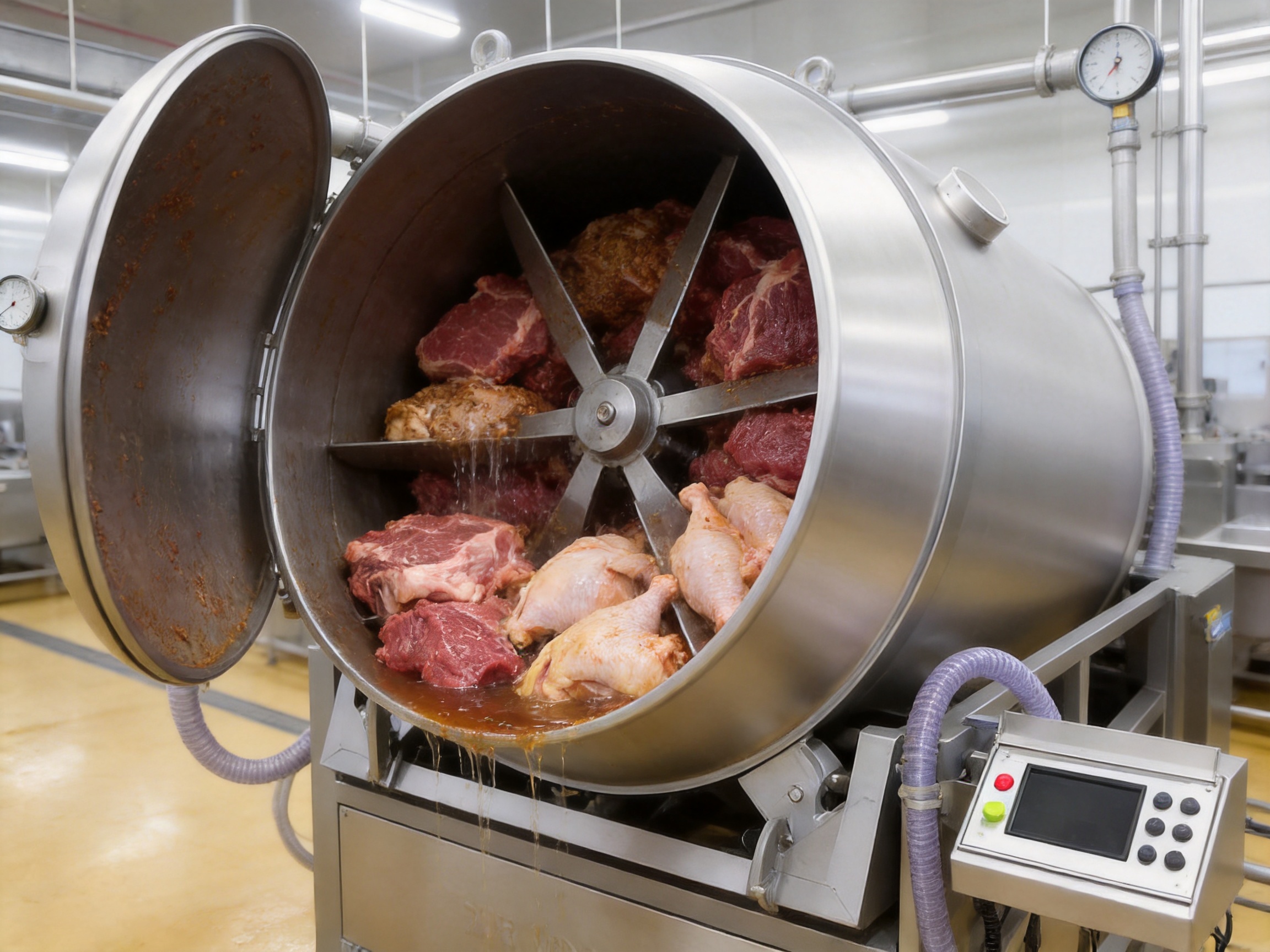
Quality control must cover the complete manufacturing process, not only the final visual inspection. Critical components are subject to procedures that include incoming-material inspection, in-process monitoring, dimensional verification, and testing against predefined specifications.
Incoming inspection helps confirm that materials and purchased components meet the required standards before they enter production. In-process monitoring checks whether fabrication, welding, machining, assembly, and finishing steps remain within defined parameters. Dimensional verification confirms that critical parts fit together correctly and maintain the intended design geometry.
This approach is especially important for components that directly influence vacuum performance, drum rotation, hydraulic movement, electrical control, and product safety. Components that fail to meet the specified criteria should not proceed to assembly.
A structured quality system provides several advantages. It reduces the risk of hidden defects, improves consistency between machines, supports more predictable commissioning, and helps the manufacturer investigate any future service issue. For customers, this means greater confidence that the machine has been produced according to controlled procedures rather than assembled through informal methods.
International Electrical Components
Electrical components are sourced from leading international brands. The use of widely recognized components can provide several practical benefits for food-processing companies operating in different regions.
First, internationally available components are often easier to replace locally. If a switch, inverter, sensor, relay, or control element requires service, the customer may be able to obtain a compatible replacement through a regional distributor rather than waiting for a shipment from the original equipment manufacturer.
Second, familiar components can simplify maintenance training. Many plant electricians and automation technicians already have experience with widely used industrial electrical systems. This may reduce the time needed to diagnose faults and return equipment to service.
Third, established component suppliers generally provide technical documentation, product specifications, and lifecycle information. These resources can support preventive maintenance and spare-parts planning.
Electrical selection should always be confirmed according to the customer's voltage, frequency, safety requirements, control architecture, and local regulations. The use of international components does not eliminate the need for proper installation, grounding, inspection, and periodic maintenance.
Product Applications in Meat Processing
Beef Products
Beef cuts can be processed in the tumbler to improve marinade distribution and support the production of seasoned, tenderized, or restructured products. The adjustable speed range allows processors to select an appropriate level of mechanical action for whole-muscle cuts, strips, cubes, and other formats.
Pork Products
Pork products commonly require reliable seasoning, moisture retention, and binding. Vacuum tumbling can help distribute brine and functional ingredients through the batch. The massaging action can also assist in developing a cohesive structure for cooked and sliced pork products.
Poultry
Poultry products may include breast portions, thigh meat, drum meat, whole-muscle pieces, and prepared products. Because poultry can be sensitive to excessive mechanical impact, the low end of the speed range and appropriate paddle configuration may be selected for gentler processing.
Seafood
Fish, shrimp, scallops, and other seafood products can be processed with suitable recipes and handling conditions. Seafood generally requires careful control of temperature and mechanical intensity. Optional cooling and adjustable speed can help operators create a process that protects product appearance while distributing seasoning or marinade.
Sausage and Deli-Meat Ingredients
For certain sausage and deli-meat processes, vacuum tumbling may be used to condition meat and distribute ingredients before stuffing, forming, cooking, or further processing. The vacuum environment can help reduce air inclusion and support a more uniform texture.
Ready-to-Cook and Value-Added Products
Consumer demand for convenient food has increased the importance of marinated and ready-to-cook products. The tumbler can be used to prepare seasoned meat portions, marinated strips, kebab ingredients, prepared poultry, and other value-added products. Consistent processing is essential when these items are sold under retail or food-service specifications.
Potential Applications Beyond Meat
The equipment is primarily associated with meat processing, but the basic functions of controlled mixing, vacuum treatment, and material conditioning may be relevant to selected products in other industries. Any non-meat application should be evaluated carefully for material compatibility, hygiene requirements, cleaning procedures, and regulatory compliance.
In food processing, suitable vegetables or fruits may be seasoned, infused, or prepared for further processing when the product can tolerate the mechanical action. Seafood is another related application because it benefits from controlled flavor distribution and temperature management.
In pharmaceutical, cosmetic, and chemical manufacturing, vacuum mixing equipment may be used for powders, granules, pigments, creams, or other materials. However, the machine configuration, materials of construction, sealing system, cleanability, validation requirements, and explosion-protection classification may differ from those required in a meat-processing plant.
Textile applications such as dyeing and finishing may also use rotating treatment equipment, but these processes normally require different tanks, chemical-resistant materials, temperature systems, and process controls. Consequently, the hydraulic vacuum tumbler should not be considered automatically suitable for every material. Application testing and technical confirmation are necessary before use outside its intended meat-processing environment.
Manufacturing Scale and Production Strength
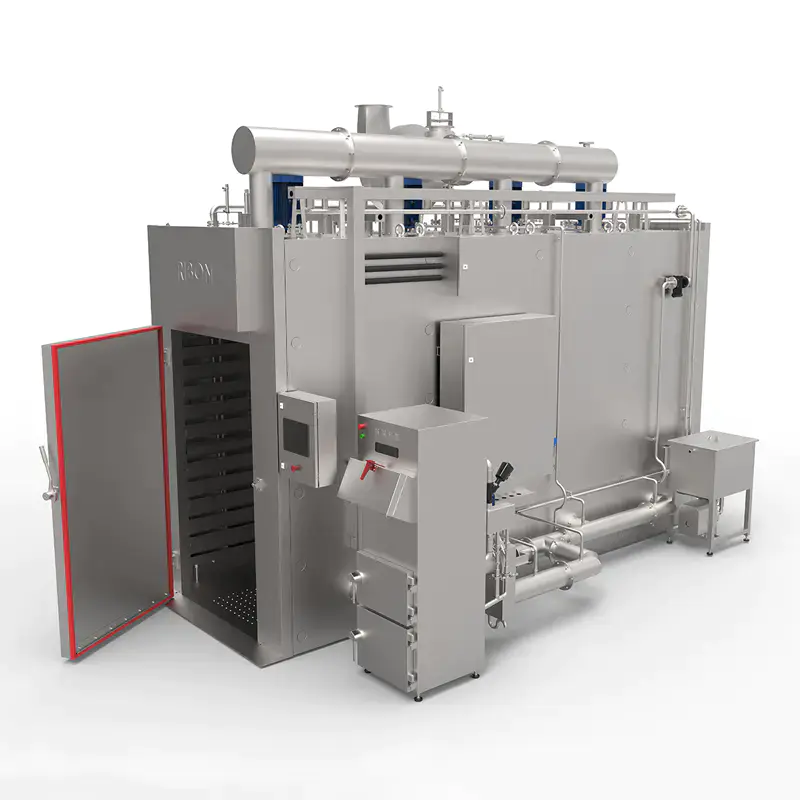
The manufacturer focuses on meat-processing machinery, including smokehouses, vacuum tumblers, and cutting and deboning solutions. A stated production capacity of approximately 1,000 vacuum tumblers per year reflects a large manufacturing base and specialized concentration on this equipment category.
Specialization can provide advantages over general machinery suppliers. A manufacturer that concentrates on vacuum tumblers is more likely to have accumulated practical knowledge about drum geometry, paddle design, vacuum sealing, hydraulic tilting, product movement, and process control. Continuous production also creates opportunities to refine designs based on manufacturing feedback and customer requirements.
Since its establishment in 2003, the company has developed and supplied meat-processing solutions for customers in different markets. International experience can help a manufacturer understand variations in electrical systems, factory layouts, production expectations, hygiene procedures, and service requirements.
The company's stated objective is to develop practical, better-designed solutions that create value for customers while supporting environmental responsibility through continued technical and service improvements. In an industrial context, practical design may include reliable operation, simplified maintenance, appropriate automation, efficient handling, and the ability to integrate with existing production systems.
Installation and Process Planning
Successful installation begins before the equipment arrives at the plant. The customer should evaluate floor loading, access routes, ceiling height, utility connections, drainage, cleaning space, product flow, and the position of loading and unloading equipment.
The selected model should match the required batch size rather than simply the maximum available capacity. Overloading can impair movement and reduce process consistency, while excessive underloading may reduce the efficiency of each cycle. The correct working load should be established through process trials and the manufacturer's technical recommendations.
Plant planners should also consider how the tumbler connects with upstream and downstream operations. If meat arrives in standardized containers, a rail-type loading system may be appropriate. If containers must be positioned flexibly, a movable hydraulic loader may be more suitable. The discharge direction and drum tilt should be coordinated with the next stage of production.
Utility requirements may include electrical power, water for the vacuum pump, cleaning water, drainage, and, when fitted, cooling utilities. The exact requirements depend on the final configuration and local installation standards.
Hygiene and Maintenance Considerations
Food-processing equipment must be designed and operated as part of a comprehensive hygiene program. Operators should follow established procedures for pre-operational inspection, cleaning, sanitation, inspection, and documentation.
After production, product residues should be removed from the drum, paddles, seals, outlets, and surrounding surfaces. Particular attention should be given to areas where brine or meat particles may accumulate. Cleaning chemicals and water pressure should be selected according to the equipment materials and the plant's sanitation program.
Preventive maintenance should include inspection of the drive system, bearings, seals, vacuum lines, vacuum pump, hydraulic components, electrical connections, sensors, safety devices, and paddle attachments. Lubrication should be performed only where specified and with products suitable for the application.
The vacuum system should be checked for leaks. A gradual loss of vacuum may result from worn seals, damaged hoses, loose fittings, valve problems, or pump maintenance issues. Early diagnosis can prevent longer production interruptions.
Hydraulic components should be inspected for leaks, abnormal noise, pressure loss, and uneven movement. Because the hydraulic system handles the movement of a heavy frame or drum, any abnormal behavior should be investigated before continued operation.
Operators should also monitor unusual vibration. A change in vibration can indicate an unbalanced load, loose fastener, worn bearing, paddle issue, or other mechanical condition. Prompt maintenance can protect both the machine and the product.
How the Tumbler Supports Process Optimization
Process optimization should be based on measurable product results rather than machine settings alone. Important evaluation criteria may include marinade uptake, finished yield, cooking loss, sliceability, texture, flavor uniformity, appearance, and production time.
Operators can begin with a controlled trial using a defined load, product temperature, recipe, vacuum level, drum speed, inclination, and processing duration. One parameter can then be adjusted at a time so that its effect is easier to measure.
For example, a processor may compare continuous vacuum with breathing rotation. Another trial may compare a lower drum speed with a higher speed. Paddle type, inclination angle, and cooling performance can also be evaluated. The objective is to identify the operating window that provides the best product quality without unnecessary mechanical treatment or energy consumption.
Recipe records should include raw-material information and environmental conditions as well as machine settings. Meat temperature, piece size, fat content, injection level, brine composition, and filling percentage can all affect the final result. A well-controlled machine is most effective when it is used within a well-controlled production system.
Selection Guide for Buyers
Determine Required Batch Capacity
Start by estimating the average and peak production requirements. The 1,700-liter model supports a maximum loading figure of approximately 1,000 kilograms, the 2,500-liter model approximately 1,500 kilograms, and the 3,500-liter model approximately 2,100 kilograms. Actual working loads will vary according to product density, recipe, movement requirements, and filling ratio.
Review Product Sensitivity
Delicate products may require low-speed operation, gentler paddles, shorter cycles, or different loading levels. Tougher cuts may benefit from more intensive treatment. Buyers should identify the full range of products that the machine will process before selecting the paddle configuration and control strategy.
Evaluate Loading and Unloading
Material handling can influence labor requirements and total line efficiency. A movable hydraulic loading device may provide flexibility, whereas a rail-type solution may be better for a fixed-flow factory. The chosen arrangement should align with container dimensions and the location of other processing equipment.
Confirm Utility and Site Conditions
Electrical supply, water, drainage, floor strength, access, ventilation, and sanitation space should be confirmed during the design stage. A large machine cannot deliver its expected performance if it is installed in a restricted or unsuitable area.
Consider Future Expansion
Processors should consider whether production volume, product variety, or automation requirements are likely to increase. Selecting a machine with programmable control, flexible loading, adjustable speed, optional cooling, and integration potential may provide greater long-term value than selecting equipment only for current output.
Q&A
What is the primary purpose of a hydraulic vacuum tumbler?
Its primary purpose is to massage, tumble, marinate, and condition meat products under controlled vacuum and pressure conditions. It helps distribute brine, supports protein extraction, and can improve product consistency, yield, texture, and flavor absorption.
How does vacuum improve the tumbling process?
Vacuum removes air from the drum and reduces pressure around the product. This can increase contact between meat and brine, reduce air pockets, and assist marinade infiltration. Alternating vacuum and natural pressure can provide an additional pressure-driven treatment effect.
What drum speeds are available?
The drum speed can be adjusted from 2 to 12 rpm through a frequency inverter. The appropriate speed depends on the product, paddle design, filling level, and desired treatment intensity.
Can the machine process poultry and seafood?
Yes. Poultry and seafood can be processed when the recipe and mechanical settings are correctly selected. These products may require gentler speed, suitable paddle geometry, careful temperature control, and appropriate processing time.
What is the maximum vacuum level listed for the models?
The listed vacuum level is -0.085 MPa for the RGR-1700HY, RGR-2500HY, and RGR-3500HY models.
What is the purpose of the hydraulic tilting system?
The hydraulic system allows the frame or drum to be tilted from 0 to 20 degrees. Tilting changes product movement during marination and can assist with loading, unloading, and dynamic processing.
What paddle options are available?
V-shaped and blade-shaped paddles are available as options. The correct paddle depends on the product type and the required balance between mixing efficiency and product protection.
Does the equipment include cooling?
Cooling is available as an option. It may be useful for longer cycles, sensitive products, or recipes in which temperature control is important.
How does automated manufacturing benefit the equipment?
Automated laser cutting improves dimensional accuracy, automated gas-shielded welding supports consistent structural strength, and drum balancing helps reduce vibration during operation. Together, these processes improve repeatability and long-term reliability.
Why are internationally recognized electrical components useful?
They can make local replacement easier and may simplify maintenance because technicians in different regions are familiar with widely used industrial brands. Final component selection must still match the customer's electrical system and regulatory requirements.
Can the tumbler be used for pharmaceutical or cosmetic products?
The general concept of vacuum mixing may be relevant to other industries, but suitability cannot be assumed. Pharmaceutical, cosmetic, and chemical applications may require different materials, validation, cleaning, sealing, and safety specifications. Technical assessment and application testing are necessary.
How should buyers choose between the three models?
Buyers should compare required batch size, product density, production schedule, available installation space, loading method, utilities, and future expansion plans. The maximum loading figures are approximately 1,000 kilograms, 1,500 kilograms, and 2,100 kilograms for the three listed models, respectively.
Conclusion
The hydraulic vacuum tumbler is a high-capacity solution for processors seeking better control over marination, massaging, vacuum treatment, and product conditioning. Its combination of PLC control, touch-screen operation, adjustable speed, breathing or continuous vacuum, hydraulic tilting, selectable paddles, multiple loading options, water-sealed vacuum technology, and optional cooling makes it suitable for a broad range of industrial meat products.
Its advantages are supported by manufacturing processes that include automated laser cutting, fully automated gas-shielded welding, post-welding drum balancing, and systematic quality control for key components. These capabilities address the practical requirements of large rotating food-processing equipment: structural strength, dimensional accuracy, stable operation, hygiene, maintainability, and repeatable performance.
The equipment is available in capacities from 1,700 to 3,500 liters, with maximum listed loading figures from 1,000 to 2,100 kilograms. This range allows processors to select a model appropriate to their production volume while retaining a consistent operating concept.
For best results, the machine should be selected and configured according to the product, recipe, loading level, factory layout, utility conditions, and hygiene program. When integrated correctly into a complete production line, a hydraulic vacuum tumbler can help processors improve product uniformity, develop higher-value products, reduce manual handling, and create a more controlled and efficient meat-processing operation.
References
1. Product information supplied for the hydraulic vacuum tumbler, including operating functions, features, model specifications, loading solutions, and manufacturing capabilities.
2. General principles of vacuum tumbling, meat marination, mechanical massaging, brine absorption, and soluble-protein extraction in processed meat production.
3. General industrial practices for programmable logic controller systems, frequency-inverter motor control, hydraulic material handling, and food-processing equipment integration.
4. General food-processing equipment hygiene principles covering cleaning, sanitation, preventive maintenance, inspection, and production-area design.
5. General engineering practices for automated laser cutting, gas-shielded welding, rotating-drum balancing, dimensional inspection, and quality control of industrial machinery.