

 English
 русский
 Español
 عربى

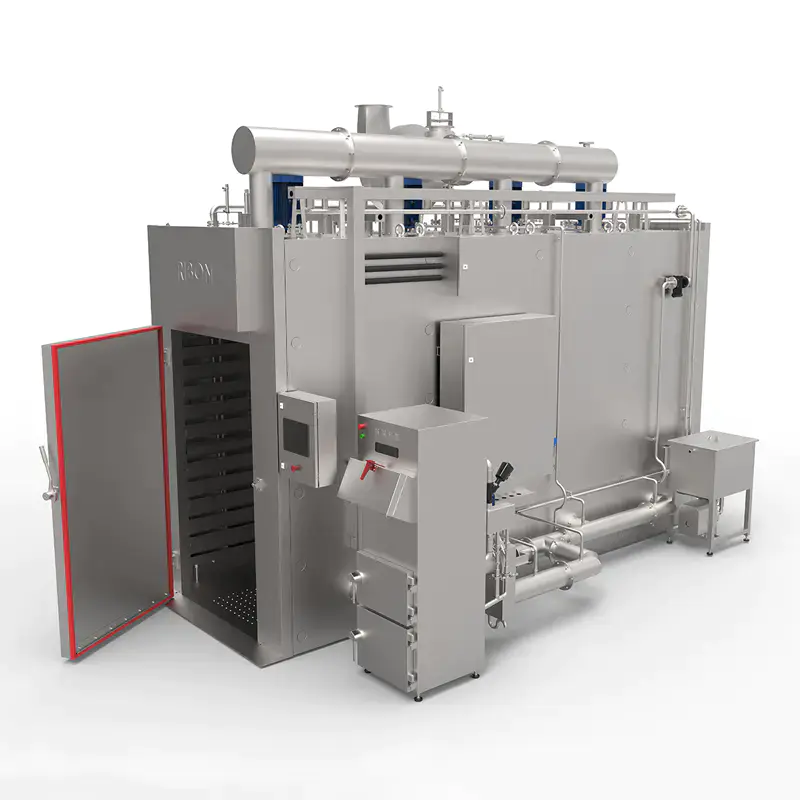
Modern meat processing depends on carefully controlled temperature, humidity, airflow, and drying conditions. These factors influence product safety, appearance, texture, weight loss, flavor development, processing time, and production consistency. In a smokehouse or drying room, even a small variation in climate can create significant differences between batches. Areas with excessive airflow may dry too quickly, while areas with insufficient circulation may remain damp. Uneven temperature distribution can affect color and texture, and uncontrolled humidity may increase drying time or cause unnecessary product loss.
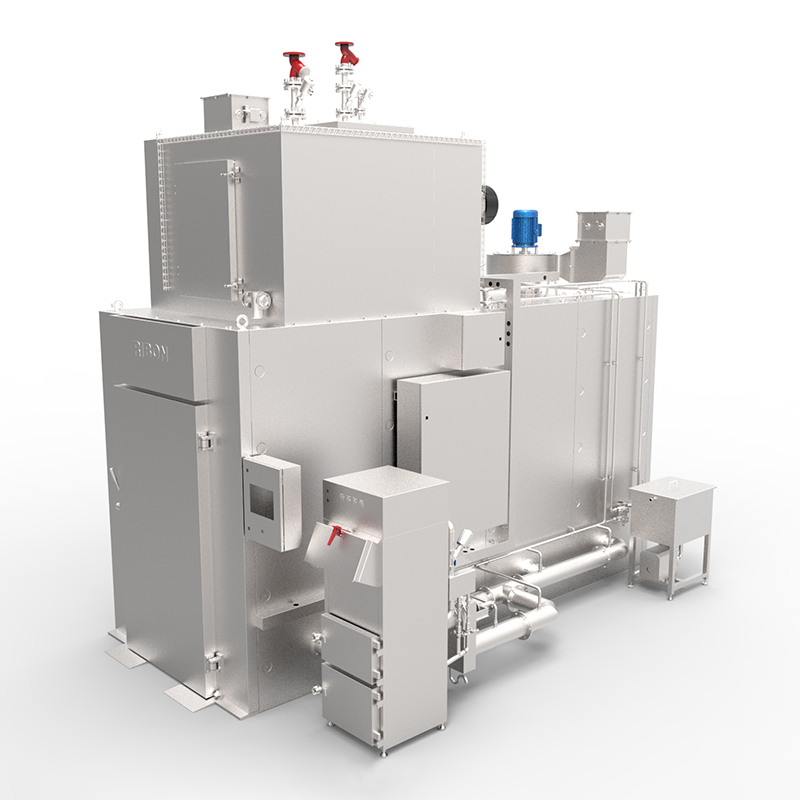
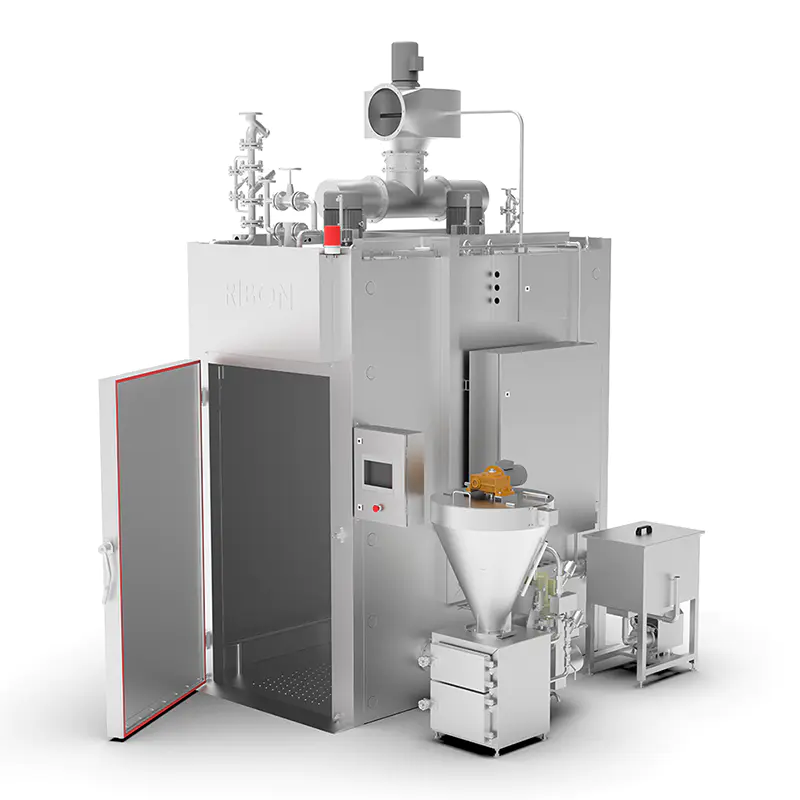
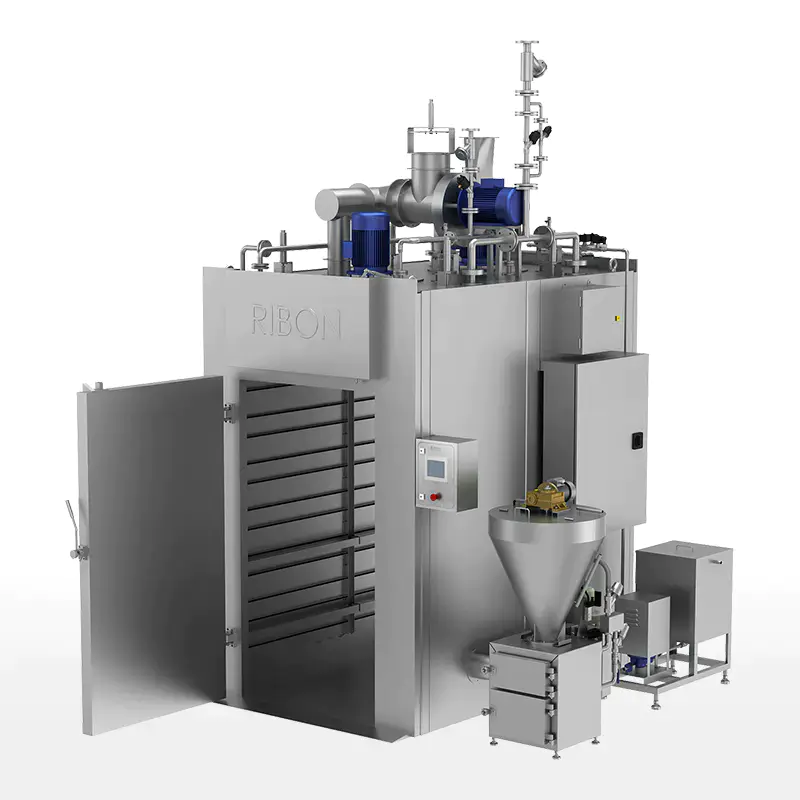
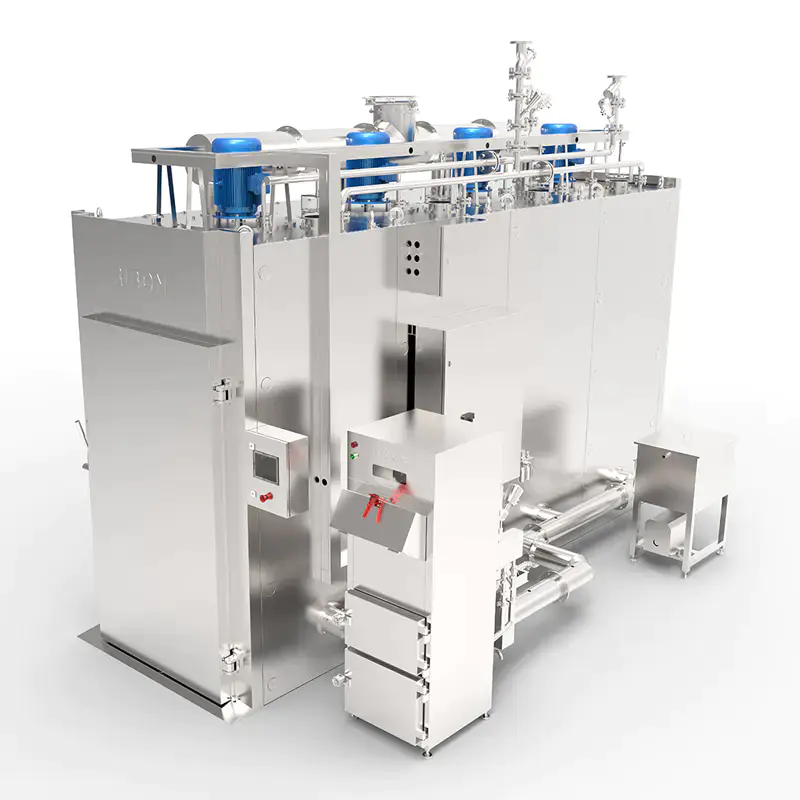
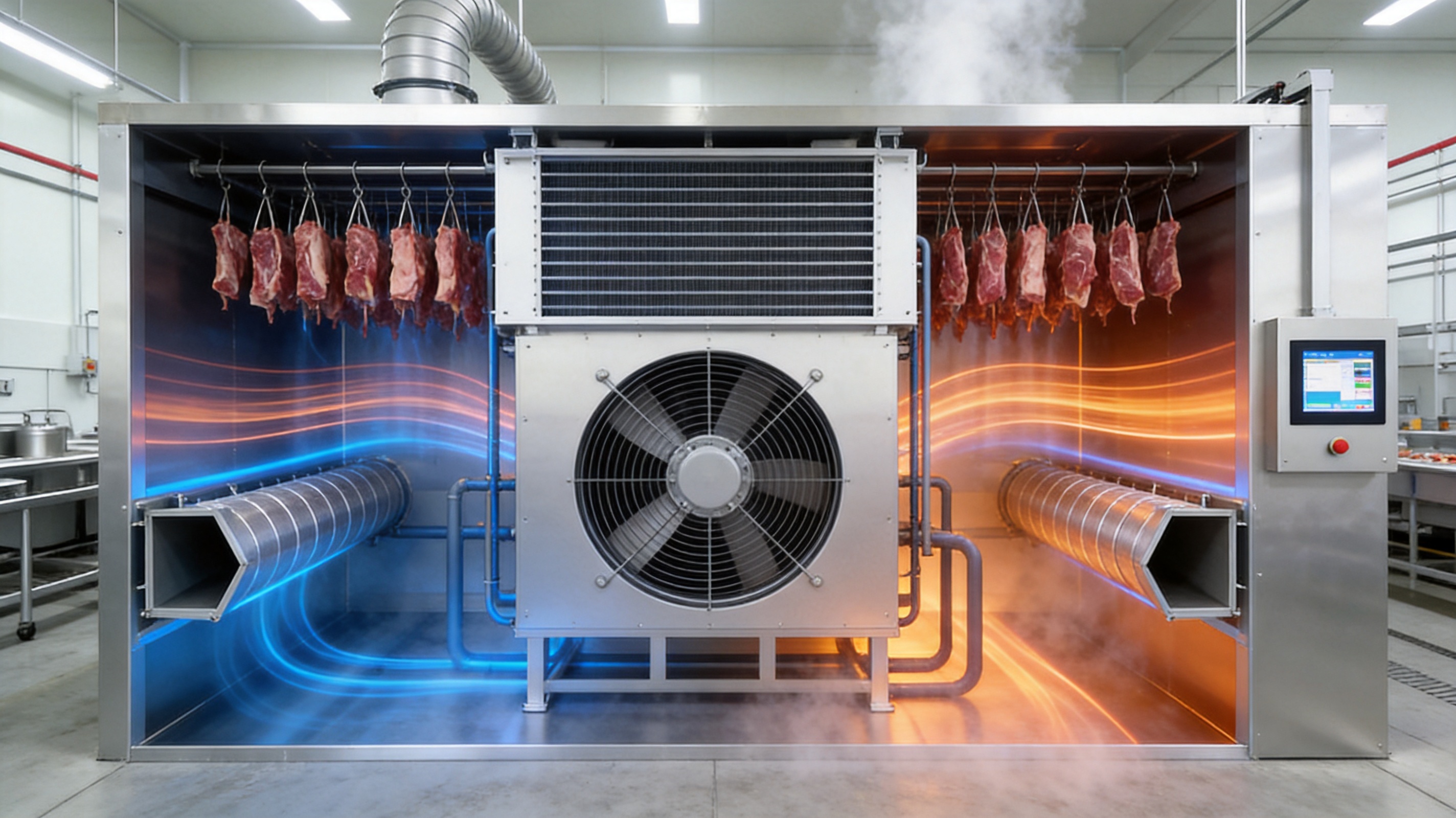
The air conditioning solution developed for meat processing smokehouses is designed to address these challenges through an integrated combination of heating, air circulation, air-volume regulation, air return, exhaust, and automated control systems. Rather than relying on a conventional dryer with limited circulation or manual adjustment, this solution creates a controlled processing environment in which temperature and humidity can be managed according to the requirements of the product.
The system is suitable for meat processing facilities that require reliable drying performance, repeatable results, practical installation, and efficient use of available space. It can also use an existing room as the drying chamber, reducing the need to purchase and install a separate chamber in suitable applications. Its central heat exchanger, large circulation capacity, special air ducts, periodic air movement, controllable air return system, and PLC touchscreen control platform give processors a more precise way to manage smokehouse air conditions.
For manufacturers seeking to improve production consistency while controlling equipment and operating costs, this type of air conditioning solution offers an important alternative to traditional drying arrangements. It combines the essential functions of a drying environment into one coordinated system and provides a platform that can be adapted to different meat processing requirements.
Content
- 1 Why Air Management Is Important in Meat Processing
- 2 Main Components of the Air Conditioning Solution
- 3 Key Advantages Compared with Traditional Drying Methods
- 4 How the System Supports the Smokehouse Process
- 5 Competitive Advantages of the Integrated Design
- 6 Manufacturing Strengths and Engineering Approach
- 7 Installation and Integration Considerations
- 8 Operating Practices for Reliable Results
- 9 Maintenance and Service Considerations
- 10 Applications in Meat Processing Facilities
- 11 How to Evaluate This Solution Against Competing Equipment
- 12 Frequently Asked Questions
- 13 Product: Air Conditioning Solutions
Why Air Management Is Important in Meat Processing
Meat products are sensitive to changes in environmental conditions. During smoking, drying, heating, or related processing stages, the product exchanges moisture and heat with the surrounding air. The speed and uniformity of this exchange depend on several variables, including air temperature, relative humidity, airflow volume, airflow direction, exhaust rate, and the arrangement of products inside the room.
If these conditions are not balanced, the outer surface of the product may dry faster than the inner portion. This can lead to inconsistent texture and an undesirable product appearance. If the air remains too humid, drying may take longer and production capacity may be reduced. If heated air is distributed unevenly, products positioned in different areas of the chamber may finish at different times.
Traditional drying methods may depend on basic heating equipment, natural air movement, multiple fans, or manual damper adjustment. Such arrangements can work in simple applications, but they may provide limited control when the facility handles different products, varying batch sizes, or demanding quality standards. Modern meat processors increasingly need equipment that can respond to changing conditions during the production cycle.
An integrated air conditioning solution is intended to provide that response. It does not treat heating, ventilation, and circulation as independent functions. Instead, these functions are coordinated so that the processing environment can be adjusted as the product changes from one stage to another. This approach supports better control of moisture removal, temperature stability, airflow distribution, and exhaust management.
Main Components of the Air Conditioning Solution
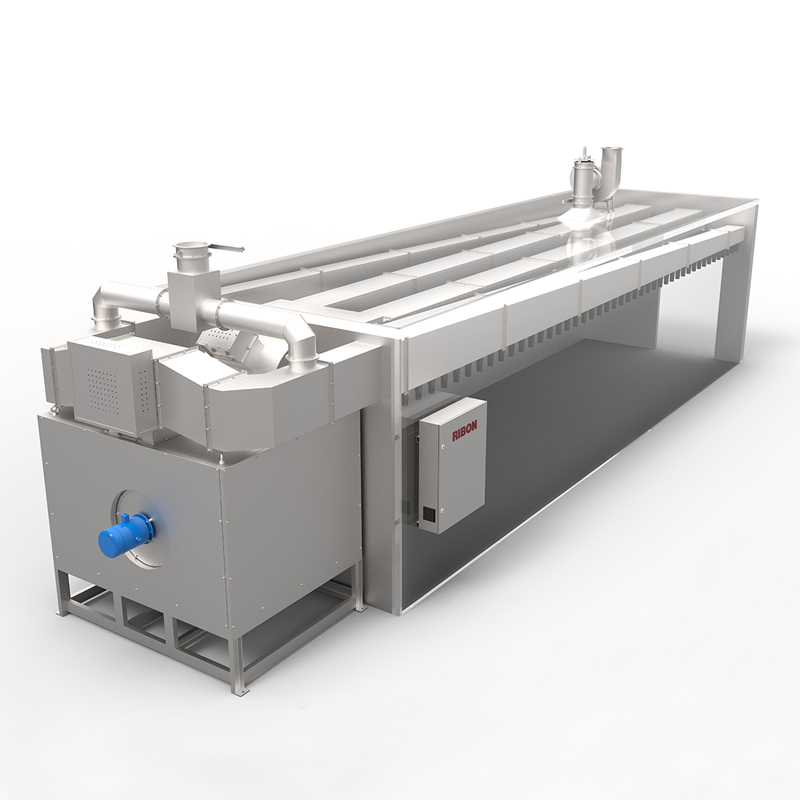
The solution includes a driving system, heating system, air circulation system, air amount dynamic control system, adjustable air return system, and exhaust system. These components work together to create a controlled drying and processing environment.
Driving System
The driving system supports the movement and operation of the air handling equipment. Its role is to maintain stable operation of the circulation and control components throughout the processing cycle. Stable mechanical operation is important because changes in fan performance or air movement can influence the conditions around the products.
By coordinating the driving system with the air circulation and control functions, the equipment can maintain a more predictable airflow pattern. This is particularly important in large rooms or rooms containing a high volume of products, where uncontrolled air movement may result in differences between the front, center, and rear sections of the chamber.
Heating System
The heating system raises and maintains the air temperature required by the process. Heating performance is not only a matter of reaching a target temperature. The heat must also be transferred efficiently and distributed evenly throughout the room. A stable heating system helps reduce temperature fluctuations and supports consistent moisture removal.
The solution adopts a central heat exchanger with a large exchanging area. A larger heat exchange surface can support effective heat transfer and help the system respond to process requirements. It also allows the heating function to operate as part of a centralized air management arrangement rather than relying on isolated heating points that may create hot and cold areas.
Air Circulation System
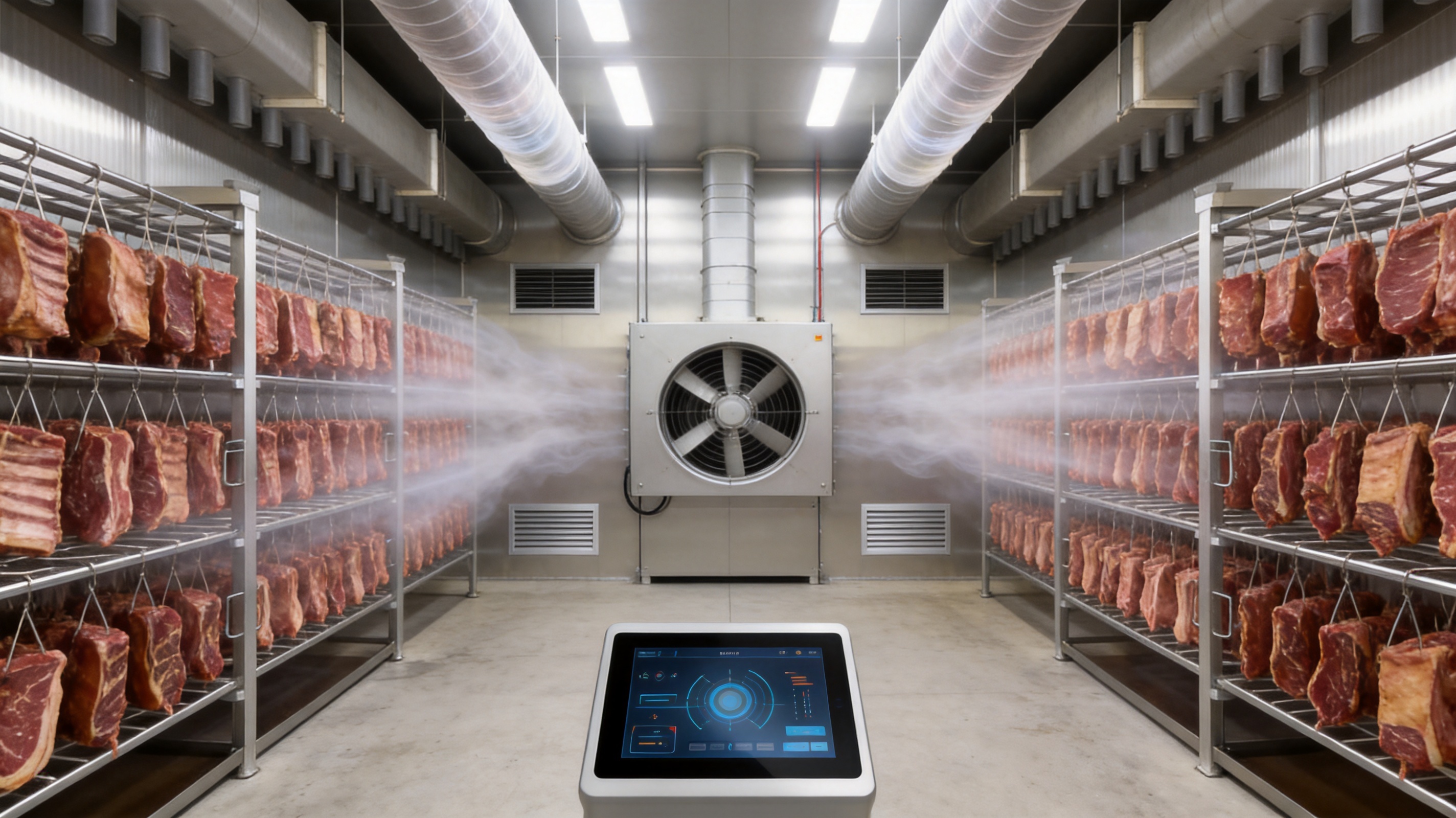
Air circulation is one of the most important features of a smokehouse drying environment. The system uses a single central circulation fan to provide a large air volume and stable air pressure. This configuration is intended to create coordinated air movement throughout the processing room.
A central circulation fan can simplify the airflow arrangement compared with a system that uses multiple independent fans operating without coordinated control. When several fans operate at different rates or directions, the room may experience turbulence, dead zones, or uneven pressure. A central arrangement provides a more unified approach to air movement and can make system control easier.
Dynamic Air-Volume Control
The air amount dynamic control system adjusts the amount of air moving through the processing environment. Different stages of drying may require different airflow conditions. A product at the beginning of a cycle may respond differently from a product that has already lost a substantial amount of surface moisture.
Dynamic air-volume control allows the system to respond to these changing requirements. Instead of maintaining one fixed air quantity during the entire cycle, the system can support a more appropriate relationship between airflow, temperature, humidity, and exhaust. This helps processors avoid excessive airflow when it is not needed and provides stronger control when moisture removal must be increased.
Adjustable Air Return System
The adjustable air return system helps maintain uniform environmental conditions. Returning air in a controlled manner is essential because the air leaving the product area may have different temperature and humidity characteristics from the incoming or heated air.
By managing the return path, the system can help balance the conditions within the room. This supports more consistent air quality and reduces the possibility that some areas will receive air that is significantly different from the rest of the chamber. The controllable air return function is especially valuable when the room contains products with different positions, shapes, or loading densities.
Exhaust System
The exhaust system removes air when ventilation or moisture discharge is required. Effective exhaust management is necessary for controlling humidity and maintaining a suitable processing environment. If moisture-laden air is not discharged at the appropriate time, drying may slow down. If too much conditioned air is exhausted too quickly, energy may be wasted.
The integrated exhaust function allows ventilation to be considered together with heating and air circulation. This coordinated approach supports better process control than a simple arrangement in which exhaust is operated independently without reference to temperature or humidity requirements.
Key Advantages Compared with Traditional Drying Methods
The air conditioning solution offers several advantages over traditional drying methods. These advantages relate to process efficiency, product consistency, equipment utilization, operating convenience, and system control.
| Feature | Air Conditioning Solution | Traditional Drying Approach | Practical Benefit |
|---|---|---|---|
| Temperature and humidity control | Conditions can be controlled according to process requirements | May rely on fixed settings or manual adjustment | More precise processing conditions |
| Air circulation | Central circulation fan with stable air pressure | May use less coordinated airflow arrangements | More uniform air distribution |
| Drying chamber | Can use a suitable existing room as the dryer chamber | May require a separate dedicated chamber | Potential reduction in purchase and installation cost |
| Air direction | Special air ducts on both sides | May provide less balanced airflow | Improved consistency across the room |
| Air movement | Special air damper system supports periodic movement | May maintain one fixed airflow pattern | Better control of drying uniformity |
| Heat transfer | Central heat exchanger with a large exchange area | May use less centralized heat distribution | Efficient and stable heat transfer |
| Operation | PLC and touchscreen control | May require more manual intervention | Easier monitoring and adjustment |
Improved Efficiency
Efficiency in a meat processing smokehouse involves more than energy consumption. It also includes the time required to complete a batch, the quantity of product that can be processed, the frequency of rework, and the stability of production planning. A system that shortens drying time while maintaining consistent results can support more efficient use of labor and equipment.
The described solution is designed to reduce drying time through better management of temperature, humidity, airflow, and heat exchange. The large central heat exchanger supports heat transfer, while the circulation fan and special duct arrangement help distribute the conditioned air. When these functions are coordinated, the system can create more effective drying conditions than a simple heater or uncontrolled ventilation system.
Efficiency also comes from reducing unnecessary manual intervention. Operators do not need to rely only on visual inspection or repeated manual adjustment of dampers and fans. The PLC and touchscreen system gives them a more organized way to monitor and manage the process.
Better Drying Consistency
Consistency is a major advantage of controlled air conditioning. Meat products may vary in size, shape, moisture content, and composition, but the processing environment should remain as stable as possible. Consistent air movement helps reduce differences caused by product position within the room.
The special air ducts installed on both sides are designed to support air consistency across the chamber. The central circulation fan provides large airflow and stable pressure, while the air damper system allows the direction or pattern of movement to be managed periodically. Together, these features help reduce stagnant areas and excessive local airflow.
Better consistency can produce several commercial benefits. It may reduce the number of products that require additional processing, help maintain a more uniform appearance, and support predictable yield. It can also make quality control easier because operators are working with a more repeatable process.
Temperature Control According to Humidity
The system is designed to provide controllable temperature according to humidity conditions. This is an important distinction from a heating arrangement that simply raises the room to a preset temperature. In drying applications, temperature and humidity influence each other, and both need to be considered when determining the appropriate process condition.
When humidity changes, the drying response of the product also changes. A controlled system can adjust the process environment to avoid conditions that are too aggressive or too slow. This provides the flexibility needed for different products and different production stages.
Control according to humidity can also help protect product quality. Excessively rapid surface drying may affect texture, while insufficient moisture removal may extend the processing cycle. A more balanced environment supports gradual and predictable drying.
Lower Infrastructure Cost in Suitable Applications
One notable feature is the ability to use the existing room as the dryer chamber. When the room meets the necessary structural, hygienic, and process requirements, this can reduce the need to purchase a separate drying chamber. The resulting savings may include equipment purchase, room construction, installation work, and the use of additional production space.
This feature can be valuable for facilities that are upgrading an existing smokehouse or adding drying capability to an established plant. Rather than redesigning the entire layout, the processor may be able to install the air conditioning solution within an appropriate room and connect it with the required controls and services.
Actual suitability depends on the dimensions, insulation, hygiene standards, loading arrangement, and operating requirements of the room. Nevertheless, the design provides a practical path for facilities seeking to improve climate control without necessarily purchasing a completely new chamber.
More Effective Use of Heat Exchange
The central heat exchanger with a large exchange area is another important advantage. Heat transfer performance influences how quickly the system can reach and maintain the required temperature. A centralized exchanger also supports more consistent treatment of the air before it is distributed through the room.
Efficient heat exchange can contribute to shorter warm-up periods and more stable operation. It may also reduce the need for excessive heating input caused by poor heat transfer or uneven distribution. When combined with managed airflow, the exchanger helps create a more controlled thermal environment.
Stable Air Pressure and Large Air Volume
The use of one central circulation fan is intended to provide a large air volume and stable air pressure. Stable pressure is important because unpredictable pressure differences can cause uneven airflow through the room. The central fan arrangement supports a coordinated circulation pattern and can simplify the relationship between airflow and damper control.
A large air volume does not mean that maximum airflow must be maintained continuously. The dynamic air-volume control system allows airflow to be adjusted according to the process. This combination of strong circulation capacity and controllability gives the system greater flexibility than a fixed-capacity fan arrangement.
Periodic Air Movement
The special air damper system makes the air move periodically. Periodic changes in airflow direction or distribution can help expose different product surfaces to comparable environmental conditions. This is useful when products are arranged in rows, hung on racks, or positioned at different distances from the air outlets.
Without changes in air movement, certain areas may receive a continuous supply of more conditioned air while other areas receive less. Periodic movement helps balance these differences and supports a more uniform drying pattern. It also allows the system to respond to the changing moisture distribution within the room.
Automated Operation
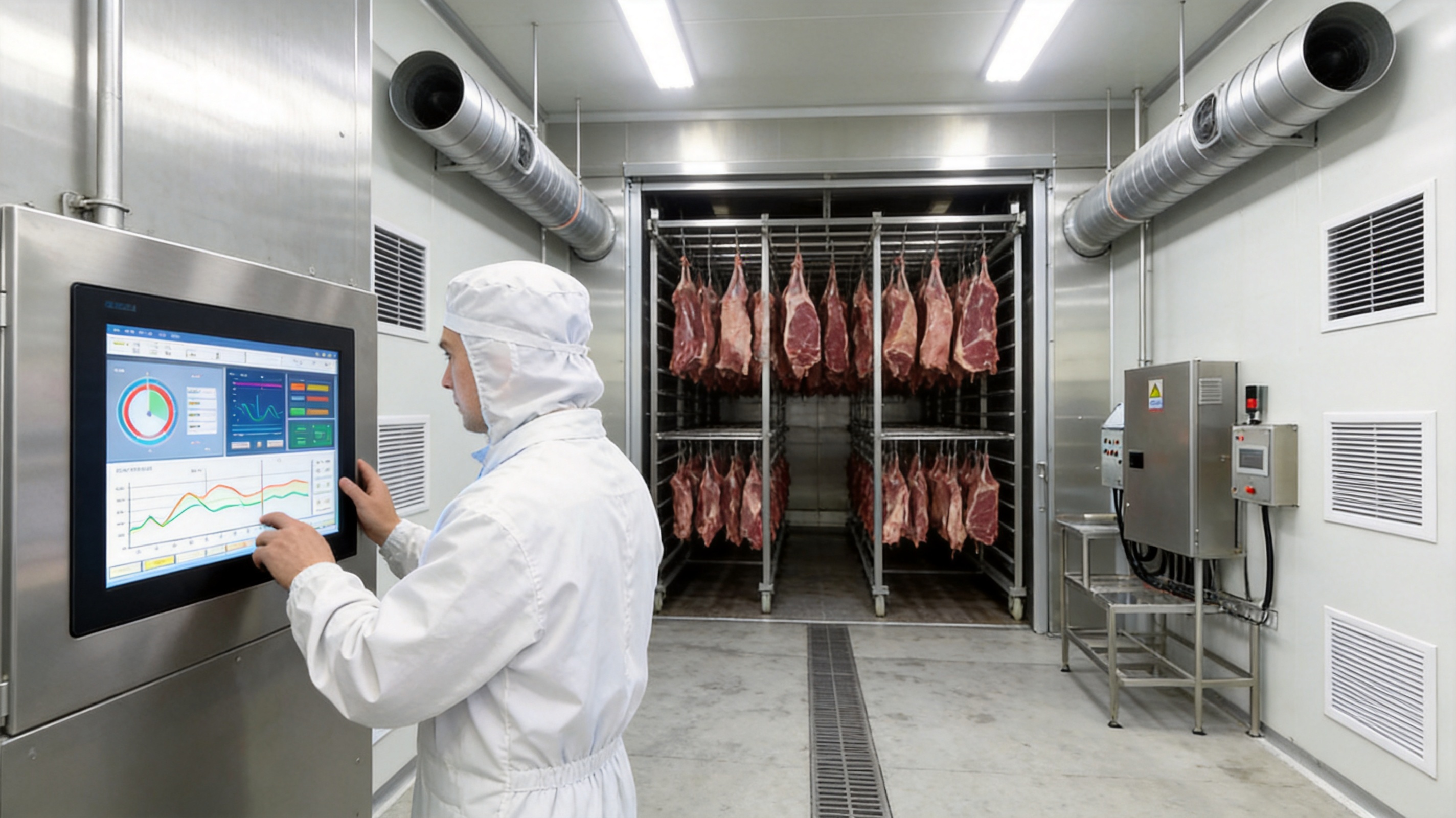
The PLC and touchscreen control system improves the usability of the equipment. Operators can manage the main processing functions through a centralized interface instead of relying on separate manual controls. A touchscreen can also make operating information easier to understand, particularly when the system includes several interacting functions.
Automation supports repeatability. Once a suitable process program has been established, it can be applied consistently to later batches. This reduces dependence on individual operator habits and makes it easier to standardize production procedures.
Automation does not remove the importance of trained personnel. Operators still need to select appropriate settings, inspect products, confirm hygienic conditions, and respond to unusual situations. However, the control system provides a stronger technical foundation for those tasks.
Air Conditioning Solutions
How the System Supports the Smokehouse Process
The air conditioning solution can be understood as a controlled environmental platform within the meat processing facility. It supports the conditions required for drying and related smokehouse operations by coordinating heat, air movement, air return, and exhaust.
Initial Conditioning
At the beginning of a cycle, the system can help establish the required room temperature and airflow condition. The central heat exchanger transfers heat to the circulating air, while the fan distributes the air through the duct system. Establishing a stable environment before or during product loading can help reduce the initial variation between batches.
Moisture Removal
As products release moisture, the air surrounding them becomes more humid. The air return and exhaust functions manage this moisture-laden air. The dynamic air-volume system can support the required rate of circulation, while controlled exhaust helps remove excess humidity when necessary.
The objective is not simply to remove as much moisture as possible. The objective is to remove moisture at a rate appropriate for the product and process stage. Excessively fast removal may negatively affect product quality, while excessively slow removal may reduce productivity. Coordinated control supports a more balanced approach.
Uniform Distribution
The air ducts on both sides, central fan, and damper arrangement work together to improve the distribution of conditioned air. Uniform distribution is particularly important in rooms with substantial product loading. The system is designed to reduce differences between areas near the air outlet and areas farther away from it.
Process Adjustment
Different products may require different temperatures, humidity conditions, airflow rates, or drying times. The control system provides the flexibility to adjust these settings according to the production requirement. This is a significant advantage for processors that manufacture several product types rather than operating a single fixed process.
Competitive Advantages of the Integrated Design
Equipment buyers often compare systems based on price, capacity, energy use, automation, and expected product quality. An integrated air conditioning solution can provide a stronger overall value because it combines several functions that might otherwise be purchased and managed separately.
Integrated Rather Than Fragmented Operation
A fragmented drying arrangement may contain an independent heater, separate fans, manually operated dampers, and a basic exhaust outlet. Each component may function individually, but the overall result can be difficult to coordinate. The operator may need to adjust several devices to respond to one process change.
The integrated design connects heating, circulation, air-volume control, air return, exhaust, and automation. This reduces the gap between process requirements and equipment response. It also gives the operator a clearer view of the entire system.
Greater Adaptability
A traditional dryer may be designed around a fixed process and a narrow product range. The air conditioning solution is more adaptable because temperature and humidity can be controlled according to the requirements of different products. Airflow and air return can also be adjusted as conditions change.
This adaptability may help processors introduce new products, modify recipes, or change batch sizes without replacing the entire drying system. It also supports more flexible production planning.
Efficient Space Utilization
Using an existing room as the dryer chamber can make better use of the factory building. This is especially valuable where floor area is limited or where the cost of constructing new processing rooms is high. The system may allow a facility to upgrade its process capability while preserving other areas for production, storage, packaging, or maintenance.
Potentially Lower Total Ownership Cost
Total ownership cost includes the purchase price, installation, energy use, labor, maintenance, downtime, and product losses. A low-cost machine may become expensive if it requires frequent manual adjustment or produces inconsistent batches. Conversely, an integrated system may provide value through shorter processing times, less rework, better use of space, and easier operation.
The possibility of using a current room, combined with centralized heating and circulation, can reduce certain infrastructure expenses. The PLC control platform may also reduce labor requirements associated with manual monitoring. Actual savings depend on the plant layout, product type, operating schedule, and local energy conditions, but these are important factors when comparing competing technologies.
Manufacturing Strengths and Engineering Approach
The product is supplied by Zhejiang Ribon Intelligent Equipment Co., Ltd., a Chinese manufacturer specializing in meat processing machinery. The company was founded in 2003 by Mr. Shi Ming and has focused on the research, development, and manufacturing of equipment for the meat processing industry.
Its product scope includes meat processing smokehouses, vacuum tumblers, and cutting and deboning solutions. This product focus gives the company experience across several connected stages of meat processing. Knowledge of smokehouse operation can be considered alongside the requirements of upstream preparation and downstream cutting or handling.
Long-Term Industry Focus
Since its establishment, the company has concentrated on meat processing machinery rather than treating the sector as a secondary application. Long-term specialization supports a better understanding of the production challenges faced by processors, including process consistency, equipment practicality, product handling, cleaning requirements, and production efficiency.
The air conditioning solution reflects this focus by addressing the complete drying environment rather than only one technical function. Its design considers the relationship between heat exchange, airflow, air return, exhaust, and operator control.
Research and Development
The company emphasizes research, development, and continuous optimization. Technologies and solutions have been improved over time and are used in meat processing applications around the world. Continuous development is important because meat processors face changing requirements involving product variety, energy management, production capacity, automation, and environmental responsibility.
For an air conditioning solution, ongoing development may involve improving airflow distribution, refining control logic, optimizing heat exchange, and making the equipment easier to operate. The use of a PLC and touchscreen interface demonstrates the importance of automation and practical user control in the product design.
Practical Equipment Design
The company is committed to developing better-designed and more practical solutions. Practicality is especially important in food processing equipment because machines must operate reliably in demanding production environments while remaining accessible for inspection, cleaning, service, and adjustment.
A practical smokehouse air conditioning solution should be evaluated not only by its technical specifications but also by how well it fits the facility, how easily operators can understand the controls, and how effectively it supports everyday production. The ability to use an existing room as a dryer chamber, when appropriate, is an example of a design concept focused on practical implementation.
International Application Experience
The company has exported meat processing solutions worldwide since 2003. International application experience can expose a manufacturer to different production scales, facility layouts, climate conditions, product types, and customer expectations. This experience may contribute to more flexible project planning and a broader understanding of installation requirements.
For buyers, international experience can also indicate that the equipment has been developed for use beyond one local production environment. However, each project still requires careful evaluation of local regulations, utilities, room construction, hygiene standards, and product specifications.
Environmental Responsibility
The company supports environmental responsibility through ongoing technological and service improvements. In meat processing, environmental performance can be influenced by energy efficiency, processing time, product yield, equipment lifespan, maintenance requirements, and resource utilization.
The air conditioning solution contributes to this broader objective by supporting efficient heat exchange, controlled airflow, potential reduction in drying time, and efficient use of existing rooms. These features do not eliminate energy consumption, but they provide tools for managing the process more effectively and avoiding unnecessary operation.
Installation and Integration Considerations
The solution can typically be integrated with existing HVAC infrastructure or other plant systems, subject to a technical evaluation. Integration may involve reviewing the room dimensions, insulation, ventilation routes, available utilities, control requirements, loading pattern, and production workflow.
Existing Room Assessment
When an existing room is intended to serve as the dryer chamber, its construction must be assessed carefully. The room should be suitable for the required temperature and humidity conditions and should support hygienic meat processing practices. The internal surfaces, doors, drainage, lighting, access, and cleaning procedures all influence whether the room is appropriate.
Room volume and product loading must also be considered. A room that is too large for the available circulation capacity may not achieve the desired airflow performance, while a heavily loaded small room may require careful arrangement to avoid blocked ducts or restricted air return.
HVAC Integration
Integration with an existing HVAC system may provide benefits such as improved energy coordination, centralized climate control, and reduced installation requirements. The existing system can potentially support or complement heating, ventilation, or air management functions, depending on the configuration.
Integration should not be assumed to be identical for every factory. The technical team should review air volume, pressure, temperature range, humidity requirements, exhaust capacity, control interfaces, and safety functions. In some facilities, the smokehouse air conditioning system may operate as an independent process system while communicating with the broader HVAC infrastructure.
Control System Coordination
The PLC and touchscreen system can serve as the main operating platform for the air conditioning solution. If the equipment is connected to a wider factory control system, the communication method and responsibilities of each control layer should be defined clearly.
A well-planned control arrangement should make it easy for operators to identify the active process stage, current settings, alarms, and required actions. It should also prevent conflicting commands between the smokehouse system and the general HVAC system.
Airflow Planning
Airflow planning is essential for achieving the intended performance. The location of air ducts, return openings, exhaust points, racks, hooks, trolleys, and product loads should be considered together. Products should not block the air path or create unnecessary resistance.
The special air ducts on both sides are designed to support air consistency, but their effectiveness also depends on correct room arrangement and loading practice. Operators should follow suitable loading procedures and avoid placing equipment or materials in areas that restrict circulation.
Operating Practices for Reliable Results
Although automation improves control, good operating practices remain important. Operators should verify that the room is clean, the air paths are unobstructed, doors are properly closed, and product loading is consistent from batch to batch.
Before starting a cycle, the operator should confirm the selected temperature, humidity-related settings, airflow condition, exhaust mode, and process duration. The touchscreen interface can support this verification by presenting the operating parameters in a centralized form.
During processing, operators should monitor system status and respond to alarms or unusual readings. Product appearance, texture, and weight may also provide useful information when evaluating the process. If a product requires a different drying profile, the settings should be adjusted through an established process-development procedure rather than through uncontrolled trial and error.
After processing, the room and relevant equipment should be cleaned according to the facility’s hygiene program. Maintenance personnel should inspect fans, dampers, heat exchange surfaces, ducts, sensors, control cabinets, and exhaust components according to the service schedule.
Maintenance and Service Considerations
Regular maintenance helps preserve airflow, heat transfer, control accuracy, and system reliability. Dust, grease, moisture, or residue can reduce the effectiveness of heat exchange surfaces and air passages. Inspection and cleaning should therefore be treated as part of normal production management.
The central circulation fan should be inspected for abnormal vibration, noise, or performance changes. Since the fan provides the main airflow, a decline in its performance can affect pressure balance and product uniformity. Bearings, drives, and related mechanical components should be serviced according to the manufacturer’s recommendations.
Air dampers should move correctly and maintain their intended positions. A damper that sticks or fails to respond may alter the airflow pattern and create uneven drying. Air return and exhaust components should also be checked for obstruction or damage.
The heat exchanger should be kept in suitable condition so that its exchanging area remains effective. Reduced heat transfer may cause longer warm-up periods, unstable temperature, or higher energy demand. Temperature and humidity sensors should be checked periodically to ensure that the control system is receiving accurate information.
Control system maintenance includes checking the PLC, touchscreen, wiring, communication connections, alarms, and stored process settings. Backup procedures for control parameters can help reduce downtime if a component must be replaced or reset.
Applications in Meat Processing Facilities
The air conditioning solution is intended for meat processing smokehouse environments and can support drying-related operations for a range of products. The exact operating profile depends on product formulation, product dimensions, loading density, target moisture level, and the desired appearance and texture.
It can be considered by new facilities planning an integrated smokehouse area, as well as by established processors upgrading traditional drying rooms. It may also be suitable for manufacturers that need more consistent production but do not want to invest in a completely separate dryer chamber.
Facilities producing multiple categories of meat products may benefit particularly from the system’s adjustable conditions. Different product programs can be developed and managed through the control system, allowing the equipment to support varied production requirements.
How to Evaluate This Solution Against Competing Equipment
When comparing smokehouse air conditioning equipment, buyers should look beyond the initial purchase price. The most relevant comparison should include airflow uniformity, heating stability, humidity control, control-system usability, integration potential, room utilization, maintenance access, service support, and expected production results.
A competing system may have a large nominal heating capacity but provide limited air distribution. Another system may offer automated controls but lack an effective air return arrangement. A basic dryer may appear inexpensive but require a new chamber, additional infrastructure, or more manual labor. The integrated design described here should be evaluated according to how its individual features work together.
Key questions include whether the system can maintain stable air pressure, whether air can be distributed consistently throughout the room, whether the airflow pattern can change periodically, whether temperature and humidity can be adjusted according to the process, and whether an existing room can be used effectively.
Buyers should also ask how the equipment will be integrated into the plant, what information is available through the PLC touchscreen, how maintenance is performed, and what support is available during installation and commissioning. These factors can have a strong effect on long-term value.
Frequently Asked Questions
What is the purpose of the meat processing air conditioning solution?
Its purpose is to create and maintain controlled air conditions for meat processing smokehouse and drying applications. It combines heating, air circulation, dynamic air-volume control, air return, exhaust, and automated operation.
How is it different from a traditional dryer?
Traditional dryers may depend on fixed heating, less coordinated airflow, or manual control. This solution uses a central heat exchanger, one central circulation fan, special air ducts, periodic air movement, controllable air return, and PLC