

 English
 русский
 Español
 عربى

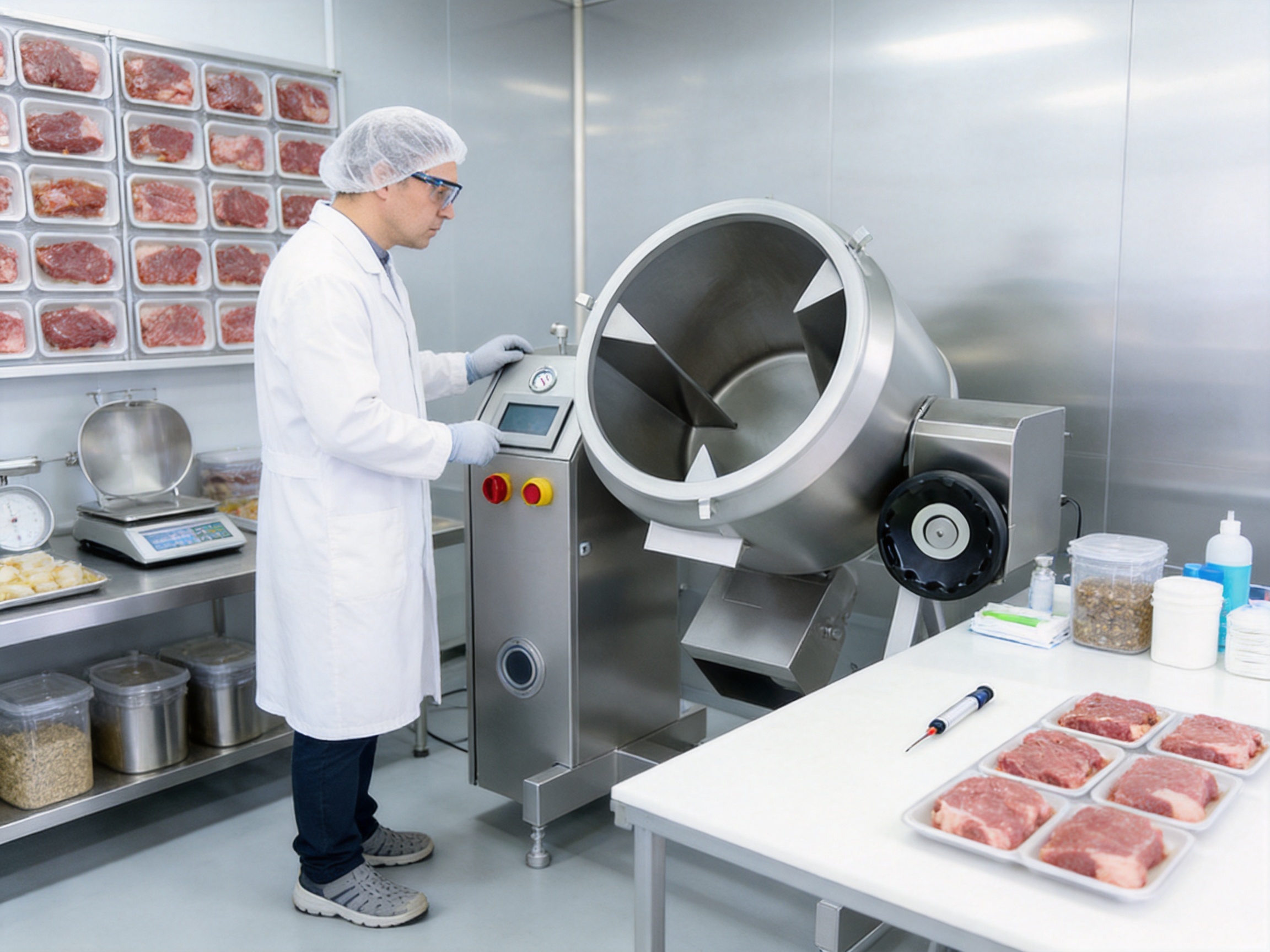
Modern meat processors need equipment that can improve flavor, texture, yield, and production consistency without making daily operations unnecessarily complicated. A vacuum tumbler is one of the most useful machines for achieving these goals because it combines mechanical massaging, controlled rotation, and vacuum processing in a single system. The Restaurant Commercial 150L Vacuum Tumbler RGR-150VF is designed for restaurants, small and medium-sized processors, product development departments, and laboratory testing environments that require dependable treatment of meat in manageable batches.
With a 150-liter drum, adjustable rotation from 3 to 17 revolutions per minute, continuous vacuum capability, programmable rotation direction and time, and interchangeable paddle options, this model provides a flexible platform for a wide range of meat products. It can be used for marinated pork, beef, poultry, prepared foods, sausage ingredients, cooked-meat products, and other recipes that benefit from improved brine distribution and protein extraction.
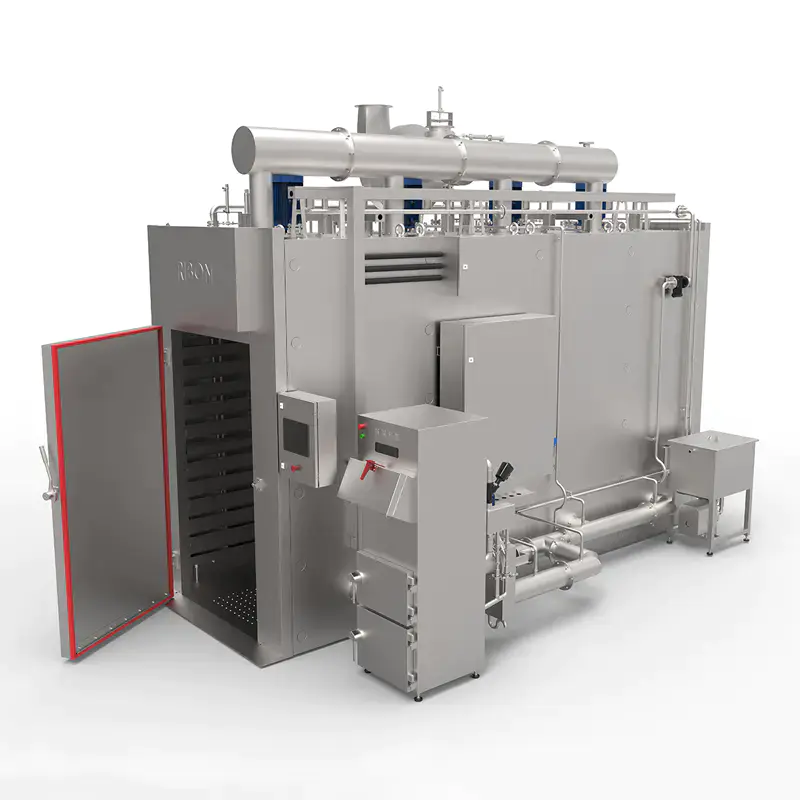
The machine is manufactured by Zhejiang Ribon Intelligent Equipment Co., Ltd., a Chinese meat processing machinery specialist founded in 2003. The company focuses on the research, development, and manufacture of meat processing smokehouses, vacuum tumblers, and cutting and deboning solutions. Its long-term experience, export activity, and continuous product optimization support a design approach centered on practical operation, adaptable processing, and customer value.
This article explains the working principle, principal advantages, operating flexibility, manufacturing strengths, application possibilities, safety considerations, and selection value of the 150-liter vacuum tumbler. It also compares the characteristics of this type of equipment with common alternatives and answers frequently asked questions from restaurant operators, processors, and test kitchens.
Content
- 1 Understanding the Role of a Vacuum Tumbler
- 2 Product Overview: RGR-150VF 150-Liter Vacuum Tumbler
- 3 How the Machine Works
- 4 Key Advantages Over Basic or Less Flexible Equipment
- 5 Comparison with Common Alternatives
- 6 Applications in Restaurants and Commercial Kitchens
- 7 Manufacturing Strengths and Engineering Approach
- 8 Process Control for Better Results
- 9 Hygiene, Cleaning, and Maintenance
- 10 Safety Precautions for Operators
- 11 Operational and Commercial Value
- 12 Why the 150-Liter Format Is Suitable for Product Development
- 13 Recommended Selection and Implementation Procedure
- 14 Frequently Asked Questions
- 14.1 What is the capacity of the RGR-150VF vacuum tumbler?
- 14.2 What is the rotation-speed range?
- 14.3 Can the rotation direction be changed?
- 14.4 What paddle options are available?
- 14.5 How long does meat typically remain in a vacuum tumbler?
- 14.6 Does a higher rotation speed always produce better results?
- 14.7 Can the machine be used for laboratory testing?
- 14.8 What types of meat can be processed?
- 14.9 What safety measures are important?
- 14.10 How should the tumbler be cleaned?
- 14.11 What makes this machine different from a simple soaking tank?
- 14.12 Is the machine suitable for a restaurant with several menu items?
- 14.13 How can a buyer evaluate whether 150 liters is sufficient?
- 15 Conclusion
- 16 References
- 17 Product: Vacuum Tumbler RGR-150VF
Understanding the Role of a Vacuum Tumbler
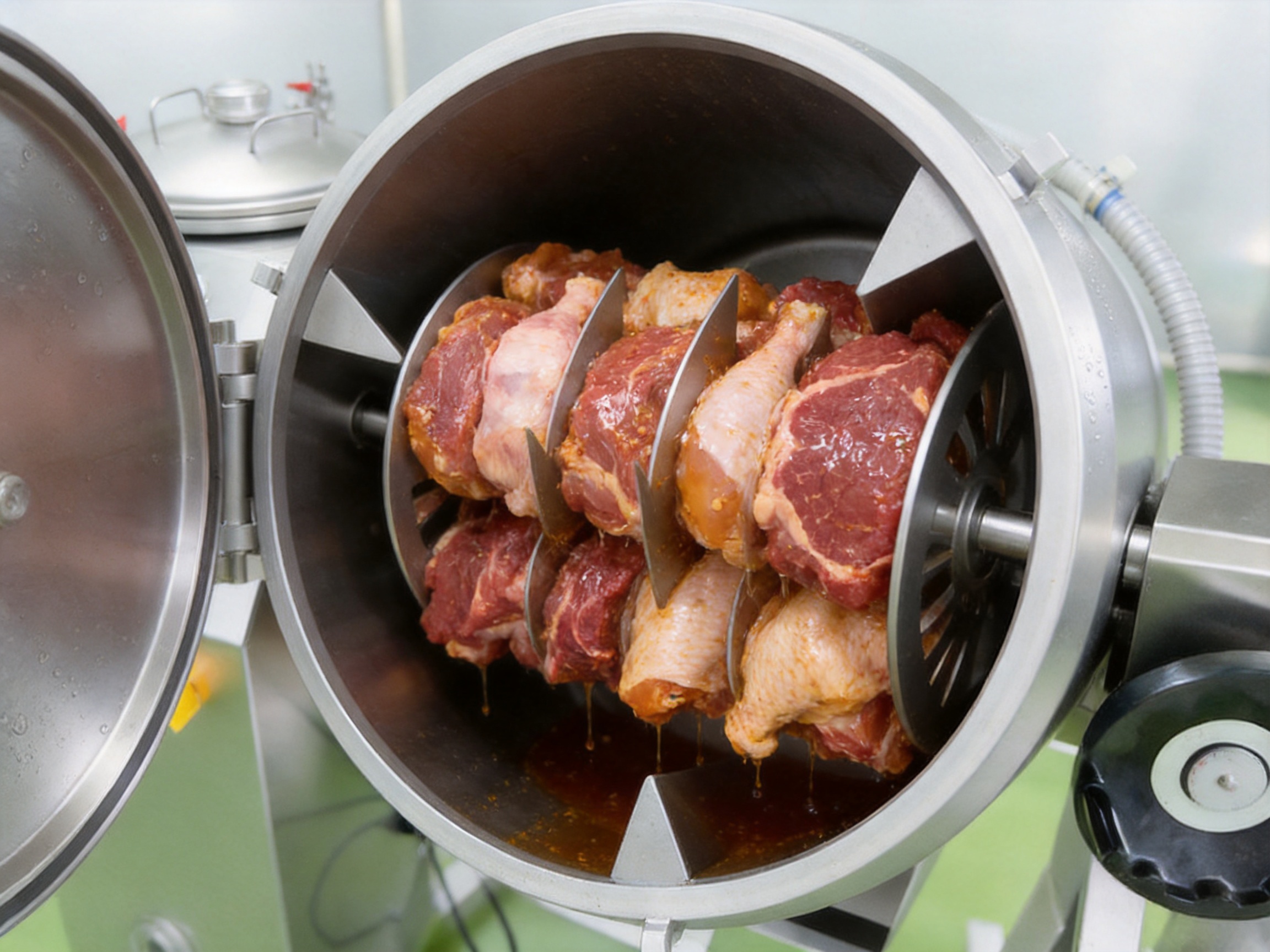
A vacuum tumbler is a mechanical processing machine used to massage meat while it rotates inside a sealed drum. During processing, the machine can remove air from the drum and create a vacuum environment. The reduced-pressure condition helps the meat absorb brine, marinades, seasonings, and functional ingredients more effectively. At the same time, the movement of the meat against the drum and paddles promotes physical tenderization and improves contact between the product and the liquid.
Traditional soaking methods rely mainly on diffusion. The meat is placed in a container with brine or marinade, and the liquid gradually moves into the product. This method can be slow and may produce uneven results, especially when the pieces differ in size or when the surface of the meat is not sufficiently exposed to the marinade.
A tumbler adds controlled mechanical action to the process. As the drum rotates, the meat is lifted, moved, and gently dropped or rolled. The rotating paddle increases circulation inside the drum, while the alternating vacuum and natural-pressure conditions support the movement of the brine into the meat structure. This combination can shorten processing time and improve uniformity when the machine is operated according to an appropriate recipe.
The vacuum does not replace proper recipe development, food safety procedures, or temperature control. Instead, it provides an additional processing advantage. The final result depends on several factors, including meat type, piece size, loading quantity, brine composition, product temperature, rotation speed, vacuum level, processing duration, and the selected paddle configuration.
Product Overview: RGR-150VF 150-Liter Vacuum Tumbler
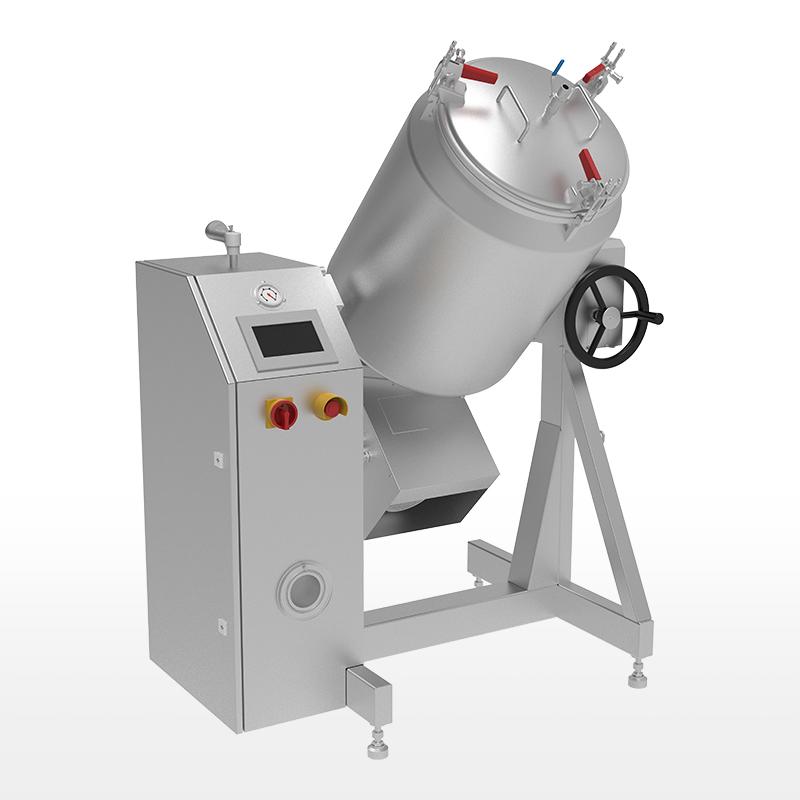
The RGR-150VF is a restaurant commercial vacuum tumbler with a 150-liter drum volume. It is intended for restaurant production, pilot-scale manufacturing, product development, and laboratory testing. Its capacity is large enough to support meaningful production batches while remaining suitable for businesses that do not need a large industrial tumbler.
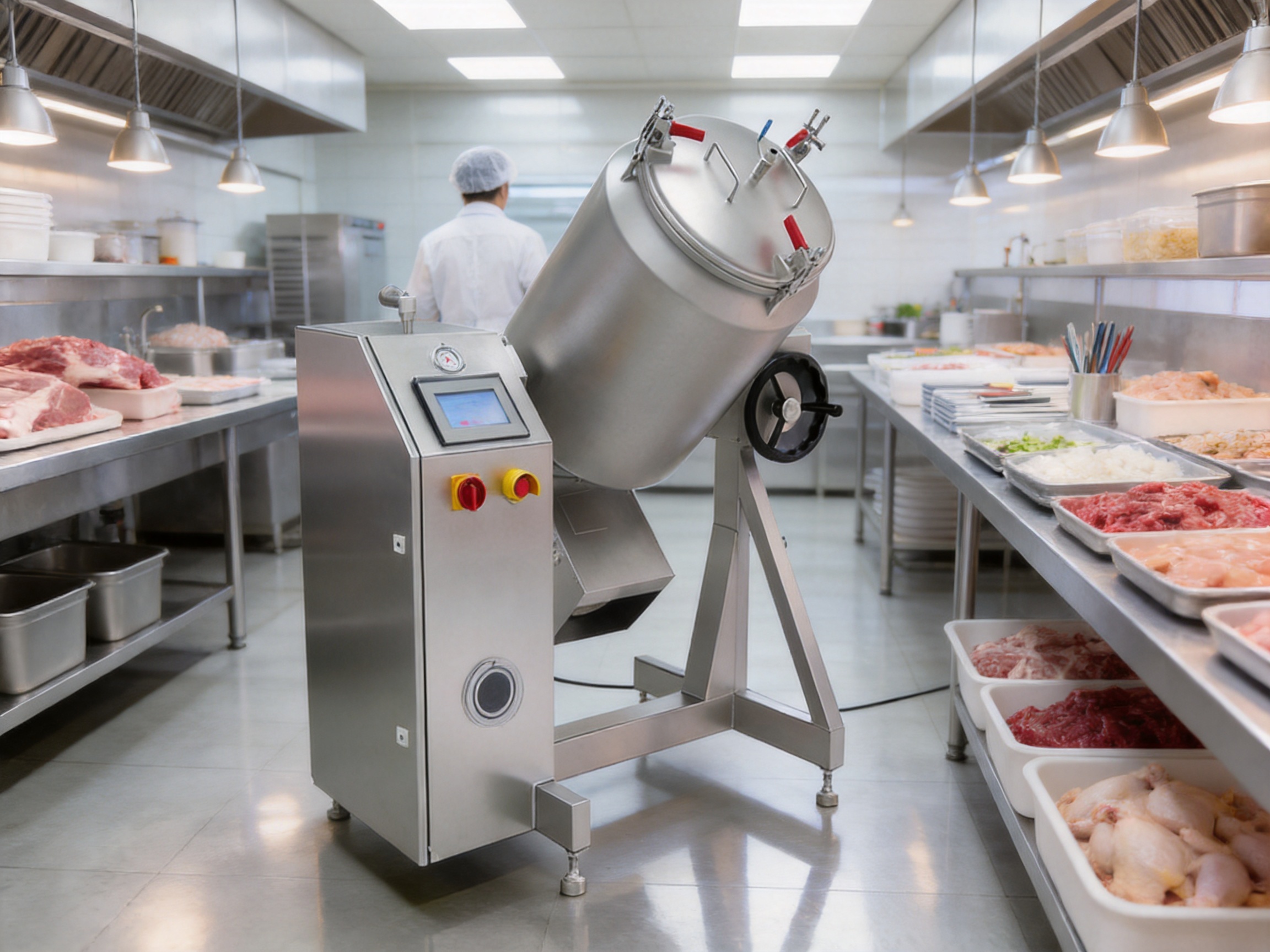
The machine is particularly appropriate for users who need flexibility. A restaurant may use it for marinated chicken, pork strips, beef cuts, or prepared meat products. A small processor may use it for regular production runs. A laboratory or research kitchen may use it to test different brines, marination times, rotation programs, and product formulations before scaling up to larger machinery.
The model combines several important functions in one unit:
• Continuous vacuum processing.
• Adjustable rotation speed from 3 to 17 revolutions per minute.
• Adjustable rotation direction.
• Programmable rotation time.
• Optional V-shaped or blade-shaped paddles.
• A 150-liter drum volume.
• Alternating vacuum and natural-pressure processing capability.
These functions give operators control over the intensity and duration of treatment. A delicate product may require slower movement and a shorter cycle, while a tougher cut or a product requiring stronger extraction may benefit from a longer program and a different paddle design.
Vacuum Tumbler RGR-150VF
How the Machine Works
Mechanical Massaging and Rotation
When the drum rotates, the meat is carried upward and then moves downward under gravity. This repeated movement exposes different surfaces of the product to the brine and creates a massaging effect. The rotating paddle supports circulation and helps prevent the product from remaining stationary in one area of the drum.
Mechanical massaging can improve the distribution of marinade across the surface of each piece. It can also encourage the extraction and dissolution of myofibrillar proteins, often described in processing terms as the extraction of salt-soluble proteins or the development of a protein film. These proteins can contribute to binding, moisture retention, sliceability, and the texture of certain processed meat products.
Vacuum and Natural-Pressure Conditions
The RGR-150VF is designed to process meat under vacuum and natural-pressure conditions alternately. Under vacuum, air is removed from the drum and from spaces around the meat. This can help the brine make closer contact with the product. When the pressure returns toward normal, the pressure difference may support further movement of the liquid into surface pores and product structure.
The alternating pressure effect works together with the mechanical action of the drum. It is not simply a matter of placing meat inside a vacuum chamber. The product is moved, massaged, and exposed to changing pressure conditions during the same cycle. This integrated approach is one reason vacuum tumbling is often preferred over static marination for commercial meat preparation.
Brine Infiltration and Protein Extraction
The primary functional objective of many vacuum tumbling processes is improved brine infiltration. Salt, water, spices, phosphates where legally and technically appropriate, flavorings, and other ingredients need to be distributed consistently throughout the product. A well-controlled tumbler can help reduce differences between pieces and improve repeatability from batch to batch.
The process may also accelerate the dissolution and extraction of relevant proteins. In products such as formed meats, restructured meat, and some cured preparations, extracted proteins can help bind pieces together and improve the finished texture. The exact result depends on the formulation and on the operator’s control of time, temperature, speed, and loading.
Key Advantages Over Basic or Less Flexible Equipment
1. Integrated Vacuum Processing
One of the most important advantages of the RGR-150VF is that vacuum processing is integrated into the tumbler. A basic open drum or ordinary mixing vessel may provide mechanical movement, but it cannot provide the same reduced-pressure environment. An external soaking tank may allow marination, but it generally does not provide the same combination of vacuum, controlled rotation, and repeated massaging.
Integrated vacuum processing can reduce the need for separate equipment and simplify the production sequence. Operators can load the product, add the brine, select the program, and complete the treatment in one dedicated machine. This can support better workflow organization and reduce unnecessary transfers between containers.
2. Wide Rotation-Speed Range
The adjustable speed range of 3 to 17 revolutions per minute provides more control than equipment with a single fixed speed. A low speed can be useful for delicate pieces that may be damaged by excessive movement. A higher speed can be selected when more intensive mixing or massaging is required, provided that the product can withstand the mechanical action.
Speed adjustment also helps product developers identify the best processing conditions for new recipes. Instead of using the same motion for every product, the operator can compare slow, medium, and faster programs and evaluate the effect on appearance, moisture retention, tenderness, and yield.
3. Programmable Direction and Time
The ability to set rotation direction and time improves process control. Changing direction can help redistribute the product inside the drum and reduce the possibility that pieces will remain in a repetitive movement pattern. Time control supports recipe consistency because the operator can establish a defined cycle rather than relying on visual estimation.
For restaurants, this can make staff training easier. Once an approved program has been developed, different employees can follow the same settings. For processors and laboratories, directional and time controls provide additional variables for testing and optimization.
4. Interchangeable Paddle Options
The availability of V-shaped and blade-shaped paddle options is a significant flexibility feature. Different meat products respond differently to mechanical movement. A paddle that is suitable for larger pieces may not be the best choice for thin slices, soft poultry, or a formulation containing fragile ingredients.
A V-shaped paddle may support a particular lifting and rolling pattern, while a blade-shaped paddle may create a different circulation and contact effect. The correct selection depends on the product, batch size, target texture, and desired processing intensity. Offering paddle alternatives allows one machine to serve more than one product category.
5. Practical 150-Liter Capacity
A 150-liter drum occupies a useful position between small laboratory equipment and large industrial tumblers. It can support commercial restaurant production without requiring the investment or floor space associated with a much larger line. It is also large enough to produce meaningful test batches for new recipes and process trials.
Capacity should always be evaluated together with the actual density and characteristics of the product. Drum volume is not the same as recommended meat load. Operators should follow the manufacturer’s loading guidance and avoid overfilling, because excessive loading can restrict product movement and reduce the effectiveness of vacuum and massage action.
6. Suitability for Diverse Applications
A flexible vacuum tumbler can be used for many products instead of being dedicated to one recipe. This is valuable for restaurants and smaller processors whose product range changes frequently. The same machine may be used for marinated pork one day, seasoned chicken the next day, and a product-development trial later in the week.
Such flexibility can improve equipment utilization and reduce the need to purchase separate machines for different treatments. It can also support seasonal products, limited-time menu items, and customer-specific formulations.
Comparison with Common Alternatives
Several methods can be used to marinate or tenderize meat, but they do not provide the same combination of functions. Static soaking is simple and inexpensive, but it may take longer and can result in uneven penetration. Manual mixing requires labor and may produce inconsistent treatment. An ordinary mixer can distribute ingredients but may not provide vacuum processing. An injector can introduce brine into the interior of selected products, but it does not replace surface coating, massaging, or protein extraction.
The vacuum tumbler is not necessarily the best answer for every product. Very delicate products may require gentler equipment, while extremely large industrial operations may need a higher-capacity automated line. However, for restaurant production, pilot processing, and medium-scale applications, a 150-liter vacuum tumbler can provide a strong balance between capability, flexibility, and manageable scale.
| Processing Method | Main Strength | Common Limitation | Typical Use |
|---|---|---|---|
| Static soaking | Simple operation and low equipment complexity | Slower penetration and less mechanical action | Basic marination |
| Manual mixing | Low initial investment | Labor-intensive and difficult to standardize | Small occasional batches |
| Ordinary mixer | Ingredient distribution and product movement | Usually lacks vacuum processing | General mixing applications |
| Injector | Direct introduction of brine into selected products | Does not provide complete surface massage or vacuum action | Whole-muscle brine distribution |
| Vacuum tumbler | Combines rotation, massage, vacuum, and programmable treatment | Requires recipe development and proper cleaning | Commercial marination and product development |
Applications in Restaurants and Commercial Kitchens
Marinated Poultry
Poultry products often benefit from controlled vacuum tumbling because chicken pieces can vary in size and shape. A suitable program may help distribute marinades more evenly across wings, thighs, breast portions, strips, or diced poultry. Adjustable speed is useful because poultry can become damaged if the treatment is too aggressive.
Restaurants can use the machine to prepare consistent batches before cooking. Better distribution of seasoning can improve menu consistency and reduce the need for manual handling. The process may also help the product retain more of the intended flavor during cooking, although final performance depends on the recipe and cooking method.
Pork Products
Pork cuts, strips, cubes, and prepared pork products are common applications for vacuum tumbling. Mechanical massage can support brine absorption and help develop a more uniform texture. Products intended for grilling, roasting, frying, or further processing may be treated with different recipes and programs.
For processed pork products, the operator may focus on protein extraction and binding. For a restaurant marinade, the goal may be primarily flavor distribution and tenderness. The adjustable time and speed controls allow the same equipment to be configured for both objectives.
Beef Products
Beef can require careful control because different cuts have very different fiber structures and tenderness levels. Thin slices and small pieces may need a shorter cycle, while tougher pieces may require a more deliberate treatment. The operator should monitor product appearance and texture during recipe development to avoid excessive mechanical damage.
Vacuum tumbling can be used for seasoned beef strips, marinated portions, prepared barbecue products, and other commercial recipes. The machine does not eliminate the need to select appropriate cuts, trim excess material, or maintain proper product temperature, but it can improve the efficiency of the marination stage.
Sausage and Formed Products
In some sausage and formed-meat applications, tumbling is used to distribute salt, water, seasonings, and functional ingredients while promoting protein extraction. Extracted proteins can improve cohesion and contribute to the binding of meat particles during subsequent filling, forming, cooking, or slicing.
Program settings should be developed according to the product formulation. Excessive speed or time may affect particle definition, while insufficient treatment may result in poor binding or uneven seasoning. The availability of different paddles gives processors more options when working with different raw materials.
Laboratory and Pilot Testing
The product is specifically described as suitable for restaurant and laboratory testing. This makes it useful for culinary research, product development, process comparison, and customer sampling. A 150-liter machine can produce enough material for meaningful evaluation without requiring a full industrial production line.
Product developers can compare brine concentrations, seasoning systems, vacuum exposure, rotation speeds, paddle shapes, and processing times. Results from these trials can help determine whether a formulation is ready for larger-scale production. Because the process settings can be recorded and repeated, the machine supports a more structured development program than manual soaking.
Manufacturing Strengths and Engineering Approach
The performance of processing equipment depends not only on its listed specifications but also on how the machine is designed, manufactured, tested, and supported. Zhejiang Ribon Intelligent Equipment Co., Ltd. has specialized in meat processing machinery since 2003. Its product scope includes smokehouses, vacuum tumblers, and cutting and deboning lines, giving the company experience across several connected stages of meat production.
Long-Term Industry Specialization
Specialization in meat machinery allows a manufacturer to focus on the practical requirements of meat processors. These requirements include hygienic product contact, repeatable movement, controlled processing, ease of cleaning, operator usability, and compatibility with different production environments. A company that works across multiple types of meat equipment can also understand how one machine fits into a broader processing line.
The company’s history since 2003 indicates sustained involvement in this field rather than short-term participation in the equipment market. Over time, user feedback, changing product requirements, and experience with different applications can support continuous refinement of machine design.
Research and Development Focus
The company states that it specializes in research, development, and manufacturing. This combination is important because product development should be connected to real manufacturing capability. A machine must not only perform well in concept; it must also be manufactured consistently, assembled accurately, and supported with practical service information.
Research and development can include improving processing functions, adapting equipment to different products, refining controls, enhancing cleaning access, and making the machine easier to integrate into customer workflows. The adjustable settings and optional paddle arrangements of the RGR-150VF reflect an approach that gives operators more control instead of limiting the equipment to one fixed process.
Continuous Product Optimization
The company describes its technologies and solutions as continuously optimized. In meat processing, optimization is usually an ongoing process rather than a single design event. Changes in recipes, labor conditions, market expectations, energy considerations, and hygiene requirements can all influence equipment development.
Continuous optimization may involve improving mechanical reliability, simplifying operation, enhancing process repeatability, or making the machine more practical for different customers. The goal is not merely to add complexity. Effective optimization should provide useful benefits that operators can understand and apply in everyday production.
Practical Design Philosophy
The company is committed to developing better-designed and more practical solutions that provide value and convenience to customers. This philosophy is relevant to the 150-liter tumbler because restaurants and smaller processors often need equipment that is powerful but not unnecessarily complicated.
Practical design means that functions should serve a clear processing purpose. Adjustable rotation speed should help operators protect products and optimize recipes. Direction and time settings should support repeatability. Paddle options should make the machine more adaptable. Vacuum capability should contribute to brine infiltration and product quality. When these functions are combined logically, the equipment becomes more useful than a machine with a longer but less meaningful list of features.
Experience with International Customers
The company has exported its solutions worldwide since 2003. International experience can expose a manufacturer to different product types, operating practices, facility layouts, regulatory expectations, and customer priorities. It can also encourage clearer technical communication and a stronger understanding of installation and after-sales needs.
Export experience does not automatically guarantee that every application will be identical, so buyers should still discuss their product, local requirements, utilities, and cleaning procedures with the supplier. Nevertheless, a long-term international customer base can be a positive indication of manufacturing and project experience.
Process Control for Better Results
Control the Product Temperature
Meat should be processed within the temperature range appropriate for the product and facility procedures. Excessive temperature rise can affect quality, safety, fat behavior, and protein functionality. Mechanical tumbling generates movement and may contribute to temperature changes, especially during long or intense cycles.
Operators should establish a temperature-monitoring procedure and avoid leaving raw meat in the machine longer than necessary. Chilled raw materials, controlled room conditions, and efficient loading and unloading can help maintain product quality.
Choose an Appropriate Load
Overloading can prevent the meat from moving freely. If the drum is too full, pieces may be compressed together instead of being lifted and massaged. Brine distribution may become less uniform, and vacuum effects may not reach all surfaces equally.
Underloading can also affect performance because there may not be enough product to create the intended movement pattern. The correct load should be established through the manufacturer’s guidance and practical trials. The operator should consider product density, shape, liquid quantity, and paddle configuration rather than relying on drum volume alone.
Set the Rotation Speed Carefully
The 3-to-17-rpm range gives the operator considerable control, but higher speed is not always better. Gentle products may need slower movement to preserve appearance. Larger or denser pieces may need enough speed to circulate properly. A development trial should compare different settings while recording product appearance, marinade pickup, yield, and texture.
A useful production program is one that achieves the desired result with the least unnecessary mechanical stress and processing time. Once the correct setting has been established, it can be documented as part of the recipe or standard operating procedure.
Use Time and Direction Settings Consistently
Processing time has a direct effect on the final result. Short treatment may provide limited brine contact, while excessive treatment may cause softening, bruising, or an undesirable texture. Direction changes may help keep the batch moving evenly and may be useful when different product shapes tend to collect in one area.
Restaurants and processors should document the selected time, speed, direction pattern, vacuum condition, loading quantity, and brine ratio. Such records make it easier to repeat successful results and identify the cause of variation when a batch does not meet expectations.
Select the Correct Paddle
The choice between V-shaped and blade-shaped paddles should be based on the product’s size, structure, moisture level, and desired movement. Operators should evaluate whether the meat is lifted smoothly, whether pieces circulate evenly, and whether the product shows excessive tearing or compression.
Different paddles can also be useful for different stages of product development. A processor may select one paddle for larger pieces and another for smaller or more delicate products. This flexibility can increase the value of the equipment over its service life.
Hygiene, Cleaning, and Maintenance
Because the machine is used for raw and prepared meat products, sanitation must be treated as a central operating requirement. Product residues, brine, fat, and protein deposits should not be allowed to accumulate in the drum, paddle area, seals, discharge points, or other product-contact locations.
Cleaning procedures should follow the manufacturer’s instructions and the facility’s food safety program. Operators should use suitable cleaning agents, correct water temperature, appropriate rinsing, and approved sanitation methods. The machine should be isolated safely before cleaning, especially around electrical components and moving parts.
Routine inspections should include the drum, paddle, vacuum connections, seals, control functions, guards, and structural components. Unusual noise, vibration, leakage, poor vacuum performance, or inconsistent rotation should be investigated promptly rather than ignored.
Preventive maintenance can help reduce unplanned downtime. A maintenance schedule may include checking fasteners, inspecting seals, confirming control operation, reviewing vacuum performance, and ensuring that moving components remain in good condition. The exact schedule should be based on the manufacturer’s recommendations and the intensity of daily use.
Good sanitation and maintenance practices provide benefits beyond hygiene. They can extend equipment life, protect product quality, reduce odor and residue problems, and support more predictable production. They also help operators identify developing mechanical issues before they become major failures.
Safety Precautions for Operators
Safe operation begins with correct installation. The tumbler should be placed on a stable, level surface that can support the machine and its working load. Adequate clearance should be provided for loading, unloading, cleaning, inspection, and maintenance.
Electrical connections should be installed correctly and grounded according to applicable requirements. Operators should avoid using electrical equipment in wet conditions unless the installation is specifically designed for that environment. Cables, switches, and connectors should be inspected for damage.
Personnel should wear suitable protective equipment when handling meat, brine, cleaning chemicals, and machine components. Gloves, protective clothing, slip-resistant footwear, and eye protection may be appropriate according to the facility’s risk assessment.
Guards and covers should remain in place during operation. Operators should never place hands or tools inside a moving drum. Loading and unloading should be performed only when the equipment has stopped and the relevant safety procedure has been followed.
Users should understand the emergency stop function before operating the machine. The emergency stop should be accessible, clearly identified, and checked as part of the facility’s safety program. Employees should know how to stop the equipment quickly if there is an unexpected obstruction, unusual noise, leakage, or other hazard.
Ventilation should be adequate for the processing area. Although vacuum tumbling is not normally a source of hazardous fumes under ordinary food-processing conditions, good ventilation supports a cleaner and more comfortable work environment, particularly when strong seasonings, cleaning chemicals, or other volatile substances are used.
Operational and Commercial Value
The value of a vacuum tumbler should be assessed not only by purchase price but also by its effect on labor, consistency, product development, and production efficiency. Manual marination can require repeated handling and supervision. A programmable tumbler can reduce some of that labor while creating a more repeatable process.
Improved brine distribution may support more consistent flavor from batch to batch. Better protein extraction may be useful in products where binding and moisture retention are important. More uniform treatment can also reduce the number of batches that need rework or adjustment.
For a restaurant, the machine can help standardize preparation across shifts. For a small processor, it can support multiple products without requiring a separate tumbler for each recipe. For a laboratory, it can provide a practical bridge between bench testing and commercial production.
Investment decisions should include the available floor space, expected batch frequency, cleaning requirements, electrical and facility conditions, operator training, and after-sales support. Buyers should provide the supplier with details about the intended products so that the equipment configuration and paddle choice can be discussed accurately.
Why the 150-Liter Format Is Suitable for Product Development
Large industrial equipment is not always ideal during the early stages of product development. A full-scale machine can consume more raw material, require greater labor, and make it expensive to repeat unsuccessful trials. A 150-liter tumbler provides a practical intermediate scale for testing while still allowing a restaurant or small processor to use the machine for commercial batches.
Product developers can conduct controlled comparisons without changing too many variables. For example, they can hold the recipe constant while changing only the rotation speed. In another trial, they can compare paddle types while maintaining the same vacuum and processing time. This approach helps identify the factors that have the greatest impact on the final product.
After a recipe is approved, the recorded process can become a foundation for future scale-up. The larger production machine may require adjustments, but the pilot results provide useful information about brine behavior, texture development, product sensitivity, and acceptable processing intensity.
Recommended Selection and Implementation Procedure
Step One: Define the Product
Identify the meat species, cut size, moisture content, formulation, target texture, and intended cooking method. A whole-muscle product may require a different program from a diced or restructured product.
Step Two: Define the Production Requirement
Estimate the number of batches required per day, the desired batch size, available labor, and the space allocated for the tumbler. Confirm that the 150-liter format matches the expected operating scale.
Step Three: Discuss Paddle Selection
Review whether a V-shaped or blade-shaped paddle is more suitable for the intended products. If several product types will be processed, discuss whether interchangeable options are needed.
Step Four: Develop the Recipe
Test brine quantity, rotation speed, direction, vacuum conditions, and time. Record all settings and evaluate the product after processing and cooking. Sensory quality, yield, appearance, tenderness, and binding should all be considered.
Step Five: Establish Standard Procedures
Once the preferred program has been identified, document loading, ingredient order, vacuum operation, rotation settings, processing time, unloading, cleaning, and inspection procedures. Training should be based on this documented process.
Step Six: Monitor and Improve
Production data should be reviewed regularly. If results change, investigate raw-material variation, temperature, loading quantity, brine concentration, equipment condition, and operator practice. Continuous improvement is most effective when it is based on recorded observations rather than assumptions.
Frequently Asked Questions
What is the capacity of the RGR-150VF vacuum tumbler?
The drum volume is 150 liters. The recommended working load may differ from the total drum volume depending on the density, shape, moisture level, and movement characteristics of the product. Operators should follow the supplier’s loading recommendations and confirm the correct batch size during product trials.
What is the rotation-speed range?
The rotation speed can be adjusted from 3 to 17 revolutions per minute. This range allows operators to select gentler or more intensive movement according to the product and recipe.
Can the rotation direction be changed?
Yes. The machine allows the rotation direction and processing time to be set. Direction control can help distribute the product more evenly and provides an additional variable during recipe development.
What paddle options are available?
The machine can be equipped with an optional V-shaped paddle or blade-shaped paddle. The best selection depends on the product type, piece size, desired circulation pattern, and required processing intensity.
How long does meat typically remain in a vacuum tumbler?
Processing time can range from approximately 30 minutes to several hours, depending on the type and size of the meat, the desired level of marination or tenderization, the recipe, rotation speed, vacuum conditions, and product temperature. The correct time should be established through controlled trials rather than assumed from one product to another.
Does a higher rotation speed always produce better results?
No. Higher speed may increase mechanical action, but it can also damage delicate products or create an undesirable texture. The best setting is the one that achieves the desired brine distribution and texture with appropriate product handling.
Can the machine be used for laboratory testing?
Yes. The product is suitable for restaurant production and laboratory testing. Its adjustable speed, direction, time, vacuum operation, and paddle options make it useful for comparing recipes and processing conditions.
What types of meat can be processed?
The machine may be used for many products, including pork, beef, poultry, sausage ingredients, formed meat, and prepared marinated products. Each product requires its own recipe and process settings, and delicate products should be tested carefully to prevent mechanical damage.
What safety measures are important?
The machine should be installed on a stable, level surface, properly grounded, and operated according to the manufacturer’s procedures. Personnel should use suitable protective equipment, keep hands away from moving parts, understand the emergency stop function, and supervise operation. Cleaning and maintenance should be performed safely with the equipment stopped and isolated as required.
How should the tumbler be cleaned?
Cleaning should follow the manufacturer’s recommendations and the facility’s sanitation program. Meat residues, brine, fat, and protein deposits should be removed from the drum, paddles, seals, and product-contact areas. Electrical components should be protected from inappropriate water exposure, and the equipment should be inspected after cleaning.
What makes this machine different from a simple soaking tank?
A soaking tank primarily holds meat and marinade together. The vacuum tumbler adds controlled rotation, mechanical massage, programmable time, adjustable speed, and vacuum processing. These combined actions can support faster and more uniform brine contact and may improve protein extraction in appropriate products.
Yes. Its adjustable settings and paddle options make it suitable for restaurants that prepare different marinated or processed meat products. Operators should maintain separate, documented recipes and cleaning procedures when changing between products.
How can a buyer evaluate whether 150 liters is sufficient?
The buyer should estimate daily production, batch frequency, product density, loading requirements, available space, and future growth. The actual working load should be confirmed with product samples because a 150-liter drum does not mean that every product should fill the drum completely.
Conclusion
The Restaurant Commercial 150L Vacuum Tumbler RGR-150VF is designed for users who need more than basic soaking or mixing. By combining continuous vacuum capability, mechanical massaging, adjustable rotation from 3 to 17 rpm, programmable direction and time, and optional paddle configurations, it offers a flexible solution for marination, tenderization, brine distribution, and protein extraction.
Its 150-liter format is suitable for restaurant production, small commercial processing, product development, and laboratory testing. The equipment can help improve process consistency while allowing operators to adapt treatment to different meat types and recipes. Compared with static tanks and fixed-speed mixers, the machine provides greater control over pressure, movement, time, and product handling.
The manufacturer’s specialization in meat processing equipment since 2003, focus on research and development, worldwide export experience, and commitment to practical product optimization provide a strong foundation for this model. Its broader expertise in smokehouses, vacuum tumblers, and cutting and deboning solutions also positions it as a provider of connected meat-processing technologies rather than a supplier of only one isolated machine.
Successful results still depend on correct installation, recipe development, temperature control, loading, sanitation, maintenance, and operator training. When these requirements are managed systematically, the RGR-150VF can become a valuable part of a modern meat-processing workflow and a practical tool for producing more consistent, flavorful, and commercially reliable meat products.
References
1. Product information supplied for the RGR-150VF Restaurant Commercial 150L Vacuum Tumbler.
2. Manufacturer information concerning meat processing machinery research, development, manufacturing, export experience, and product optimization.
3. General principles of vacuum tumbling, mechanical meat massage, brine distribution, and salt-soluble protein extraction in processed meat production.
4. General food-processing guidance concerning equipment hygiene, preventive maintenance, operator safety, temperature control, and sanitation procedures.
5. General product-development practices for pilot-scale testing, recipe standardization, process documentation, and commercial meat production.