

 English
 русский
 Español
 عربى

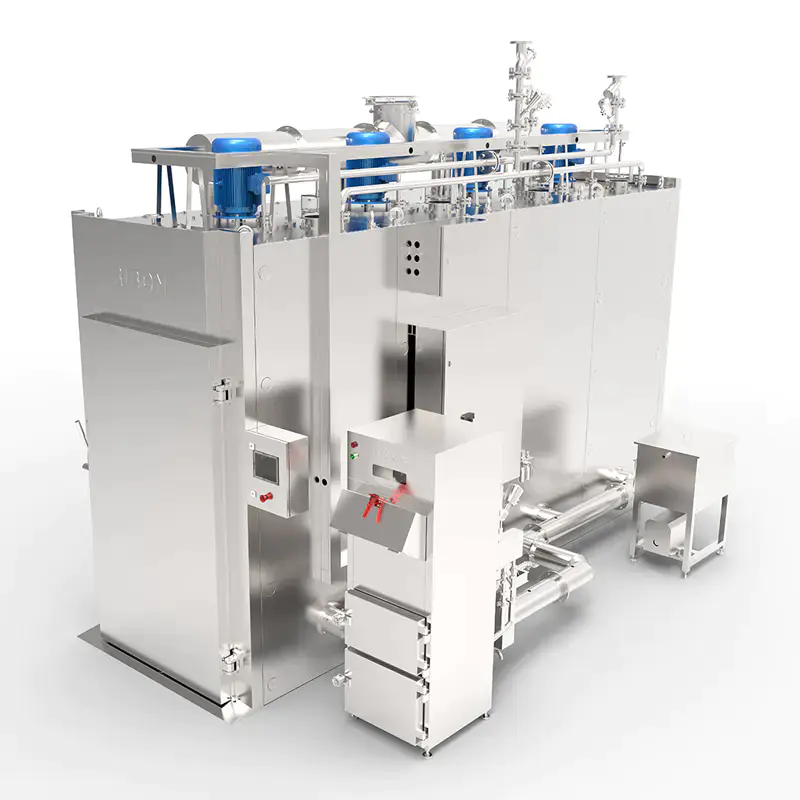
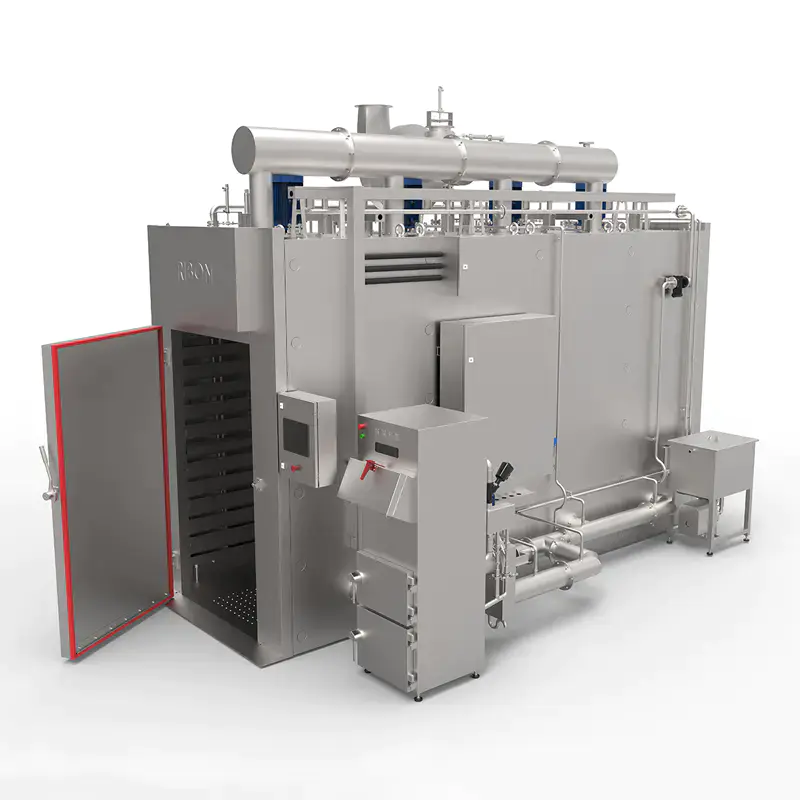
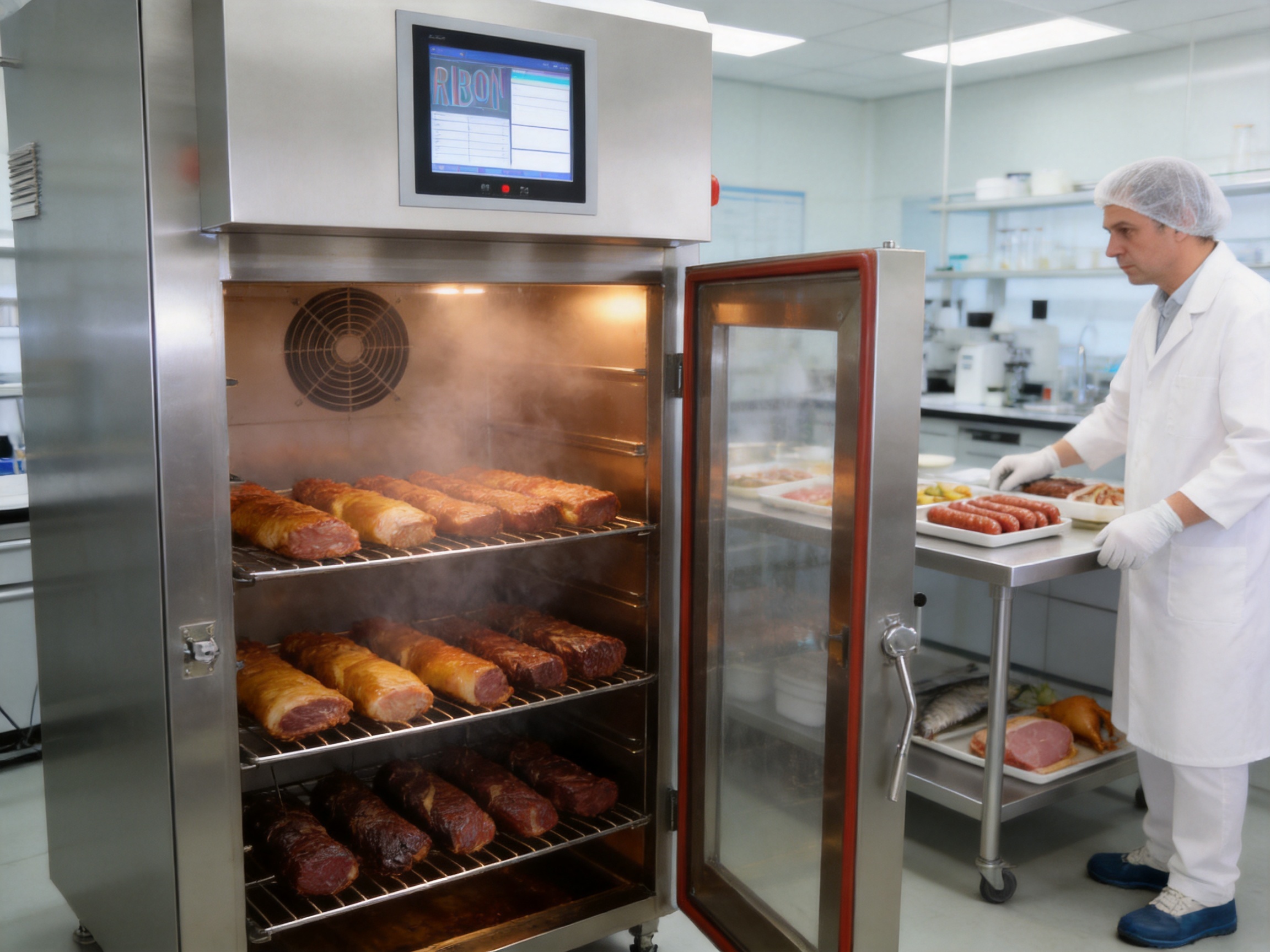
A laboratory smokehouse is more than a compact cooking cabinet. It is a controlled processing system designed to help users dry, smoke, cook, bake, and evaluate meat and other food products under repeatable conditions. For laboratories, restaurants, pilot plants, butcher shops, culinary schools, and small-scale processors, precise control is essential. A product must provide stable heat, effective air circulation, dependable smoke distribution, easy cleaning, and an operating interface that can be used confidently by different operators.
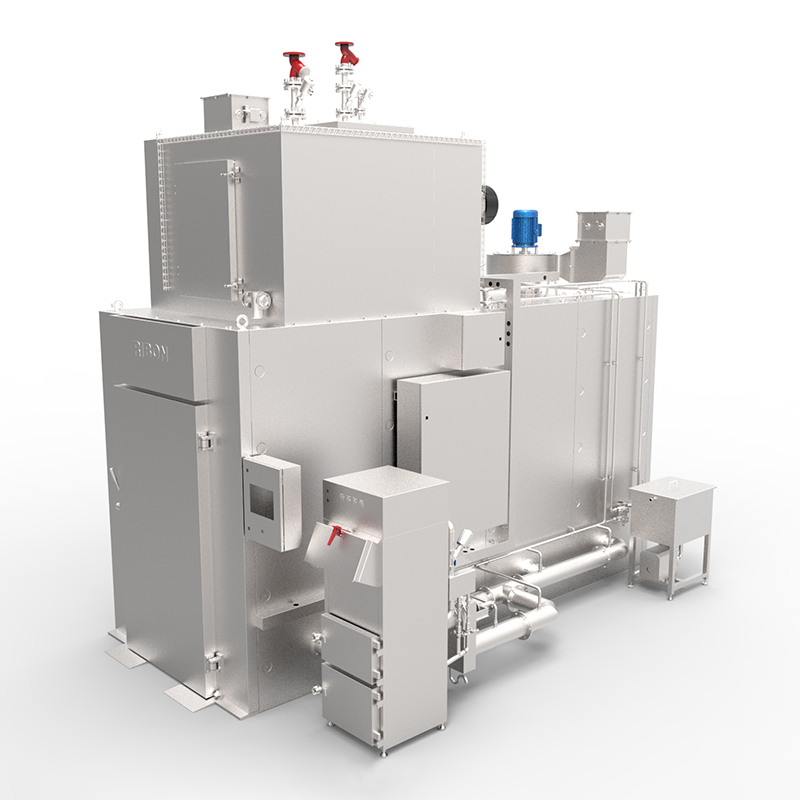
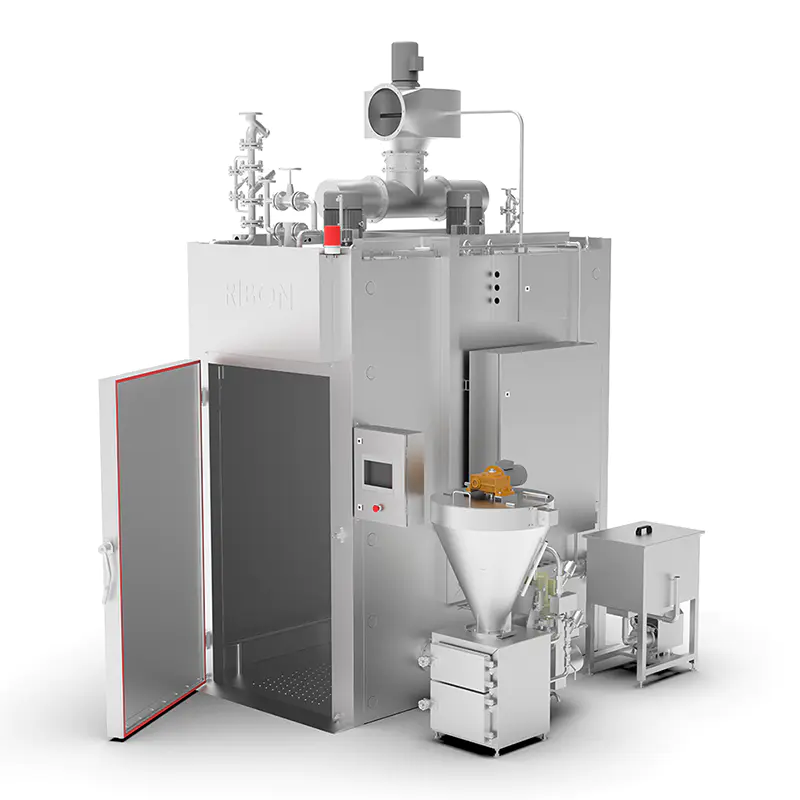
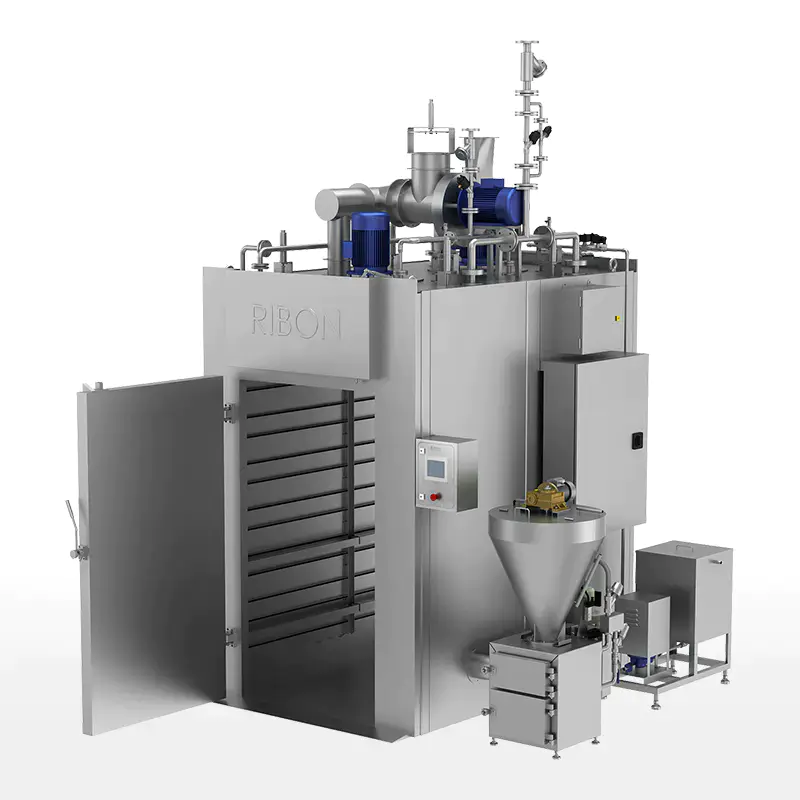
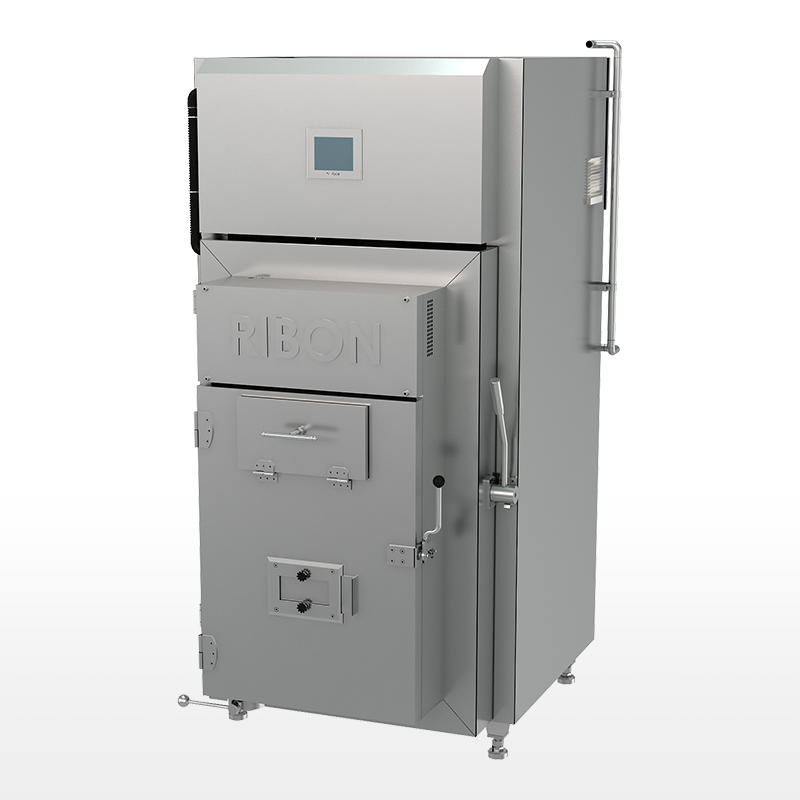
The Lab Smokehouse described in this article is designed for these requirements. It combines a fully welded stainless steel structure with electric heating, an internal woodchip smoke generator, automatic PLC and touch-screen control, high-efficiency air circulation, and an automatic cleaning system. Depending on the selected configuration, the unit can perform drying, hot smoking, cooking, baking, and cold smoking.
Two principal versions are available. The RYXY1-M-D model is designed for drying, hot smoking, cooking, and baking, with a working temperature range of 45°C to 180°C. The RYXY1-M-DL model adds cold smoking capability and operates from 15°C to 180°C. Both versions are rated for a product capacity of 25 kg, while their electrical power ratings are 12 kW and 15 kW respectively.
These specifications make the smokehouse suitable for product development and small-batch manufacturing where flexibility, repeatability, sanitation, and efficient use of space are important. Instead of relying on separate equipment for different thermal and smoking processes, users can complete several stages in one integrated chamber.
Content
- 1 Why a Laboratory Smokehouse Matters in Modern Meat Processing
- 2 Integrated Drying, Smoking, Cooking, and Baking
- 3 Construction Designed for Hygiene and Long-Term Use
- 4 PLC and Touch-Screen Control
- 5 Efficient Air Circulation for More Consistent Products
- 6 Temperature Range and Model Selection
- 7 Advantages Compared with Basic or Separate Equipment
- 8 Manufacturing Strengths and Engineering Approach
- 9 Applications Across Food and Culinary Operations
- 10 Operational Practices for Reliable Results
- 11 Maintenance and Expected Service Life
- 12 Installation and Transportation Considerations
- 13 How the Smokehouse Supports Environmental Responsibility
- 14 Selection Checklist for Buyers
- 15 Q&A: Frequently Asked Questions
- 15.1 What products can be processed in the Lab Smokehouse?
- 15.2 What is the capacity?
- 15.3 What is the maximum temperature?
- 15.4 Which model supports cold smoking?
- 15.5 How is smoke generated?
- 15.6 Is operation automatic?
- 15.7 Why is the fan important?
- 15.8 Is the chamber easy to clean?
- 15.9 Can the smokehouse be used in a restaurant?
- 15.10 Can it be moved by hand?
- 15.11 How long can the smokehouse last?
- 15.12 What electrical supply is required?
- 15.13 What should be checked before ordering?
- 16 Conclusion
- 17 References
- 18 Product: Lab Smokehouse
Why a Laboratory Smokehouse Matters in Modern Meat Processing
Meat processing involves a series of physical, chemical, and sensory changes. Heating affects protein structure, moisture retention, texture, and food safety. Drying changes water activity and concentration of flavor. Smoking contributes aroma, color, and preservation effects. Baking and roasting create surface browning and characteristic taste. Each stage must be managed carefully if the finished product is expected to meet a consistent standard.
In large-scale production, process parameters are often established through extensive trials and then transferred to industrial lines. Laboratories and pilot facilities need equipment that can reproduce these trials accurately. A smokehouse that provides only heat may be insufficient because it cannot reproduce the complete interaction between temperature, airflow, humidity, smoke, and product loading.
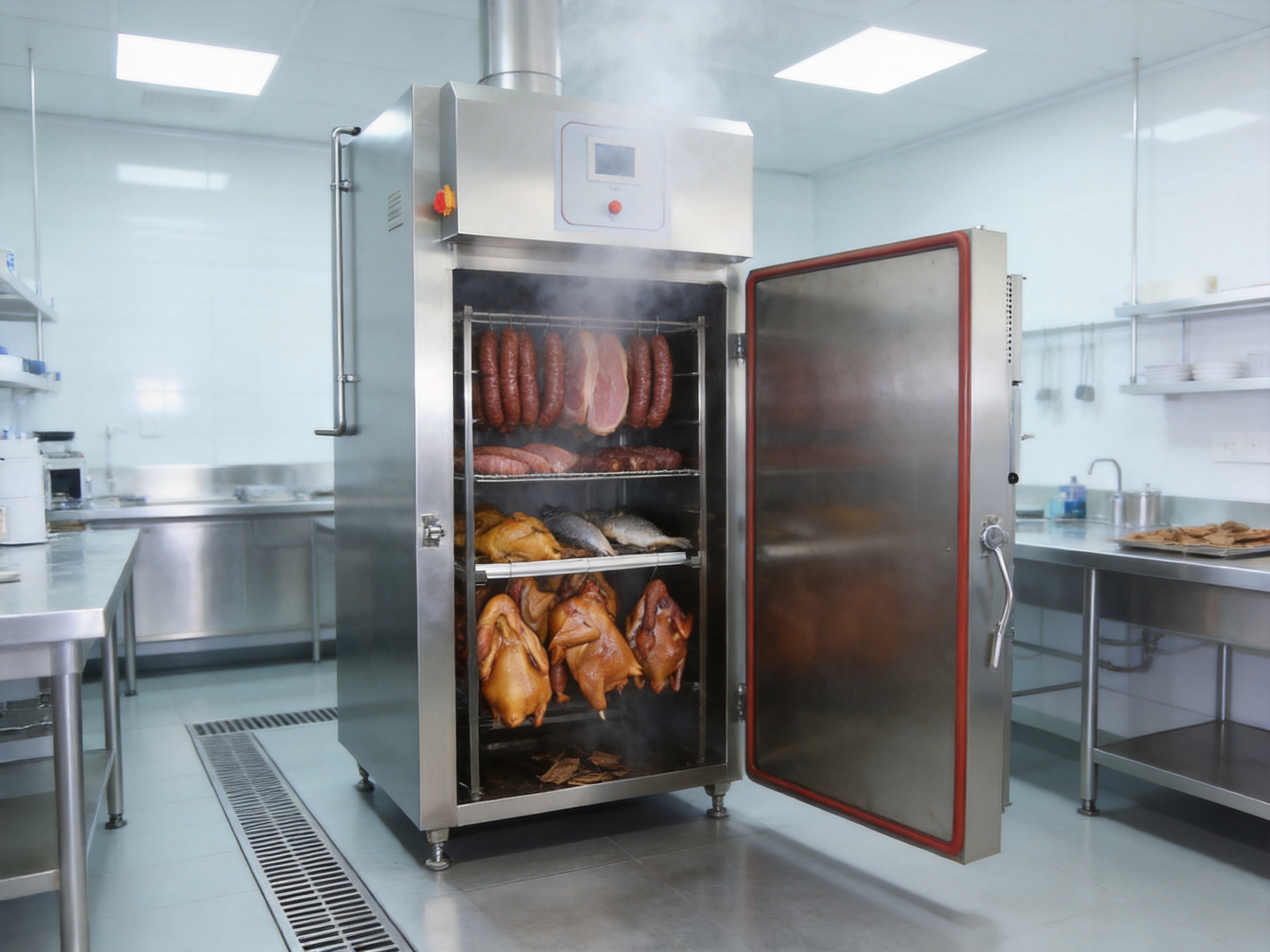
The Lab Smokehouse provides a dedicated environment for testing these variables. Users can evaluate ham, sausage, poultry, fish, and other products using controlled programs. The same chamber can support recipe development, process validation, staff training, sensory trials, and small production runs.
For restaurants and specialty food producers, the equipment also creates an opportunity to develop distinctive products. Smoked sausages, cooked ham, poultry, fish, and baked meat products can be prepared with greater consistency than is usually possible with improvised ovens or manually managed smoking cabinets.
A laboratory-oriented design also encourages efficient use of materials. Product developers can test smaller batches before committing to larger production quantities. This can reduce ingredient waste, shorten development cycles, and make it easier to compare different spice blends, casings, woodchip types, temperatures, and cooking schedules.
Integrated Drying, Smoking, Cooking, and Baking
One of the most important advantages of the Lab Smokehouse is its multifunctional operation. The equipment is not limited to a single smoking function. It is designed to perform several thermal and smoke-related processes in one chamber.
Drying
Drying is frequently used before smoking or cooking. It helps remove surface moisture and prepares the product for more effective smoke adhesion. A controlled drying stage can also improve the final appearance of sausage casings and meat surfaces.
Uncontrolled drying may cause uneven results. Some areas may become excessively dry while other areas remain wet. The smokehouse addresses this challenge through internal air circulation and controlled heating. The high-efficiency fan helps distribute air throughout the chamber, supporting more consistent exposure for products positioned on different levels.
Hot Smoking
Hot smoking combines smoke exposure with elevated temperature. This process can create a characteristic smoky flavor and color while contributing to the cooking of the product. The RYXY1-M-D and RYXY1-M-DL configurations both support hot smoking.
The internal woodchip smoke generator allows smoke to be produced within the equipment rather than requiring a separate external smoke source. This integrated arrangement can simplify installation, reduce the number of connected components, and make the overall system easier to operate in a laboratory or restaurant environment.
Cold Smoking
Cold smoking is available with the RYXY1-M-DL model. Its temperature range begins at 15°C, allowing users to conduct processes that require smoke exposure without the higher temperatures associated with hot smoking or cooking.
Cold smoking is often selected for products where the objective is to introduce smoke flavor and aroma while limiting thermal impact. The appropriate process depends on the product formulation, moisture level, food safety plan, and intended storage conditions. The availability of cold smoking in the same equipment gives product developers greater flexibility when comparing processing methods.
Cooking
Cooking requires stable heat distribution and accurate temperature management. Variations in chamber temperature can produce differences in texture, yield, and internal product condition. Electric heating provides a direct and controllable heat source, while the fan promotes more uniform circulation around the product.
The touch-screen control system allows operators to establish and monitor automatic programs. This is particularly useful when a product requires several stages, such as drying followed by smoking and cooking. An automatic sequence can reduce the need for constant manual adjustment and help different operators follow the same process.
Baking
Baking expands the equipment’s usefulness beyond traditional smoked products. Meat-based baked products, specialty sausages, poultry preparations, and other recipes can be developed using the same chamber. The maximum temperature of 180°C provides a useful range for laboratory trials and small-batch culinary production.
Using one multifunctional smokehouse for several operations may reduce the need to purchase separate ovens, dryers, and smoking cabinets. It can also simplify product transfer because items may remain in the same chamber through multiple process stages.
Lab Smokehouse
Construction Designed for Hygiene and Long-Term Use
Food-processing equipment must be durable, cleanable, and resistant to the conditions created by heat, moisture, salt, smoke, and organic residues. The Lab Smokehouse uses a fully welded stainless steel construction to address these demands.
Stainless steel is widely used in professional food equipment because it offers resistance to corrosion and provides a smooth, nonporous surface when properly finished. A welded structure can also reduce the number of joints, gaps, and exposed fasteners where moisture or food residue might accumulate.
The fully welded construction contributes to structural strength as well. Repeated heating and cooling cycles can place stress on equipment panels and connections. A robust welded frame and chamber can help the unit maintain its integrity during regular operation, cleaning, loading, and unloading.
Cleanability is especially important in a laboratory because many different formulations may be processed in the same chamber. Residues from spices, fats, marinades, smoke, and proteins must be removed before the next trial. The stainless steel interior supports systematic cleaning, while the complete automatic cleaning system helps reduce the labor associated with routine sanitation.
Automatic cleaning does not eliminate the need for inspection or manual attention. Operators should still follow the manufacturer’s recommended cleaning procedure, remove persistent deposits where necessary, inspect drains and spray points, and confirm that the chamber is dry and ready for the next batch. However, automation can improve consistency and reduce the chance that important cleaning steps are overlooked.
PLC and Touch-Screen Control
The control system is a central feature of the smokehouse. A programmable logic controller, combined with a touch-screen interface, provides a structured method for setting, monitoring, and repeating process parameters.
Manual operation can be useful for simple trials, but it becomes difficult when a recipe contains multiple stages. An operator may need to adjust temperature, smoking duration, airflow, and cooking time in a particular order. If these adjustments are made inconsistently, the resulting products may differ even when the recipe appears unchanged.
PLC-based control supports programmed operation. A user can establish a process sequence and allow the equipment to progress through the stages automatically. This may include drying, heating, smoking, cooking, and finishing steps, depending on the required application and the capabilities of the selected configuration.
The touch screen gives operators a direct visual interface. It can make it easier to review the current operating condition, identify the active stage, enter target values, and respond to warnings. For laboratories, a clear control interface also supports documentation because researchers can record the conditions used during each trial.
Compared with basic smoking cabinets that rely heavily on manual switches and visual judgment, an automatic PLC and touch-screen system can offer better repeatability. It can also reduce operator workload and make training more straightforward. These benefits are particularly valuable when multiple people use the equipment or when a process must be reproduced weeks or months after the original trial.
Electronic controls should be protected from excessive moisture, unauthorized access, impact, and unsuitable environmental conditions. Proper installation, routine inspection, and adherence to operating instructions are important for preserving control-system reliability.
Efficient Air Circulation for More Consistent Products
Uniform airflow is essential in a smokehouse. Products loaded at different positions may otherwise receive different levels of heat and smoke. Areas close to the heating source may process more quickly, while areas farther away may remain cooler or less exposed.
The high-efficiency fan in the Lab Smokehouse is designed to circulate air through the chamber. This supports more consistent temperature conditions and helps distribute smoke around the product surfaces. Improved circulation can be especially useful when the chamber is loaded with sausages, ham, poultry, or fish arranged across several racks or levels.
Air movement also influences drying. A controlled flow can help remove moisture from product surfaces without relying solely on increased temperature. This provides greater flexibility when developing recipes that require a gradual drying stage.
Air circulation does not mean that loading configuration is unimportant. Operators should avoid blocking air paths, exceeding the recommended capacity, or placing products too close together. The stated capacity is 25 kg, and maintaining suitable spacing is important for allowing air and smoke to reach the product uniformly.
Compared with simple static chambers, a smokehouse equipped with effective internal circulation can provide more reliable batch-to-batch results. The advantage is not merely faster processing; it is improved consistency in color, texture, moisture loss, and smoke exposure.
Temperature Range and Model Selection
The two configurations are designed for different process requirements. Selecting the correct model depends on the products to be processed and the temperature range required by the recipes.
| Specification | RYXY1-M-D | RYXY1-M-DL |
|---|---|---|
| Primary functions | Drying, hot smoking, cooking, and baking | Drying, cooking, baking, hot smoking, and cold smoking |
| Smoke source | Internal woodchip smoke | Internal woodchip smoke |
| Control system | Automatic PLC and touch screen | Automatic PLC and touch screen |
| Heating method | Electric heating | Electric heating |
| Voltage | 380 V / 50 Hz / 3 phase, adjustable as required | 380 V / 50 Hz / 3 phase, adjustable as required |
| Power | 12 kW | 15 kW |
| Temperature range | 45°C to 180°C | 15°C to 180°C |
| Capacity | 25 kg | 25 kg |
RYXY1-M-D Configuration
The RYXY1-M-D model is suitable for users whose applications focus on drying, hot smoking, cooking, and baking. Its temperature range begins at 45°C and extends to 180°C. This makes it appropriate for many common laboratory and small-batch meat processing tasks.
With a 12 kW electrical rating and 25 kg capacity, it is a practical choice for users who do not require cold smoking. It may be suitable for restaurants, product development kitchens, butcher shops, and pilot operations that primarily produce cooked and hot-smoked items.
RYXY1-M-DL Configuration
The RYXY1-M-DL model provides the same general multifunctional capabilities while adding cold smoking. Its lower operating range begins at 15°C, and its electrical rating is 15 kW.
This configuration is advantageous for research facilities and specialty producers that want to compare hot-smoking and cold-smoking methods. It provides a broader process range in one unit and can reduce the need to purchase a separate cold-smoking cabinet.
The correct selection should be based on the process, not only on the maximum temperature. A user who regularly develops cold-smoked products should consider the RYXY1-M-DL model, while a user focused on cooked and hot-smoked products may find the RYXY1-M-D model sufficient.
Advantages Compared with Basic or Separate Equipment
Every processing application has different priorities, but several advantages distinguish this type of integrated laboratory smokehouse from basic smoking cabinets or collections of separate machines.
One Chamber for Multiple Operations
A traditional setup may require a dryer, oven, hot smoker, and cold smoker. Purchasing and maintaining several units increases the equipment footprint and may complicate product transfer. An integrated smokehouse can perform several of these functions in one chamber, improving space utilization and workflow efficiency.
More Repeatable Processing
Manual smoking often depends on operator experience. While skilled operators remain important, automatic PLC control provides a more repeatable foundation. The same programmed sequence can be used for comparative trials and routine production, helping reduce variation between batches.
Integrated Smoke Generation
An internal woodchip smoke generator avoids the need for a separate smoke source in many applications. This can simplify the equipment arrangement and reduce the number of external connections. It also places smoke generation within the controlled processing system.
Improved Sanitation Support
Fully welded stainless steel construction and an automatic cleaning system support hygienic operation. Compared with improvised chambers or equipment with numerous difficult-to-clean seams, the design is better aligned with professional food-processing requirements.
Flexible Product Development
The 25 kg capacity is large enough for meaningful pilot trials while remaining appropriate for laboratory and small-batch environments. Users can test new recipes without committing to a full industrial production run.
Broad Temperature Capability
A maximum temperature of 180°C supports drying, cooking, baking, and hot smoking. The cold-smoking option on the RYXY1-M-DL model further broadens the possible applications. This range is useful to organizations that develop several product categories rather than one standardized item.
Designed for Professional Use
The combination of stainless steel construction, electric heating, automated controls, fan circulation, internal smoke generation, and automatic cleaning reflects a professional equipment approach. These features can provide advantages in reliability, workflow organization, and operational consistency over simpler consumer-grade or manually assembled alternatives.
Manufacturing Strengths and Engineering Approach
The manufacturer behind the Lab Smokehouse was established in 2003 and specializes in the research, development, and manufacture of meat processing machinery. Its product focus includes meat processing smokehouses, vacuum tumblers, and cutting and deboning lines.
This specialization is important because smokehouse performance depends on more than the visible cabinet. Heat transfer, airflow, smoke movement, cleaning, controls, electrical integration, and product handling must work together. A manufacturer with experience across multiple stages of meat processing can consider how the smokehouse fits into a wider production workflow.
Continuous optimization is another stated strength. Meat processing applications change as customers develop new recipes, seek higher efficiency, and adopt improved environmental and service practices. Ongoing design improvement can help equipment remain practical for changing production needs.
The company has supplied equipment internationally since 2003, giving it experience with different processing environments and customer requirements. International use can involve variations in electrical standards, operating conditions, layout limitations, product types, and service expectations. The listed voltage is adjustable as required, which is useful when evaluating installation in different markets, subject to technical confirmation before purchase.
The manufacturing philosophy emphasizes practical design and customer value. For laboratory equipment, practical design means that the system should be understandable, maintainable, easy to clean, and adaptable to real processing tasks. Advanced features are most useful when they improve product consistency or reduce operating effort rather than adding unnecessary complexity.
A broad product portfolio can also support complete-line planning. A customer may require a smokehouse today and later add vacuum tumbling, cutting, or deboning equipment. Experience with connected processing stages can help the manufacturer understand material flow, batch handling, and the operational relationship between machines.
Research and Development Orientation
Research and development is particularly important for laboratory equipment because the machine is often used to develop products that will eventually be produced at a larger scale. A smokehouse must provide sufficient control for experimentation while remaining robust enough for repeated trials.
Development work may involve adjusting temperature profiles, smoke intensity, drying time, cooking duration, product loading, and cleaning routines. Equipment designed with programmable controls and flexible operation gives researchers a more useful platform for making these comparisons.
Manufacturing Quality Considerations
Although detailed factory certifications and inspection records should be requested directly from the supplier for a specific project, the listed features indicate several important manufacturing priorities. Fully welded stainless steel construction suggests attention to structural durability and hygienic design. Integrated electrical heating and controls indicate that the unit is engineered as a coordinated system rather than a collection of unrelated components.
Buyers should confirm the precise stainless steel grade, insulation construction, control-system specifications, electrical requirements, included racks or accessories, cleaning details, and acceptance-testing procedures before placing an order. These details are important when equipment will be installed in a regulated or high-throughput facility.
Applications Across Food and Culinary Operations
Meat Product Laboratories
Research laboratories can use the smokehouse to compare formulations and process conditions. Trials may involve different meat blends, fat levels, spice systems, casings, woodchips, drying stages, and final cooking temperatures. The automatic controls help researchers document and repeat the selected conditions.
Sausage Development
Sausage products often require multiple stages. Surface drying may be followed by smoking and cooking, with each stage affecting casing appearance, texture, flavor, and yield. The smokehouse supports these operations in a single chamber and can help product developers compare processing schedules.
Ham and Whole-Muscle Products
Ham and other whole-muscle products require careful management of heating and smoke exposure. Air circulation is useful when products are loaded on multiple levels because it helps reduce differences between positions in the chamber.
Poultry Processing
Poultry products can be dried, smoked, cooked, or baked depending on the recipe. The ability to program the process and monitor temperature is valuable for achieving consistent color and texture while following the product’s validated safety procedure.
Fish Processing
Fish products may be sensitive to temperature, moisture loss, and smoke intensity. The cold-smoking capability of the RYXY1-M-DL model provides additional process flexibility for suitable applications. Because fish products can have distinctive sanitation requirements, cleaning and cross-contamination controls should be carefully planned.
Restaurants and Specialty Producers
Restaurants can use a laboratory-scale smokehouse to prepare signature menu items and conduct recipe development. Specialty producers can use it for small-batch smoked foods, seasonal products, and market testing. The equipment’s multifunctional design can be valuable where floor space is limited and one machine must support several menu or product categories.
Culinary Schools and Training Centers
Training institutions can use the smokehouse to demonstrate controlled drying, smoking, cooking, and baking. The touch-screen interface provides students with exposure to modern food-processing controls, while the 25 kg capacity is suitable for instructional batches.
Operational Practices for Reliable Results
Correct operation is essential to achieving the advantages of any smokehouse. Before loading, operators should confirm that the chamber is clean, the required program is selected, the woodchips are suitable for the intended product, and the electrical supply matches the equipment requirements.
Products should be arranged to support airflow. Overloading the chamber can restrict circulation and create inconsistent processing. The stated 25 kg capacity should be treated as an operating limit, while actual loading arrangements should also consider product size, rack spacing, moisture level, and the desired smoke exposure.
Operators should verify that the process program reflects the product specification. A typical sequence may include a drying stage, a smoking stage, a cooking stage, and a finishing or holding stage. The exact conditions must be established through product trials and validated according to applicable food safety requirements.
Temperature readings should be monitored during operation. Where product safety depends on internal temperature, chamber temperature alone may not be sufficient. Appropriate product probes and validation procedures may be required, depending on the food product and local regulations.
After processing, the chamber should be cleaned according to the recommended procedure. Organic residues should not be allowed to accumulate. Smoke deposits, fats, and moisture can affect hygiene, odors, airflow, heating efficiency, and the service life of components.
The fan, heating elements, door seals, drains, spray components, electrical connections, and control panel should be inspected at suitable intervals. Any unusual noise, temperature variation, water leakage, smoke leakage, or control error should be investigated promptly.
Maintenance and Expected Service Life
A well-maintained smokehouse from a reputable manufacturer can provide many years of service, and equipment of this type may remain operational for more than a decade under suitable conditions. The actual service life depends on construction quality, operating frequency, maintenance, installation, cleaning practices, environmental conditions, and adherence to the recommended capacity and temperature limits.
Construction Quality
Fully welded stainless steel construction can support a long service life by resisting corrosion and maintaining structural strength. The precise service life will also depend on the stainless steel grade, weld quality, insulation, door hardware, heating elements, and other components.
Frequency of Use
Heavy daily use exposes the chamber, fan, heating system, controls, and seals to more operating cycles. Frequent use does not necessarily cause premature failure when maintenance is performed correctly, but it does make preventive inspection more important.
Cleaning and Moisture Control
Cleaning chemicals, standing water, excessive moisture, and deposits can affect materials and components over time. Operators should use only approved cleaning methods and avoid directing water into areas that are not designed for washdown.
Environmental Conditions
Indoor installation with controlled temperature and humidity is generally preferable. High humidity, corrosive atmospheres, dust, extreme temperatures, and poor ventilation may reduce the life of electrical and mechanical components. Adequate space should be provided around the unit for ventilation, inspection, and servicing.
Electrical Protection
The PLC, touch screen, wiring, sensors, and other electrical components should be protected from water and unnecessary impacts. The installation should use an appropriate power supply and protective devices. Electrical work should be completed by qualified personnel in accordance with local requirements.
Proper Operating Loads
Exceeding the recommended capacity can restrict airflow, increase processing times, and place additional stress on the heating and circulation systems. Operating outside the specified temperature range may also damage components or produce unsuitable results.
Installation and Transportation Considerations
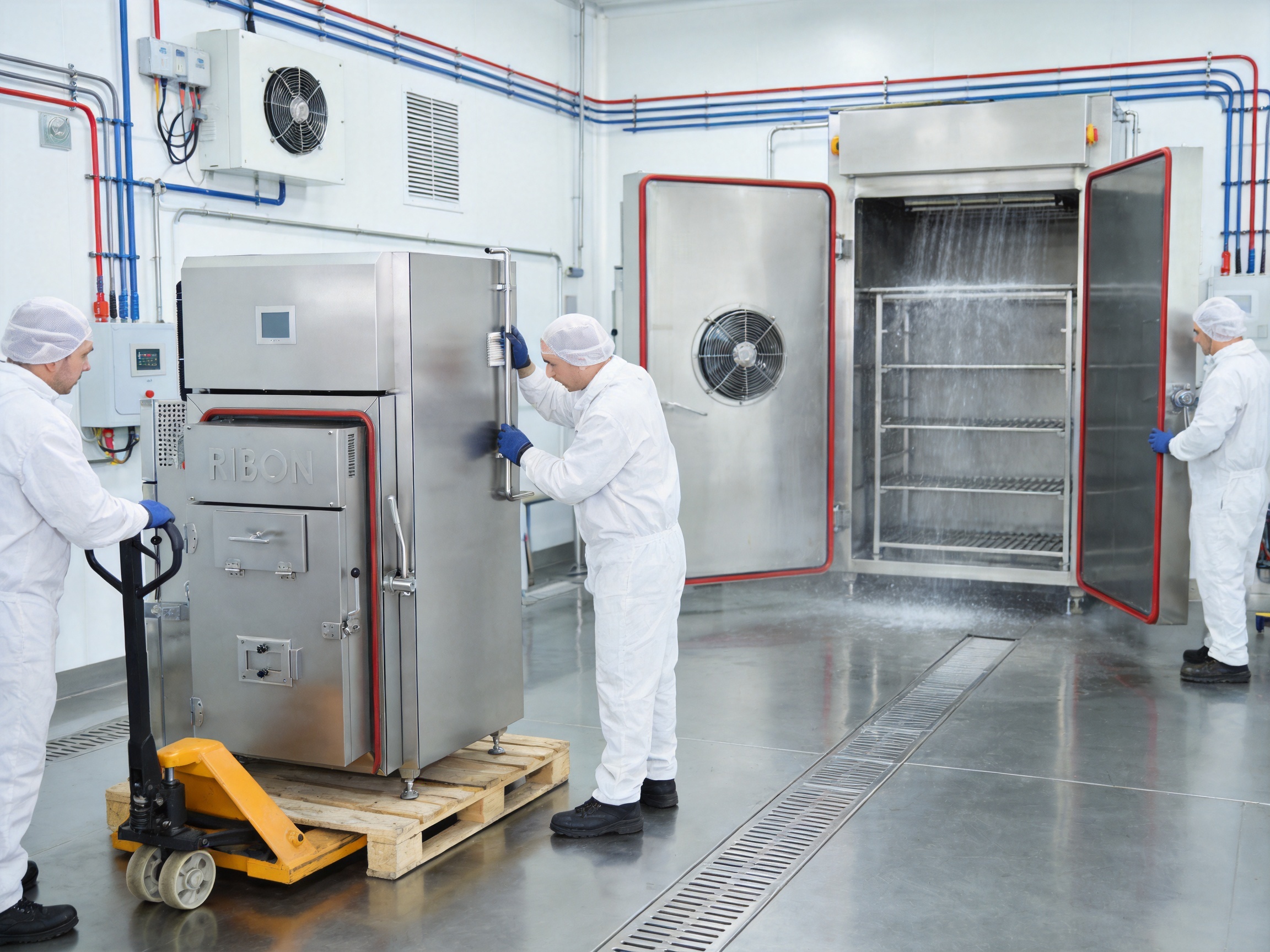
The smokehouse is a robust food-processing machine rather than a lightweight countertop appliance. Its stainless steel construction, heating system, fan, smoke generator, controls, insulation, and cleaning equipment contribute to its total weight. Whether it can be moved by hand depends on the exact dimensions, weight, floor conditions, and included accessories.
In many installations, a pallet jack, forklift, lifting device, or other suitable handling equipment will be required. Buyers should request the final shipping weight, operating weight, external dimensions, center of gravity, and lifting points before arranging transportation.
The installation location should provide a stable, level surface and sufficient access for loading, unloading, cleaning, maintenance, and eventual removal. The electrical supply must match the selected model. Both versions are listed at 380 V / 50 Hz / 3 phase, with adjustment available as required, but the final electrical configuration should be confirmed before manufacture and installation.
Ventilation and smoke management should be considered as part of the site design. Even with an integrated smoke generator and automatic cleaning system, the facility may need suitable exhaust, drainage, water, and waste-handling arrangements. Local building, electrical, fire, occupational safety, and food hygiene requirements should be reviewed by the purchaser and installation contractor.
How the Smokehouse Supports Environmental Responsibility
Environmental responsibility in food processing includes more than energy consumption. It also involves reducing product waste, improving process efficiency, extending equipment life, and avoiding unnecessary duplication of machinery.
By combining drying, smoking, cooking, and baking in one unit, the smokehouse may reduce the need for several separate machines. A smaller integrated installation can support more efficient use of floor space and may simplify cleaning and maintenance planning.
Accurate control can also help reduce failed batches. When temperature and processing stages are repeatable, users may waste fewer ingredients because of underprocessing, overprocessing, or inconsistent product quality. Small-batch testing further allows companies to refine a recipe before producing it at full scale.
Long equipment life is another sustainability factor. Durable stainless steel construction, preventive maintenance, and timely replacement of wear parts can keep the machine in service longer and reduce the need for premature replacement.
Actual environmental performance depends on operating practices, electrical efficiency, cleaning-water use, insulation, production volume, and local energy sources. Buyers seeking a full environmental assessment should request detailed technical data for the specific configuration.
Selection Checklist for Buyers
Before purchasing a Lab Smokehouse, buyers should define the products, processes, and site conditions clearly. The following questions can help guide technical discussions with the manufacturer.
First, determine whether cold smoking is required. If it is, the RYXY1-M-DL model should be considered because it offers a 15°C to 180°C range. If the application is limited to drying, hot smoking, cooking, and baking, the RYXY1-M-D model may be appropriate.
Second, confirm the required batch size. Both listed models have a 25 kg capacity, but the practical load depends on product dimensions and the necessary spacing between pieces.
Third, review the electrical supply. The listed configuration is 380 V / 50 Hz / 3 phase, although adjustment is available as required. The final voltage, frequency, phase arrangement, power rating, and protection requirements should be documented.
Fourth, request information about dimensions, shipping weight, door opening, rack configuration, water connection, drainage, exhaust, and installation access. This is particularly important when the machine must pass through existing doors or be installed in a laboratory with limited space.
Fifth, ask for details about the automatic cleaning system. Buyers should understand the required water pressure, cleaning chemicals, drainage arrangements, cleaning cycle duration, and manual cleaning steps that remain necessary.
Sixth, review service and spare-parts support. Important items may include heating elements, fan components, temperature sensors, door seals, spray nozzles, touch-screen components, and control-system parts.
Finally, request operator documentation and training. A good operating procedure should cover loading, recipe setup, woodchip use, cleaning, inspection, emergency shutdown, and maintenance.
Q&A: Frequently Asked Questions
What products can be processed in the Lab Smokehouse?
The smokehouse is designed for ham, sausage, poultry, fish, and other suitable food products. Its functions include drying, smoking, cooking, and baking. Product-specific process conditions must be established through testing and appropriate food safety validation.
What is the capacity?
Both listed configurations have a nominal capacity of 25 kg. The practical loading arrangement depends on product shape, rack spacing, airflow requirements, and the selected process.
What is the maximum temperature?
Both models can reach up to 180°C. The RYXY1-M-D model has a listed range of 45°C to 180°C, while the RYXY1-M-DL model has a listed range of 15°C to 180°C.
Which model supports cold smoking?
The RYXY1-M-DL model supports cold smoking. Its lower temperature range begins at 15°C, making it the broader option for users who need both hot-smoking and cold-smoking capability.
How is smoke generated?
Both models use an internal woodchip smoke generator. This integrated arrangement is intended to provide smoke within the processing chamber without requiring a separate external smoke-generation unit for the stated applications.
Is operation automatic?
The smokehouse uses a PLC and touch-screen control system with automatic operation. Operators can establish suitable process programs and monitor the equipment through the interface. Recipes should be tested and validated before routine production.
Why is the fan important?
The high-efficiency fan circulates air within the chamber. This helps promote more consistent heat, drying, and smoke exposure across the loaded products. Proper loading remains essential because excessive crowding can restrict airflow.
Is the chamber easy to clean?
The unit has a fully welded stainless steel construction and a complete automatic cleaning system. These features support sanitation and reduce cleaning labor, but operators must still follow the recommended cleaning procedure and perform inspections or manual cleaning when required.
Can the smokehouse be used in a restaurant?
Yes. The product is described as especially suitable for laboratories and restaurants. Its multifunctional operation can support specialty smoked foods, cooked products, recipe testing, and small-batch menu development.
Can it be moved by hand?
That depends on the exact weight, dimensions, and installation conditions. Because the smokehouse is a robust machine with stainless steel construction and integrated equipment, transportation may require a pallet jack, forklift, or other lifting equipment. Final shipping specifications should be confirmed with the supplier.
How long can the smokehouse last?
A well-maintained unit can provide many years of service and may exceed a decade in suitable conditions. Longevity depends on construction quality, cleaning, operating frequency, environmental conditions, electrical protection, maintenance, and compliance with capacity and temperature limits.
What electrical supply is required?
The listed supply is 380 V / 50 Hz / 3 phase, adjustable as required. The RYXY1-M-D model is rated at 12 kW, and the RYXY1-M-DL model is rated at 15 kW. The final electrical configuration should be confirmed for the installation site.
What should be checked before ordering?
Buyers should confirm model selection, temperature range, capacity, dimensions, weight, electrical supply, cleaning requirements, water and drainage connections, exhaust needs, rack configuration, warranty, spare parts, documentation, and installation support.
Conclusion
The Lab Smokehouse is a versatile solution for controlled meat processing, culinary research, and small-batch production. Its combination of drying, smoking, cooking, baking, and optional cold smoking allows users to perform several operations in one integrated chamber.
The main technical advantages include fully welded stainless steel construction, internal woodchip smoke generation, electric heating, high-efficiency air circulation, automatic PLC and touch-screen control, high-temperature operation up to 180°C, and a complete automatic cleaning system. These features support repeatability, hygiene, flexibility, and efficient use of space.
The RYXY1-M-D configuration is suitable for drying, hot smoking, cooking, and baking, while the RYXY1-M-DL configuration adds cold smoking and offers a wider temperature range. Both models provide a 25 kg capacity, making them appropriate for laboratories, restaurants, pilot facilities, specialty producers, and training environments.
The manufacturer’s experience since 2003 in meat processing smokehouses, vacuum tumblers, and cutting and deboning solutions supports an equipment-development approach based on specialized industry knowledge. Its focus on research, manufacturing, continuous optimization, practical design, and international supply provides a foundation for customers seeking more than a basic smoking cabinet.
For the best results, buyers should evaluate the intended products, process temperatures, batch size, site conditions, electrical supply, cleaning requirements, and transportation arrangements before selecting a configuration. With appropriate installation, operation, cleaning, and preventive maintenance, the Lab Smokehouse can become a dependable platform for product development and consistent small-scale meat processing.
References
1. Product specification sheet for the Lab Smokehouse, including model functions, temperature ranges, electrical ratings, smoke generation, control system, and capacity.
2. Manufacturer-provided information on stainless steel construction, air circulation, automatic cleaning, and laboratory and restaurant applications.
3. General principles of thermal processing, drying, hot smoking, cold smoking, cooking, and baking in meat and seafood products.
4. General food-processing equipment hygiene and sanitation practices for stainless steel chambers and automated cleaning systems.
5. General guidance on preventive maintenance, electrical protection, ventilation, transportation, and installation of commercial food-processing machinery.
6. Manufacturer background information concerning research, development, production, and international supply of meat processing equipment since 2003.