

 English
 русский
 Español
 عربى

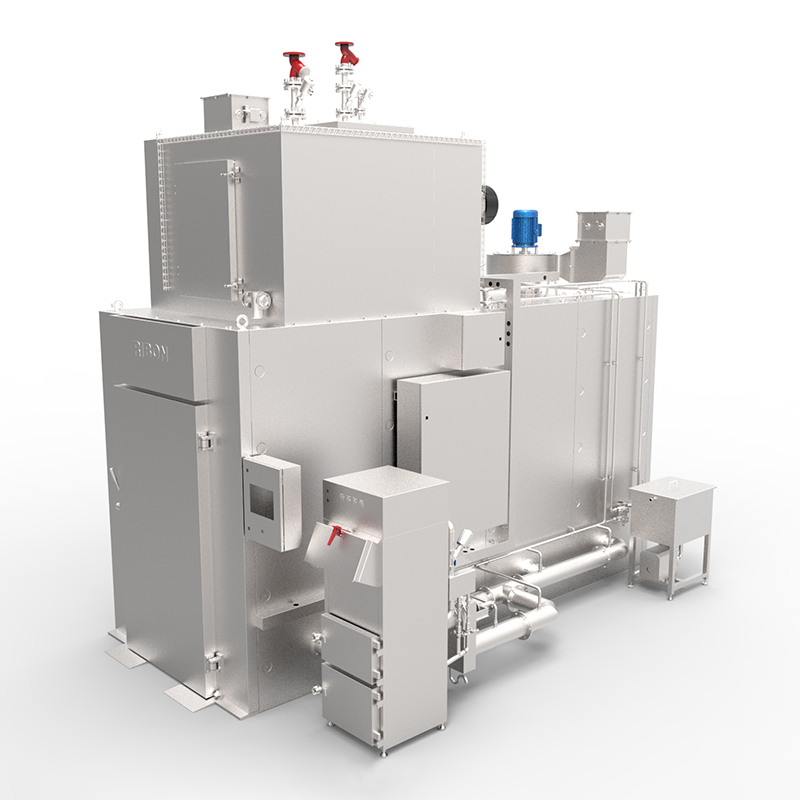
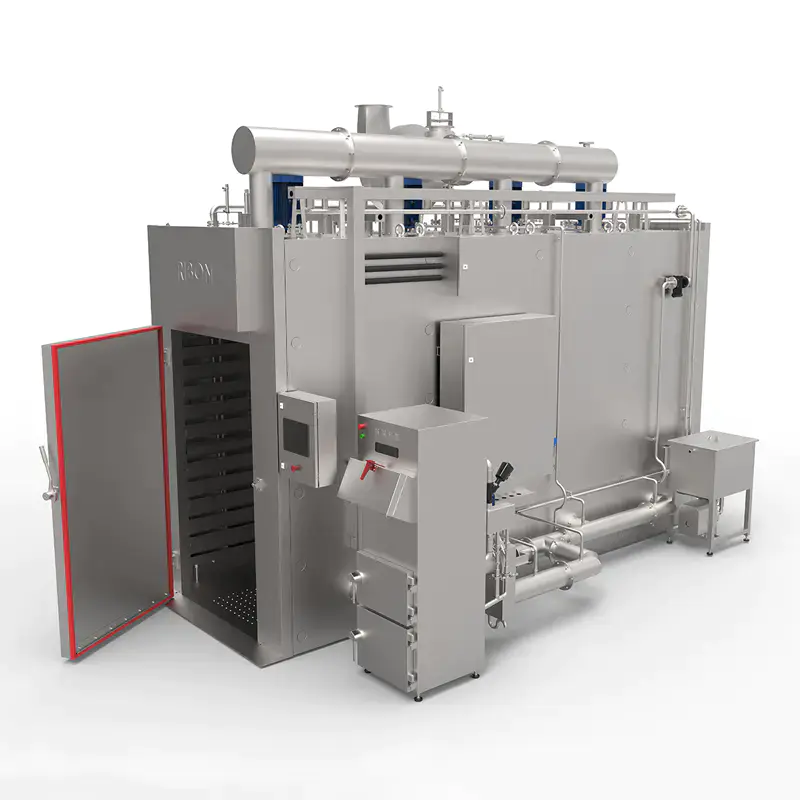
Industrial meat processing requires more than simply applying heat. A modern cooking system must deliver consistent temperature control, reliable moisture management, repeatable processing results, high throughput, easy sanitation, and efficient use of energy. It must also fit the layout and production requirements of different factories, from medium-sized processors to large-scale food manufacturing plants. The steam cooker described in this article is designed to address these demands through direct low-pressure steam injection, modular chamber construction, trolley-based loading, programmable controls, and flexible heating options.
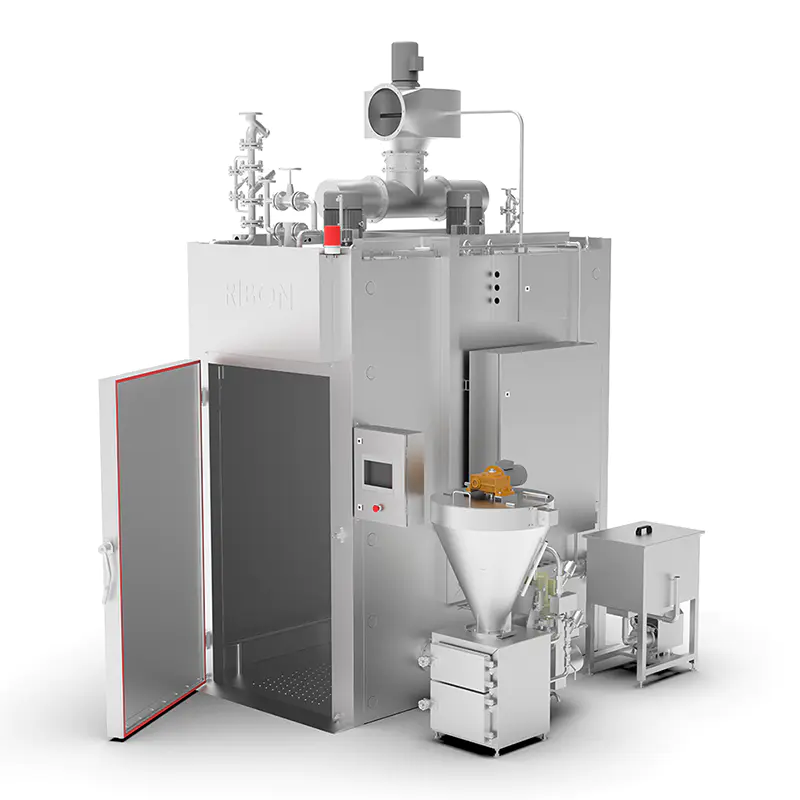
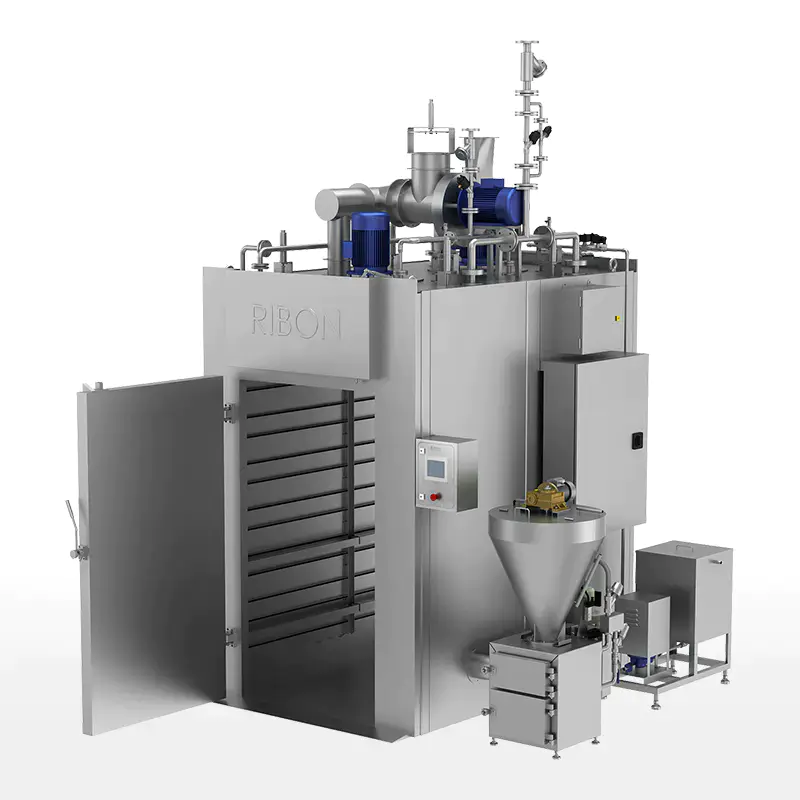
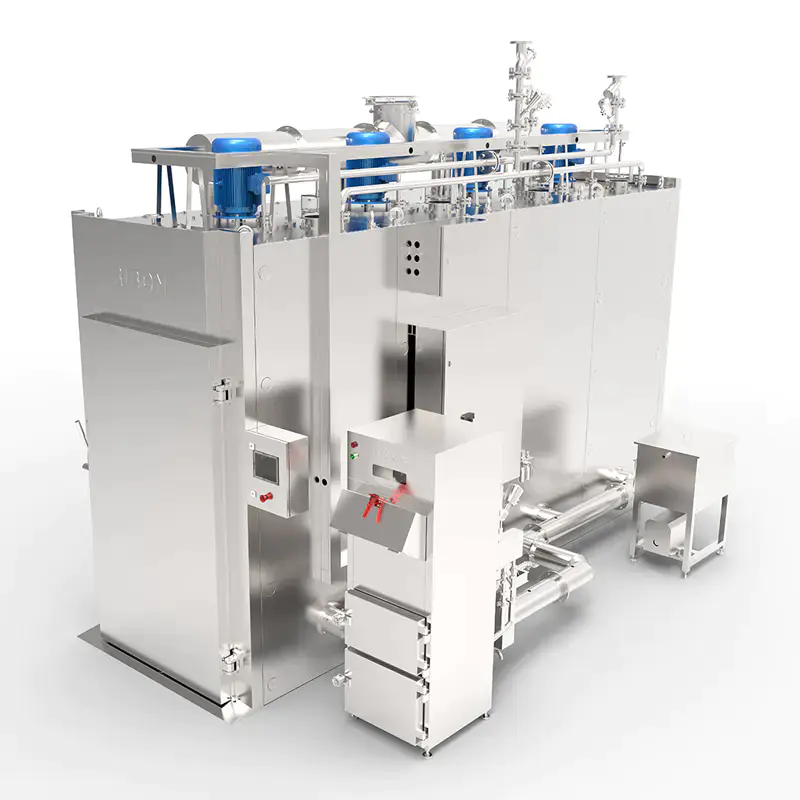
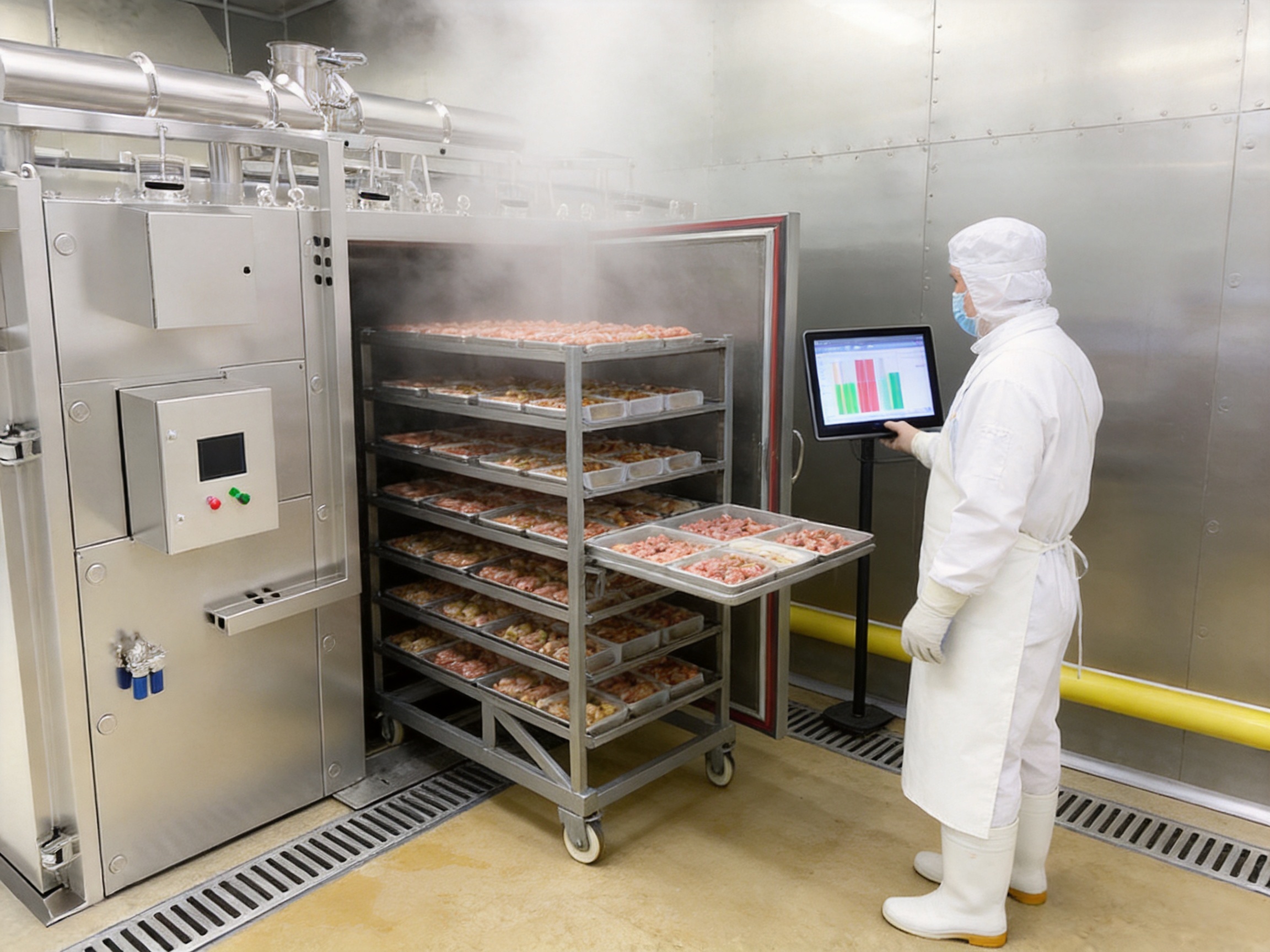
As part of a complete meat processing solution, a smokehouse steam cooker can be used for cooking, showering, and controlled thermal treatment of meat, poultry, seafood, and other suitable food products. Its configuration can accommodate between one and eight trolleys, enabling processors to select a capacity that corresponds with their production volume. The equipment is available with steam heating, electric heating, or a combination of both, allowing users to match the machine to their existing utilities and operating strategy.
The system is manufactured by Zhejiang Ribon Intelligent Equipment Co., Ltd., a Chinese meat processing machinery manufacturer established in 2003. The company specializes in meat processing smokehouses, vacuum tumblers, slaughtering equipment, cutting and deboning solutions, and related production systems. Through continued research, equipment optimization, and international project experience, the manufacturer has developed a practical approach to industrial food machinery that emphasizes dependable operation, flexible configuration, and long-term customer value.
Content
- 1 1. The Role of Steam Cooking in Modern Meat Processing
- 2 2. Product Overview and Main Functions
- 3 3. Key Technical Specifications
- 4 4. Direct Low-Pressure Steam Injection
- 5 5. PLC and Touch-Screen Control
- 6 6. Modular Chamber Construction
- 7 7. Polyurethane Foam Insulation
- 8 8. Advantages Compared with Less Advanced Cooking Systems
- 9 9. Applications in Meat and Food Production
- 10 10. Cooking Time and Process Development
- 11 11. Engineering and Manufacturing Strengths
- 12 12. Manufacturing Process and Quality Considerations
- 13 13. Hygiene, Cleaning, and Maintenance
- 14 14. Energy Efficiency and Production Economics
- 15 15. Layout Planning and Customization
- 16 16. Installation, Commissioning, and Staff Training
- 17 17. Why Choose a Specialized Meat Processing Equipment Manufacturer?
- 18 18. Selecting the Correct Configuration
- 19 19. Frequently Asked Questions
- 19.1 Q1: What is the main function of this steam cooker?
- 19.2 Q2: How many trolleys can the cooker accommodate?
- 19.3 Q3: What are the listed capacities?
- 19.4 Q4: Can the machine use electricity instead of steam?
- 19.5 Q5: How does direct steam injection improve operation?
- 19.6 Q6: Does the cooker have automatic control?
- 19.7 Q7: What happens if the machine loses power during a process?
- 19.8 Q8: Can the chamber be customized for a specific factory layout?
- 19.9 Q9: How long does it take to cook meat or poultry?
- 19.10 Q10: What maintenance is required?
- 19.11 Q11: Why is insulation important?
- 19.12 Q12: Can the cooker be integrated into a complete meat processing line?
- 19.13 Q13: What should be confirmed before purchase?
- 20 20. Conclusion
- 21 References
- 22 Product: Steam Cooker
1. The Role of Steam Cooking in Modern Meat Processing
Steam cooking is widely used in meat processing because it transfers heat efficiently while helping products retain moisture. Compared with dry heating methods, steam creates a humid cooking environment that can reduce excessive surface drying and support a more uniform thermal process. This is particularly important for cooked ham, poultry products, prepared meats, seafood, and other foods where texture, weight retention, appearance, and food safety must be carefully controlled.
In an industrial environment, the cooking chamber must do more than generate heat. It must distribute energy evenly around loaded products, provide repeatable process conditions, control the cooking sequence, and allow operators to monitor the process clearly. The chamber must also be robust enough to operate repeatedly under demanding production schedules.
The steam cooker fulfills these requirements by combining direct steam injection with programmable control. Low-pressure steam is introduced directly into the chamber, where it raises the internal temperature and creates a controlled humid atmosphere. Depending on the recipe, the system can be configured to perform steaming, cooking, showering, and related process stages.
This type of equipment is especially useful where manufacturers need to process multiple product types on one platform. Instead of relying on separate cooking systems for different recipes, processors can use programmable settings to establish different time and temperature sequences. This supports production flexibility and can reduce the need for excessive equipment investment.
2. Product Overview and Main Functions
The product is an industrial steam cooker designed for the meat processing smokehouse category. Its principal functions are steam cooking and showering. The equipment can be integrated into a broader processing line or operated as an independent cooking unit, depending on the factory layout and product workflow.
The chamber uses a trolley-based design. Products are loaded onto processing trolleys and moved into the chamber for thermal treatment. The flexible capacity ranges from one to eight trolleys, giving customers the ability to specify a configuration based on available floor space, daily output, trolley dimensions, and production scheduling.
The listed standard configurations include two-trolley and four-trolley models. The two-trolley model has a stated capacity of approximately 500 kilograms, while the four-trolley model has a stated capacity of approximately 1,000 kilograms. Actual loading capacity may vary according to product density, trolley dimensions, product arrangement, packaging format, and recipe requirements.
The equipment can use steam or electricity as the heating resource. Steam heating is suitable for facilities with an existing boiler and steam distribution system. Electric heating may be appropriate for operations that require an independent heating source or do not have sufficient steam infrastructure. The availability of different heating options gives processors greater freedom during project planning.
At the heart of the system is a PLC and touch-screen control system. This allows operators to manage processing stages through a centralized interface. The control system can support programmed recipes, temperature and time settings, operating status monitoring, and fault information. A properly configured control system helps reduce manual intervention and supports consistency between production batches.
3. Key Technical Specifications
The following table summarizes the principal specifications provided for the steam cooker. These values are intended as reference figures for the listed configurations. Final specifications should be confirmed according to the selected capacity, heating method, trolley design, and customer requirements.
| Item | Two-Trolley Configuration | Four-Trolley Configuration |
|---|---|---|
| Approximate trolley quantity | 2 | 4 |
| Approximate capacity | 500 kg | 1,000 kg |
| Installed power | 4.4 kW | 8.8 kW |
| Electric heating power | 60 kW | 120 kW |
| Steam consumption | 80 kg/h | 160 kg/h |
The specification pattern illustrates how capacity and utility demand increase with chamber size. The two-trolley model may suit plants requiring moderate production volume or limited floor space. The four-trolley model can support larger batches and may reduce the number of cooking cycles needed during a production shift.
For customers requiring one to eight trolleys, the final engineering proposal may include different chamber dimensions, door arrangements, loading configurations, control specifications, and utility connections. A manufacturer should evaluate the customer's product range, hourly output, available steam pressure, electrical supply, factory drainage, ventilation, sanitation practices, and future expansion plans before confirming the final design.
4. Direct Low-Pressure Steam Injection
One of the important characteristics of the system is that low-pressure steam is directly injected into the cooking chamber. This method allows steam to enter the processing space without relying solely on indirect heat transfer through a separate jacket or heat exchanger.
Direct injection can provide several practical advantages. First, steam can rapidly increase the chamber temperature. Second, it creates a humid cooking environment that helps limit unnecessary product drying. Third, it allows the system to respond effectively to programmed process changes. These characteristics can be valuable in meat processing, where both heating speed and moisture control influence final product quality.
Direct steam also supports showering functions. A showering stage may be used in a recipe to apply water to the product surface, manage temperature transitions, or support a controlled cooling or conditioning process. The exact sequence depends on the product and the production standard established by the processor.
Steam quality is important for successful operation. The plant should provide an appropriate steam supply, suitable pressure regulation, proper condensate management, and hygienic utility connections. Water quality and drainage design should also be evaluated, particularly where showering or frequent washdown is part of the operating process.
5. PLC and Touch-Screen Control
Industrial cooking requires repeatability. If operators rely entirely on manual timing and temperature adjustments, variations may occur between batches. A PLC-based control system helps establish consistent processing sequences and provides a structured way to manage recipes.
The touch-screen interface can make operating information easier to view. Depending on the selected configuration, operators may monitor chamber temperature, process time, stage progression, heating status, showering status, alarms, and other operating conditions from the control panel.
Recipe-based control is especially useful for processors handling several types of products. One recipe may be established for poultry, another for cooked pork products, and another for seafood or specialty prepared foods. Each recipe can be developed and validated according to the product's required thermal profile.
Automation also helps reduce dependence on individual operator habits. When an approved program is used correctly, the equipment can follow the same general sequence from one batch to the next. This supports production documentation and can assist quality assurance teams when they review process records.
Fault Diagnosis and Operating Recovery
The control system includes a fault diagnosis function. Diagnostic information can help operators identify abnormal conditions, such as sensor errors, heating faults, control interruptions, or other system events. Clear fault information can reduce the time needed to investigate a problem and can help maintenance personnel respond more efficiently.
Another listed feature is the ability of the machine to restart with the original working data. This is important in industrial food production because an unexpected interruption should not automatically require the operator to reconstruct the entire process manually. Retaining the original working data can support a more controlled restart procedure after a power interruption or other temporary fault.
Restarting a food process must always be managed according to the processor's food safety program. Retained data can support decision-making, but it does not replace product evaluation, process verification, or the requirements of the plant's quality management system.
6. Modular Chamber Construction
The steam cooker uses modular construction of the chambers. A modular design can provide important benefits during project planning, installation, and future expansion. It may allow the chamber to be adapted to different trolley quantities and factory layouts without requiring every customer to use the same fixed configuration.
Modularity can also simplify the relationship between the equipment and the building. Meat processing plants often have strict space limitations, existing walls, restricted access routes, and fixed locations for utilities. A chamber designed with modular principles can be engineered around these practical conditions more effectively than a completely standardized unit.
For expanding companies, modular construction may provide a path to increase capacity in stages. A processor may initially choose a smaller trolley configuration and later invest in a larger system when production volume increases. The feasibility of such an approach depends on the original engineering design and should be discussed with the manufacturer before purchase.
Modular equipment can also support transportation and installation planning. Large industrial machinery must often pass through factory doors, corridors, loading areas, or restricted access points. Components designed for controlled assembly can make site installation more manageable, although the specific installation method depends on the chamber size and site conditions.
7. Polyurethane Foam Insulation
The chamber uses polyurethane foam as its isolation material. Effective insulation is essential for a steam cooker because the equipment must retain heat and reduce unnecessary energy loss to the surrounding environment.
Good insulation helps the chamber reach and maintain its target temperature more efficiently. It can also improve operator comfort by limiting excessive external surface temperatures. In addition, reducing heat loss may help lower the amount of energy required during repeated production cycles.
Insulation performance depends on more than the material itself. The thickness, installation quality, door sealing, panel construction, junction design, and maintenance condition all influence the final result. A well-engineered chamber should minimize thermal bridges and provide durable seals around doors and service openings.
In a food production plant, insulation should also be protected by a hygienic external structure. The outer surface should be easy to clean and resistant to the detergents and operating conditions used by the factory. Proper maintenance of door gaskets and panel joints is important to preserve both energy performance and hygiene.
8. Advantages Compared with Less Advanced Cooking Systems
The steam cooker offers several advantages over basic cooking equipment that depends mainly on manual operation, fixed capacity, or less precise heat management.
8.1 More Consistent Processing
Programmable controls help operators repeat approved cooking procedures. Consistency is important because variations in cooking time, temperature, and humidity can affect yield, texture, color, and food safety performance.
8.2 Flexible Capacity
The availability of one- to eight-trolley designs allows processors to choose a system that matches current output. This is more practical than forcing every customer to purchase a single standard chamber size.
8.3 Multiple Heating Options
The use of steam or electricity gives the processor more flexibility in facility design. A plant with reliable boiler capacity may prefer steam heating, while another facility may value the independence of electric heating.
8.4 Better Moisture Management
Direct steam creates a humid environment that can support better moisture retention than dry-heating methods. This may help reduce excessive surface drying and support a desirable product texture.
8.5 Easier Fault Handling
Fault diagnosis can help operators and technicians identify issues more quickly. The ability to restart with original working data can also support a controlled recovery after an interruption.
8.6 Adaptability to Factory Layouts
Modular chamber construction and trolley-based loading make it easier to consider different plant arrangements. This flexibility is valuable for factories that must work around existing equipment, walls, drainage lines, and production routes.
8.7 Reduced Heat Loss
Polyurethane foam insulation helps retain thermal energy within the chamber. Together with proper door sealing and process control, insulation can contribute to efficient operation and improved working conditions.
These advantages do not mean that one cooking system is automatically suitable for every food processor. A correct comparison should consider product requirements, batch size, utility costs, maintenance resources, cleaning procedures, local regulations, and total lifecycle value. The strength of this steam cooker is its combination of flexibility, automation, and practical industrial construction.
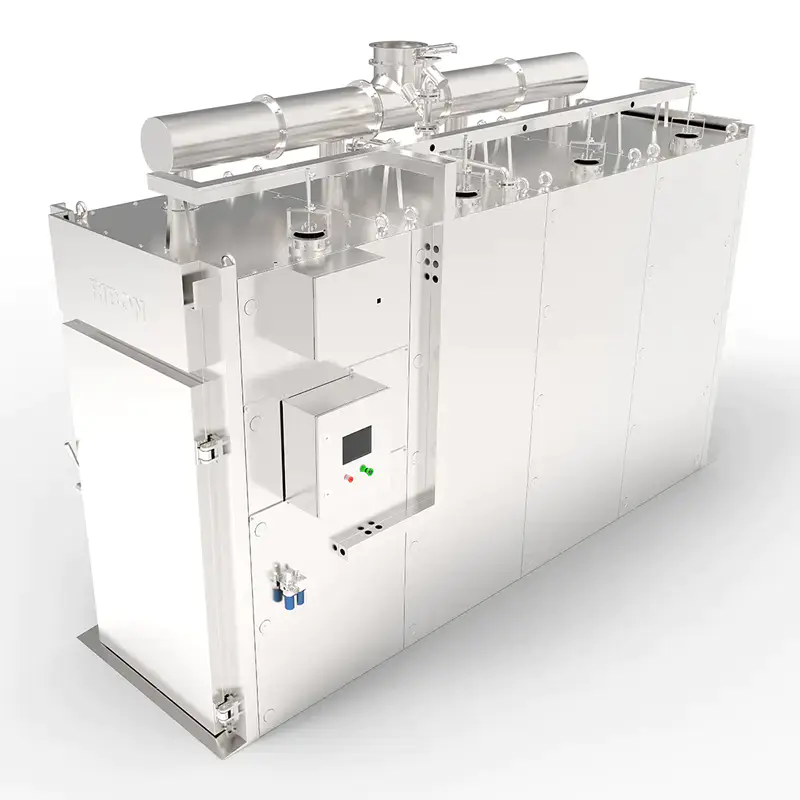
Steam Cooker
9. Applications in Meat and Food Production
The steam cooker can be used for a broad range of products where controlled humid heat is appropriate. Typical applications may include cooked meat products, poultry, fish, seafood, prepared foods, and other recipes requiring steam treatment.
Cooked Meat Products
Processed pork, beef, poultry, and mixed-meat products may be cooked in trolleys using a programmed temperature and time sequence. The recipe can be developed around product thickness, packaging type, target internal temperature, and desired texture.
Poultry Products
Chicken and turkey products often require careful control of heat penetration and moisture retention. Steam cooking can provide a consistent chamber environment for products arranged in trays, molds, racks, or other approved loading formats.
Seafood and Fish
Fish and seafood generally require precise thermal treatment because their texture can change rapidly when overcooked. A programmable steam environment can help processors establish repeatable cooking conditions, although each product must be validated independently.
Prepared Foods
The equipment may also support ready-to-eat or ready-to-serve foods that require controlled steaming. The final application depends on the product formulation, packaging, food safety requirements, and the processor's approved production procedure.
Showering Processes
The showering function may be used as part of a cooking or transition stage. It can help apply water evenly, manage the surface condition of products, or support cooling and conditioning. The process should be designed carefully to avoid unnecessary water consumption and to maintain hygienic separation between clean and unclean areas.
10. Cooking Time and Process Development
Cooking time varies considerably according to the food type, product weight, thickness, starting temperature, loading density, chamber temperature, packaging, and target internal temperature. The times used in a domestic kitchen should not be treated as direct operating instructions for an industrial steam cooker.
For general reference, small vegetables may steam in approximately five to fifteen minutes, while thicker vegetables can require longer treatment. Thin meat portions or fish fillets may require roughly eight to twelve minutes under suitable conditions, whereas thicker poultry or pork portions may require fifteen to twenty-five minutes or more.
Small seafood products may cook in approximately five to ten minutes, while larger cuts or whole fish may require fifteen to twenty minutes. Grains and legumes can require ten to thirty minutes or longer depending on pre-soaking and loading conditions. These figures are general culinary references, not validated industrial recipes.
In commercial meat processing, the most important measure is usually the internal temperature achieved at the coldest point of the product. The operator should establish a validated time-temperature profile through product trials, temperature mapping, and food safety verification.
Cooking programs should consider the time required for chamber heating, product heating, holding, showering, cooling, and unloading. A cycle that appears short based only on the final cooking stage may have a longer total duration when loading and transition stages are included.
Product arrangement also affects cooking time. Trolleys should be loaded consistently so that air and steam can circulate around the products. Excessively dense loading can slow heat penetration and create uneven conditions. A repeatable loading method is therefore as important as the equipment setting.
11. Engineering and Manufacturing Strengths
The manufacturer has specialized in meat processing machinery since 2003. Its product scope includes smokehouses, vacuum tumblers, slaughtering systems, cutting equipment, deboning lines, and related processing solutions. This specialization gives the company a broader understanding of how cooking equipment interacts with upstream and downstream processes.
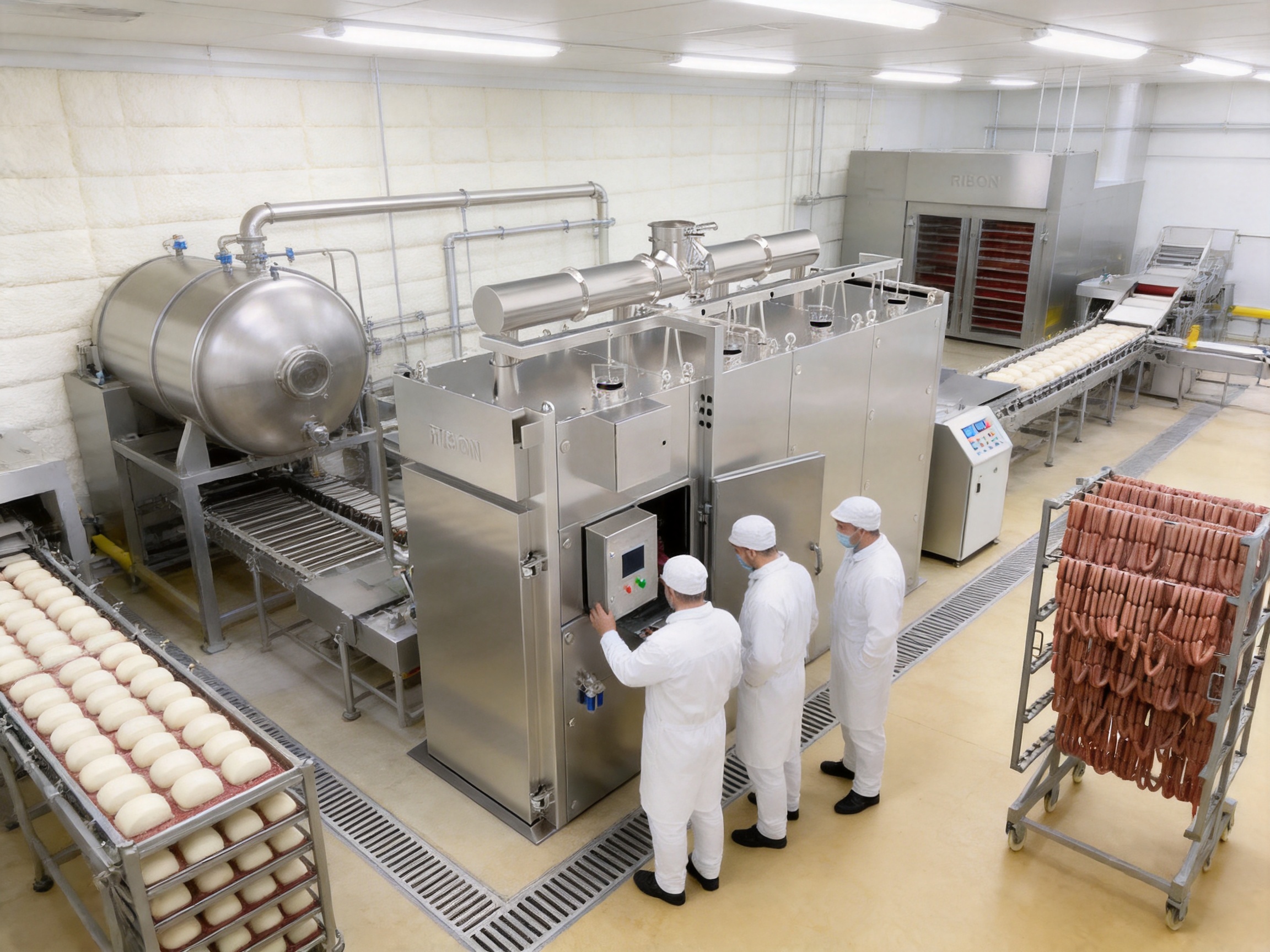
A steam cooker is not an isolated item in many factories. It may receive products from forming, filling, marinating, or loading operations and then transfer cooked products to cooling, peeling, slicing, packaging, or storage. A manufacturer with experience across several areas of meat processing can evaluate equipment integration more effectively.
The company's approach emphasizes research, development, and continuous optimization. This can include improving chamber layouts, refining control logic, selecting reliable components, adjusting insulation structures, and adapting equipment to the practical needs of international customers.
Use of Established Components
The system is specified with world-famous electrical and pneumatic components. The use of recognized component brands can support reliability, serviceability, and replacement planning. It may also make it easier for customers to source compatible parts through local industrial suppliers, depending on the selected component specifications and regional availability.
Application-Oriented Design
Equipment design should be based on actual factory use rather than appearance alone. The steam cooker reflects an application-oriented approach through trolley loading, modular chambers, programmable control, fault diagnosis, and flexible heating resources.
International Project Experience
The manufacturer has exported meat processing solutions worldwide since 2003. International project experience can help a supplier understand different production standards, factory layouts, electrical systems, utility conditions, and customer expectations. It also provides opportunities to improve equipment based on feedback from different operating environments.
Integrated Solution Capability
Because the company's product range includes vacuum tumblers, smokehouses, cutting and deboning systems, and slaughtering solutions, customers may be able to coordinate several stages of a meat processing project through one equipment supplier. This can simplify communication during line planning and support more consistent technical coordination between machines.
12. Manufacturing Process and Quality Considerations
Advanced manufacturing of food processing equipment begins with correct engineering. Before fabrication, the supplier must understand the customer's products, capacity, trolley dimensions, utilities, hygiene requirements, factory space, and operating schedule. These factors influence the chamber size, door position, insulation, control system, heating method, drainage, and service access.
Material selection is also important. Product-contact and high-humidity areas require suitable materials and surface finishes that can withstand repeated cleaning. Welded structures should be designed to minimize dirt traps and support hygienic maintenance. Edges, corners, door frames, and drainage points should be considered from the perspective of daily sanitation.
Fabrication accuracy affects final performance. Chamber panels must align correctly, doors must close evenly, and seals must maintain appropriate contact. Poor alignment can lead to steam leakage, heat loss, uneven processing, or premature wear. Controlled fabrication and inspection are therefore essential parts of reliable equipment production.
The insulation system must be installed consistently throughout the chamber structure. Gaps, compression, or poorly sealed joints can reduce thermal performance. A professional manufacturing process should include checks for panel integrity, insulation placement, door sealing, and external surface quality.
Electrical and pneumatic systems should be assembled in a logical and serviceable manner. Components must be clearly identified, wiring should be organized, and access should be provided for inspection and maintenance. The control cabinet and operator interface should be positioned to support safe and convenient operation without obstructing production movement.
Before shipment, the equipment should undergo appropriate factory inspection and functional testing. Testing may include control-system verification, sensor checks, door operation, heating tests, alarm simulations, pneumatic checks, and review of the programmed operating sequence. Final testing procedures depend on the project specification and applicable standards.
Installation and commissioning are equally important. Even a well-manufactured cooker can perform poorly if steam supply, electrical connection, drainage, ventilation, or trolley loading is unsuitable. Site commissioning should confirm that the equipment works correctly under the customer's actual operating conditions.
13. Hygiene, Cleaning, and Maintenance
Food processing equipment must be designed for frequent cleaning. Steam cooking can create condensation, protein residues, grease, and water accumulation if the chamber is not cleaned correctly. A practical sanitation program should include product-contact surfaces, chamber walls, trolley interfaces, door seals, drains, sensors, and external control areas.
The cleaning method should follow the equipment supplier's instructions and the factory's approved sanitation program. Operators should use detergents and disinfectants at suitable concentrations and temperatures. Excessive chemical exposure or incorrect cleaning methods may damage seals, surfaces, sensors, or electrical components.
Door gaskets require regular inspection because they influence both hygiene and energy performance. Damaged or compressed seals can allow steam to escape and may create difficult-to-clean areas. Replacing worn seals promptly can help maintain stable operation.
Steam valves, pressure regulation components, sensors, and heating elements should be checked according to a preventive maintenance schedule. Diagnostic information from the PLC can assist maintenance personnel, but physical inspection remains necessary.
Electrical cabinets should be protected from water during cleaning. Operators should follow lockout and isolation procedures before maintenance or inspection. Trolleys and racks should also be checked for wheel condition, structural damage, corrosion, and loading stability.
A documented maintenance plan can reduce unexpected downtime. The plan may include daily cleaning verification, weekly inspection, periodic sensor calibration, electrical checks, pneumatic checks, gasket replacement, and review of safety devices.
14. Energy Efficiency and Production Economics
Energy consumption is an important part of the total operating cost of a steam cooker. The selected heating resource, chamber insulation, loading pattern, process duration, steam quality, and maintenance condition all influence energy use.
Direct steam injection can provide rapid heating, which may help shorten warm-up stages when the steam supply is properly designed. Polyurethane foam insulation helps reduce heat loss during the cycle. Programmable controls can also prevent unnecessary overheating or excessive processing time.
Capacity selection affects production economics. A chamber that is too small may require many cycles and increase labor and handling costs. A chamber that is too large may operate with underutilized space and consume more energy per kilogram of product. The correct configuration should be selected by comparing daily output, batch size, product mix, available labor, and expected future growth.
Utility costs should be evaluated using local steam and electricity prices. A facility with efficient boiler operation may find steam heating economical, while a plant with expensive or limited steam infrastructure may prefer electric heating. The final choice should include installation cost, maintenance, energy efficiency, and production flexibility.
15. Layout Planning and Customization
Industrial kitchens and meat processing plants rarely have identical layouts. The steam cooker can be considered for different configurations involving chamber dimensions, trolley quantity, loading direction, door placement, control-panel location, and utility connection points.
Manufacturers may customize the equipment to suit specific widths, heights, depths, and production routes. The modular construction of the chamber provides a foundation for such flexibility. However, customization should be finalized during the engineering stage because changes can affect structural design, heating demand, controls, installation, and cost.
Trolley compatibility is another important planning issue. The factory should confirm trolley width, height, wheel arrangement, rack spacing, loading weight, and turning radius. Trolleys must move safely through the production area and enter the chamber without excessive force or obstruction.
The control panel may be installed in a convenient position for operators while remaining protected from direct washdown. Remote monitoring or other control options may be considered depending on the project requirements. The goal is to make the equipment easy to operate without compromising safety or hygiene.
Material and finish options may also be discussed. Food processing plants often require surfaces that support cleaning, resist corrosion, and maintain a professional appearance. The selected finish should be evaluated for durability under the factory's cleaning chemicals, humidity, temperature, and operating conditions.
16. Installation, Commissioning, and Staff Training
Successful installation begins with site preparation. The foundation or floor must support the equipment and loaded trolleys. Adequate clearance should be provided for doors, maintenance access, trolley movement, cleaning, and component replacement.
Utilities should be prepared before the equipment arrives. These may include steam supply, electrical power, water, drainage, compressed air, ventilation, and communication connections. Utility capacity should correspond to the selected chamber configuration and heating method.
During commissioning, the system should be checked under operating conditions. The team may verify chamber temperature distribution, steam injection, showering operation, sensor response, door sealing, trolley movement, alarms, and programmed recipes.
Operators should receive training in loading procedures, recipe selection, start-up, shutdown, alarm response, cleaning, and routine inspection. Maintenance staff should be trained to interpret fault information and perform basic service procedures.
Training is important because equipment performance depends on daily use. Correct loading, accurate recipe selection, proper cleaning, and timely maintenance all contribute to stable output and longer service life.
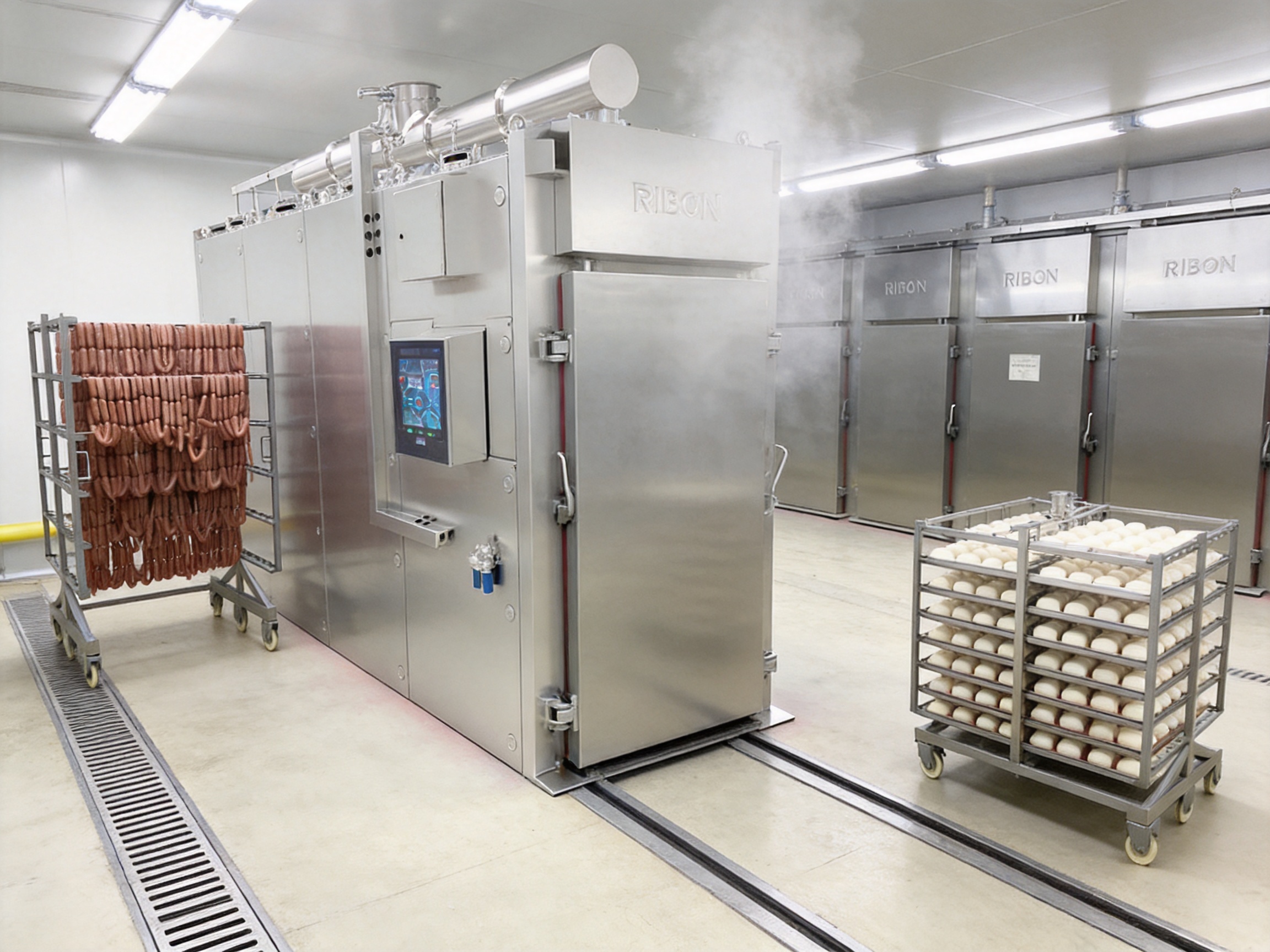
17. Why Choose a Specialized Meat Processing Equipment Manufacturer?
Purchasing a steam cooker from a specialized meat processing equipment manufacturer can provide benefits beyond the machine itself. A specialist understands the relationship between raw materials, processing stages, product handling, hygiene, thermal treatment, and packaging requirements.
The manufacturer can help identify the right capacity and trolley configuration rather than simply supplying a standard chamber. It can also consider how the cooker will connect with tumblers, smokehouses, cutting equipment, deboning systems, conveyors, cooling systems, and packaging operations.
Specialization may also support more useful technical communication. Meat processors can discuss product yield, texture, cooking loss, recipe control, batch scheduling, and sanitation with a supplier familiar with these subjects. This can improve the quality of the project design.
Zhejiang Ribon Intelligent Equipment Co., Ltd. has focused on meat processing machinery since its foundation in 2003. Its product range and international experience support a solution-oriented approach in which equipment is designed to provide practical value, operational convenience, and dependable performance.
18. Selecting the Correct Configuration
Before ordering a steam cooker, customers should prepare detailed information about their production. Important factors include the product types, average batch weight, maximum batch weight, target daily output, available trolley size, recipe duration, desired future capacity, factory dimensions, and existing utilities.
The customer should also identify whether the machine will use steam, electricity, or both. If steam is selected, the plant should provide information about available pressure, flow, boiler capacity, condensate return, and steam quality. If electric heating is selected, the available voltage, phase, transformer capacity, and local electrical standards should be confirmed.
The product's packaging and loading format should be reviewed. Products in molds, trays, bags, racks, or other containers may require different trolley arrangements. Air and steam circulation should be considered when deciding rack spacing and loading density.
Factory hygiene zoning is another key issue. The movement of raw products, cooked products, trolleys, personnel, water, and waste should be organized to reduce cross-contamination risks. The location of the cooker should support a logical production flow from loading through cooking, cooling, and further processing.
Finally, the customer should consider after-sales support, spare parts, training, documentation, and service response. A technically advanced machine delivers the greatest value when the supplier can support it throughout its operating life.
19. Frequently Asked Questions
Q1: What is the main function of this steam cooker?
The main functions are steam cooking and showering. It is designed for industrial food processing applications, particularly meat, poultry, seafood, and prepared products that require controlled humid heat.
Q2: How many trolleys can the cooker accommodate?
The design can be configured for approximately one to eight trolleys, depending on the required capacity and factory layout. Specific chamber dimensions and trolley arrangements should be confirmed during the engineering process.
Q3: What are the listed capacities?
The reference specifications include a two-trolley model with an approximate capacity of 500 kilograms and a four-trolley model with an approximate capacity of 1,000 kilograms. Actual capacity depends on the product and loading arrangement.
Q4: Can the machine use electricity instead of steam?
Yes. The equipment can be designed with steam heating, electric heating, or a suitable combination, depending on the customer's utility conditions and production requirements.
Q5: How does direct steam injection improve operation?
Low-pressure steam is injected directly into the chamber to create a humid heating environment. This can support rapid heat transfer, moisture management, and consistent thermal treatment when the system is correctly configured and operated.
Q6: Does the cooker have automatic control?
Yes. The system uses a PLC and touch-screen control system. It can support programmed recipes, process monitoring, fault diagnosis, and controlled operation of cooking and showering stages.
Q7: What happens if the machine loses power during a process?
The listed design allows the machine to restart with its original working data. The restart must still be managed according to the plant's food safety procedures, including evaluation of the product and process conditions.
Q8: Can the chamber be customized for a specific factory layout?
Yes. The modular chamber design and flexible trolley capacity allow the equipment to be considered for different factory layouts. Customization may include chamber dimensions, trolley quantity, loading direction, door position, and control-panel location.
Q9: How long does it take to cook meat or poultry?
There is no single cooking time for all products. Time depends on thickness, starting temperature, loading density, chamber temperature, packaging, and target internal temperature. Commercial recipes should be established through product trials and validated thermal processing procedures.
Q10: What maintenance is required?
Routine maintenance may include cleaning and inspection of the chamber, door seals, sensors, valves, heating components, electrical systems, pneumatic components, trolleys, and safety devices. A preventive maintenance schedule should be developed for the specific installation.
Q11: Why is insulation important?
Polyurethane foam insulation helps retain heat in the chamber, reduce energy loss, and limit external surface temperatures. Door seals and panel joints must also be maintained to preserve insulation performance.
Q12: Can the cooker be integrated into a complete meat processing line?
Yes. It can be planned as part of a broader solution involving vacuum tumblers, smokehouses, slaughtering systems, cutting equipment, deboning lines, cooling equipment, conveyors, and packaging operations.
Q13: What should be confirmed before purchase?
Customers should confirm product types, batch weight, trolley dimensions, capacity, heating resource, utilities, factory layout, hygiene requirements, recipe needs, control functions, installation conditions, training, spare parts, and after-sales service.
20. Conclusion
The industrial steam cooker provides a practical combination of controlled steam cooking, showering, flexible trolley capacity, programmable operation, direct low-pressure steam injection, modular construction, and energy-conscious insulation. These features make it suitable for meat processors seeking repeatable production results and adaptable equipment for changing product requirements.
Its advantages over simpler systems include better process repeatability, flexible capacity, multiple heating options, fault diagnosis, controlled restart capability, and compatibility with customized factory layouts. The use of recognized electrical and pneumatic components further supports serviceability and reliable operation.
The equipment is backed by a manufacturer with a long-term focus on meat processing machinery. Since 2003, Zhejiang Ribon Intelligent Equipment Co., Ltd. has developed and supplied smokehouses, vacuum tumblers, slaughtering systems, cutting and deboning solutions, and related equipment to customers in different markets.
For the best results, the steam cooker should be selected as part of a complete process plan. Product characteristics, thermal requirements, production capacity, utility conditions, hygiene zoning, trolley design, maintenance resources, and future expansion should all be considered. With correct engineering, installation, validation, and operator training, the system can provide a dependable foundation for efficient and consistent industrial cooking.
References
1. Product specification information for the industrial steam cooker, including heating resources, trolley capacity, control functions, chamber construction, insulation, and reference utility consumption.
2. General principles of steam cooking, thermal processing, moisture control, and food production equipment operation.
3. General guidance on hygienic design, sanitation, preventive maintenance, and thermal process validation for industrial food machinery.
4. Manufacturer information concerning Zhejiang Ribon Intelligent Equipment Co., Ltd., its establishment in 2003, product range, international supply experience, and meat processing equipment expertise.
5. General engineering practices for PLC-controlled machinery, direct steam systems, insulated chambers, trolley loading, and factory equipment integration.
For product configuration, capacity planning, and technical consultation, customers should provide detailed information about their products, production volume, trolley dimensions, heating utilities, factory layout, and required processing recipes to the equipment manufacturer.