

 English
 русский
 Español
 عربى

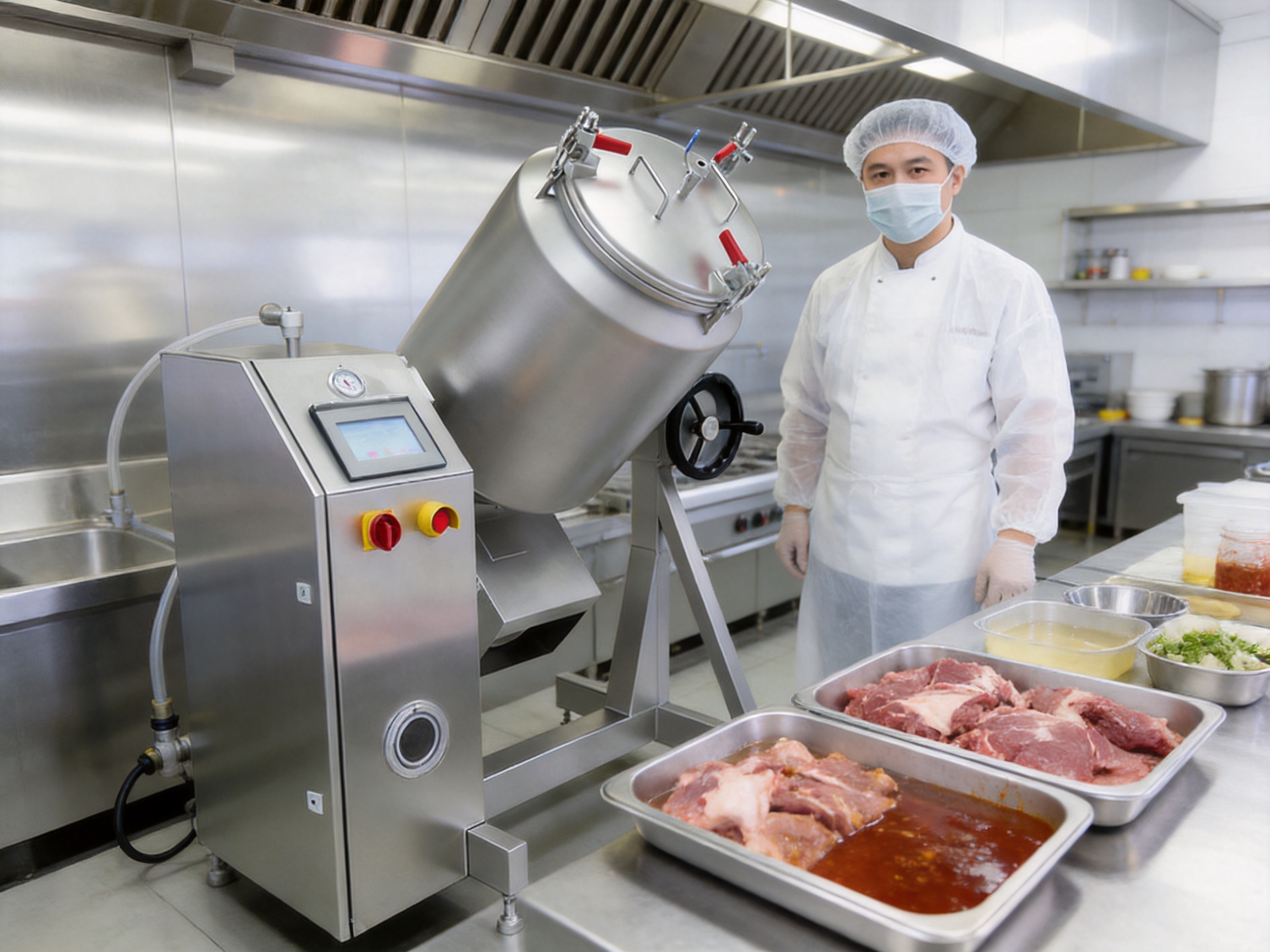
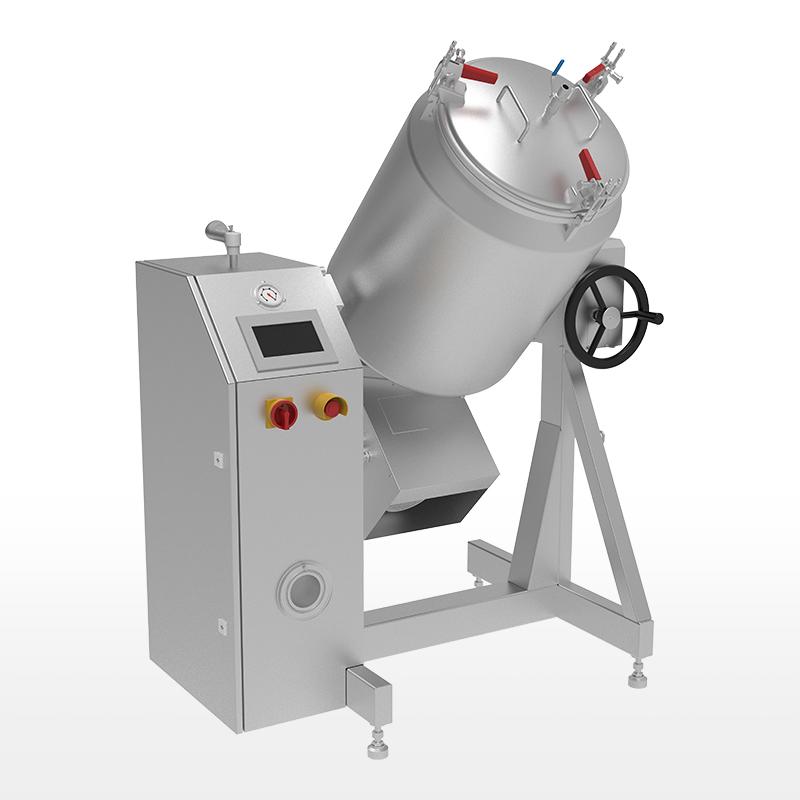
Modern meat processors, restaurant production kitchens, catering operations, product-development laboratories, and small-scale food manufacturers need equipment that can improve flavor, texture, yield, and production consistency without creating unnecessary complexity. The Vacuum Tumbler RGR-150VF is designed for this practical requirement. With a 150-liter drum, adjustable rotation speed, programmable rotation direction and time, continuous vacuum capability, and interchangeable paddle options, it provides a controlled way to massage and process meat products under alternating vacuum and natural-pressure conditions.
Vacuum tumbling is widely used to help distribute brine, marinades, seasonings, and functional ingredients throughout meat. Mechanical action encourages contact between the product and the processing liquid, while vacuum conditions help remove air and support more effective penetration. The result can be a more uniform product with improved flavor distribution and a desirable texture, provided that the recipe, loading quantity, temperature, and processing cycle are correctly selected.
The RGR-150VF is especially suited to restaurant production and laboratory testing. Its capacity is large enough to support meaningful production batches while remaining more manageable than high-capacity industrial tumblers. This balance makes it useful for businesses that need commercial performance but do not require a very large continuous processing line. It is also appropriate for product developers who need to test recipes, compare processing conditions, and establish repeatable procedures before scaling up.
Content
- 1 Understanding the Role of a Vacuum Tumbler in Meat Processing
- 2 Product Overview of the RGR-150VF
- 3 How the Vacuum and Massage Process Works
- 4 Advantages Over Basic or Less Adjustable Tumbling Equipment
- 5 Applications in Restaurants and Commercial Kitchens
- 6 Applications in Laboratory and Pilot-Scale Testing
- 7 Manufacturing and Engineering Strengths
- 8 Recommended Operating Approach
- 9 Typical Processing Time Considerations
- 10 Food Safety and Sanitation Considerations
- 11 Cleaning and Maintenance Practices
- 12 Integration with Broader Meat-Processing Solutions
- 13 How to Select the Correct Configuration
- 14 Economic and Operational Value
- 15 Quality Control During Production
- 16 Frequently Asked Questions
- 16.1 What is the main purpose of the RGR-150VF?
- 16.2 What is the drum volume?
- 16.3 What rotation speeds are available?
- 16.4 Can the rotation direction be changed?
- 16.5 Can processing time be programmed?
- 16.6 What paddle options are available?
- 16.7 How long does meat usually remain in the tumbler?
- 16.8 Is the machine suitable for restaurants?
- 16.9 Is it suitable for laboratory testing?
- 16.10 Does vacuum tumbling replace cooking or refrigeration?
- 16.11 What safety precautions are important?
- 16.12 How can a processor achieve consistent results?
- 16.13 Why is paddle selection important?
- 16.14 What should be discussed with the supplier before purchase?
- 17 Conclusion
- 18 References
- 19 Product: Vacuum Tumbler RGR-150VF
Understanding the Role of a Vacuum Tumbler in Meat Processing
A vacuum tumbler is a rotating vessel used to massage meat in the presence of a marinade, brine, seasoning solution, or other processing ingredients. During operation, the product moves through the drum as paddles or internal elements lift, fold, and release the meat. This repeated motion promotes physical contact between the meat surface and the liquid solution.
The vacuum function changes the pressure environment inside the drum. By reducing the amount of air surrounding the product, the equipment can support the movement of liquid into spaces between meat fibers and around irregular surfaces. When vacuum and natural pressure conditions are used alternately, the pressure changes can assist the movement of brine and other ingredients. The mechanical massage action then distributes the solution more evenly.
In meat processing terminology, tumbling may also support the dissolution and extraction of salt-soluble proteins, sometimes described in production literature as myofibrillar protein extraction. These proteins can contribute to binding, juiciness, sliceability, and product cohesion in suitable formulations. The actual result depends on the meat type, salt concentration, temperature, tumbling intensity, and total cycle time. Equipment alone cannot replace recipe development, but a stable and adjustable tumbler provides the process control required to achieve repeatable results.
Compared with manual mixing or simple soaking, vacuum tumbling offers a more controlled and measurable method. Manual methods may produce inconsistent coverage, uneven seasoning, and variable treatment times. Soaking can distribute liquid on the surface without providing sufficient mechanical contact or pressure variation. A vacuum tumbler combines these functions in one processing step and can reduce the amount of manual labor required for batch preparation.
Product Overview of the RGR-150VF
The RGR-150VF is a restaurant commercial 150-liter vacuum tumbler developed for meat processing applications, recipe testing, and small-to-medium batch production. Its operating concept is straightforward: the product is loaded into the drum with the selected brine or marinade, the required vacuum and rotation settings are established, and the internal paddles massage the product for a programmed period.
| Item | Specification or Function | Practical Benefit |
|---|---|---|
| Product type | Vacuum tumbler | Supports controlled meat massage under vacuum and natural-pressure conditions |
| Drum volume | 150 liters | Suitable for restaurant production, pilot batches, and laboratory testing |
| Rotation speed | Adjustable from 3 to 17 rpm | Allows processing intensity to be adapted to different products |
| Rotation direction | Settable | Provides additional control over product movement and treatment style |
| Rotation time | Settable | Supports repeatable recipes and production cycles |
| Vacuum operation | Continuous vacuum function | Maintains a controlled vacuum environment during the selected process |
| Paddle options | V-shaped or blade-shaped paddles | Allows the machine configuration to be matched to different products |
| Primary applications | Restaurant production and laboratory testing | Useful for commercial preparation and product development |
The specifications give operators several important adjustment points. Speed control allows the machine to handle products with different structures and sensitivities. A relatively gentle cycle may be appropriate for delicate pieces, while a more active cycle may be selected for products that require stronger massaging. Settable rotation direction can influence the way product pieces are lifted and released, while programmable time helps operators reproduce a tested recipe.
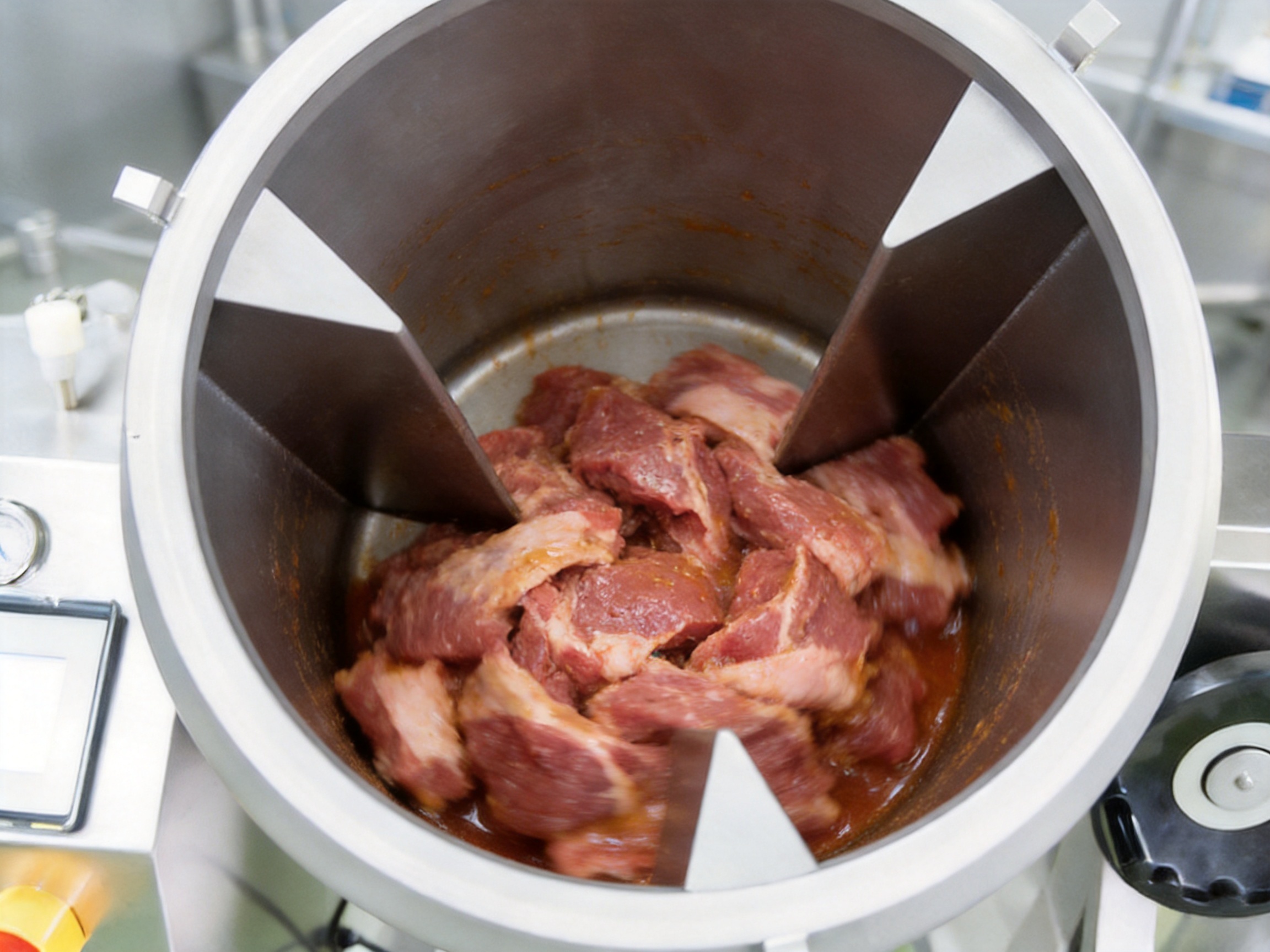
The choice between V-shaped and blade-shaped paddles is another important advantage. Different meat products respond differently to internal movement. Some products may benefit from a gentler lifting and folding action, while others may require a more direct scraping, turning, or massaging effect. Offering alternative paddle arrangements gives the processor more flexibility than a machine with only one fixed internal configuration.
How the Vacuum and Massage Process Works
The processing cycle begins with loading. Meat pieces, brine, marinade, or other approved ingredients are placed into the drum in accordance with the selected recipe. The quantity should be controlled rather than simply filling the drum to its maximum volume. Adequate free space is important because the product must be able to move. Overloading can restrict tumbling action, increase uneven treatment, and make cleaning more difficult.
Once the drum is closed and the operating settings are confirmed, the vacuum system can reduce the pressure inside the vessel. The rotating paddle then moves the meat through a repeated lifting and folding pattern. As the product changes position, liquid contacts different surfaces and enters spaces that may not be reached consistently through static soaking.
During continuous vacuum operation, the equipment maintains the selected vacuum condition while the drum rotates. This can support the removal of trapped air and promote closer contact between the product and the processing liquid. In some production strategies, operators may use alternating vacuum and natural-pressure phases. Pressure changes can support brine infiltration, while rotation provides the mechanical energy needed to massage and distribute the ingredients.
The process also contributes to the dissolution and extraction of relevant proteins in suitable salted-meat formulations. When these proteins are released, they can help improve the binding of pieces in products such as formed meats, cooked ham-style products, seasoned poultry, and other restructured preparations. The exact formulation must always be validated through product trials because excessive treatment may produce an undesirable texture.
At the end of the programmed cycle, the machine is stopped according to the operating procedure. The vacuum is released safely, the drum is opened only after pressure conditions have returned to a safe state, and the product is removed for the next processing stage. Depending on the recipe, the next step may be cooking, resting, stuffing, forming, packaging, or further chilling.
Advantages Over Basic or Less Adjustable Tumbling Equipment
Adjustable Rotation Speed
One of the most useful features of the RGR-150VF is its adjustable rotation range of 3 to 17 rpm. A fixed-speed machine offers limited control because it forces different products to receive the same mechanical treatment. However, meat products vary in size, structure, fat content, connective tissue, and sensitivity to agitation.
A lower speed can be considered when the goal is to minimize physical damage, preserve the appearance of larger pieces, or process a fragile product. A higher speed may be useful when a stronger massaging effect is required or when the formulation benefits from more active movement. The appropriate setting should be established through trials rather than selected solely according to the maximum available speed.
This adjustment range is particularly valuable in a restaurant or laboratory environment where one machine may be used for multiple recipes. Operators can document a speed for each product and build a repeatable processing schedule. This flexibility is a practical advantage over simpler tumblers with limited or no speed adjustment.
Continuous Vacuum Capability
The continuous vacuum function provides a consistent processing environment during the selected cycle. A stable vacuum condition can help maintain contact between the product and marinade and reduce the influence of air pockets. It also gives operators a clearer process framework than an intermittent or manually controlled vacuum approach.
Continuous vacuum does not mean that every product should always be processed at the strongest possible vacuum. Product composition, liquid quantity, packaging conditions, and desired texture must be considered. Nevertheless, the availability of continuous operation gives users a broader range of process options and supports more systematic recipe development.
Programmable Direction and Time
Rotation direction and processing time can be set according to the product and recipe. The ability to control time is essential for production consistency. Without a defined cycle, operators may rely on visual judgment or informal estimates, which can lead to differences between batches and shifts.
Settable direction adds another layer of control. Reversing or selecting a defined movement pattern can change how the product is lifted, folded, and released. This may be useful when working with different cuts or when a recipe requires a particular treatment sequence. Combined with speed control, direction and time settings allow the operator to develop a process profile rather than relying on a single generic operating mode.
Interchangeable Paddle Options
The availability of V-shaped or blade-shaped paddles helps match the internal movement to the product. A V-shaped arrangement may provide a particular lifting and rolling pattern, while a blade-shaped arrangement may create a different contact and turning action. The correct choice depends on meat size, product delicacy, desired mixing intensity, and the amount of liquid used.
Interchangeable configurations can extend the useful range of a machine. Instead of purchasing separate equipment for every product category, a processor can evaluate which paddle design provides the best results for each application. This is particularly useful for restaurants and laboratories that work with multiple recipes and need to compare processing methods.
Balanced Commercial Capacity
A 150-liter drum offers a practical middle ground. Very small laboratory tumblers may not provide enough material for realistic production trials, while large industrial machines may be excessive for restaurants, pilot operations, or limited-volume manufacturers. The RGR-150VF is designed for users who require commercial processing capacity without immediately moving to a large-scale production system.
The capacity can support repeated restaurant batches, seasonal product development, and pilot production. It may also help a business standardize its recipes before investing in larger processing lines. The actual working load should be determined according to the product density, movement requirements, marinade volume, and the manufacturer's operating recommendations rather than using the nominal drum volume as the exact product load.
Applications in Restaurants and Commercial Kitchens
Restaurant kitchens increasingly prepare marinated meat products in advance to improve service speed and maintain flavor consistency. A vacuum tumbler can help centralize this preparation step. Meat can be processed in planned batches, portioned after treatment, and held under appropriate food-safety conditions until cooking or further preparation.
Potential restaurant applications include marinated beef cuts, seasoned pork, poultry portions, kebab ingredients, barbecue preparations, deli-style products, and other recipes that require the distribution of liquid seasoning. The machine can help reduce the need for repeated manual mixing and provide a documented cycle for each menu item.
For a restaurant group or central kitchen, process repeatability is especially important. A standardized cycle can be recorded with the ingredient formula, loading quantity, speed, direction, vacuum condition, and treatment time. The same procedure can then be used by trained staff across shifts or locations. This can help reduce variation in taste and texture while making staff training more straightforward.
Restaurants should also consider product temperature. Meat should be kept within the safe temperature range required by applicable food regulations throughout handling and processing. The tumbler is a processing machine, not a substitute for refrigeration or temperature control. Chilled ingredients, clean equipment, short exposure times, and proper storage remain essential.
Applications in Laboratory and Pilot-Scale Testing
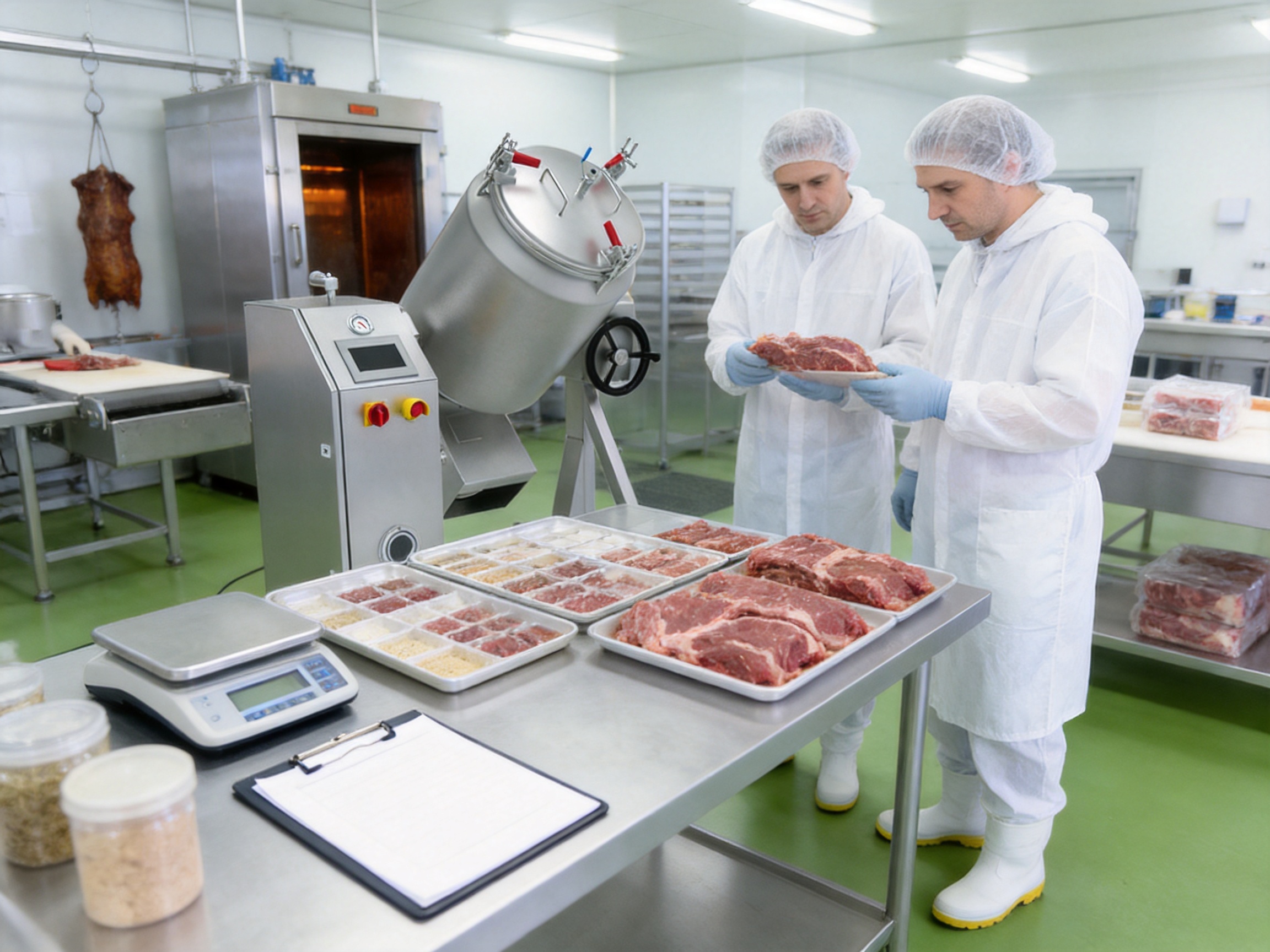
Product development teams need equipment that can produce meaningful test results without requiring a full industrial line. The 150-liter capacity is suitable for pilot testing in which developers compare marinades, salt levels, processing times, paddle configurations, and rotation speeds.
For example, a development team may create several test groups using the same meat cut but different brine concentrations. Each group can be processed under a controlled tumbling program, then evaluated for uptake, appearance, cooking yield, tenderness, flavor distribution, and sliceability. The adjustable controls make it possible to isolate variables and understand how each setting affects the finished product.
Laboratory users can also compare V-shaped and blade-shaped paddle arrangements. If one configuration produces less surface damage or more uniform distribution, that result can guide future production equipment selection. Similarly, controlled rotation times can help determine the point at which additional tumbling no longer provides a benefit or begins to affect texture negatively.
A pilot tumbler can support scale-up planning. When a recipe is moved from manual mixing or a small test vessel to a larger production line, the processor needs to understand how mechanical action, loading ratio, and vacuum conditions influence the product. Data from a 150-liter commercial machine can provide a more useful reference than purely manual trials.
Manufacturing and Engineering Strengths
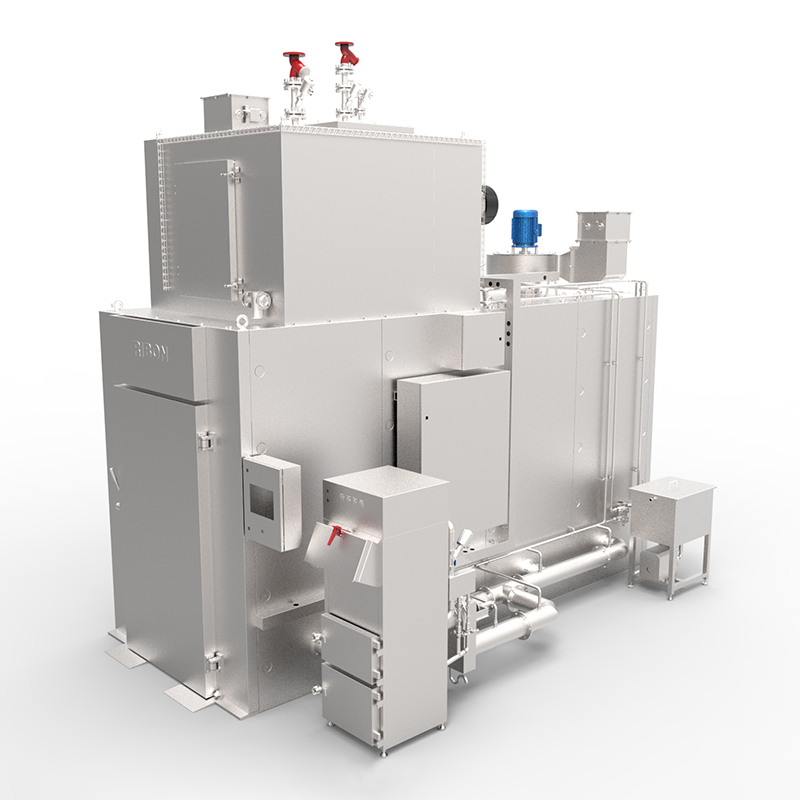
Zhejiang Ribon Intelligent Equipment Co., Ltd. was founded in 2003 by Mr. Shi Ming and focuses on the research, development, and manufacture of meat processing machinery. Its product range includes meat processing smokehouses, vacuum tumblers, and cutting and deboning solutions. This specialization is important because meat-processing equipment must be designed around food handling, product movement, cleanability, process repeatability, and integration with other production stages.
The company has exported meat-processing solutions worldwide since 2003. International experience can help a machinery manufacturer understand that processors operate under different production conditions, recipe traditions, facility layouts, labor systems, and regulatory expectations. Although every installation still requires application-specific evaluation, a broad export background supports the development of equipment that is practical for varied operating environments.
The company describes its technologies and solutions as continuously optimized. Continuous optimization is particularly relevant to vacuum tumblers because small changes in internal paddle geometry, control logic, access design, vacuum performance, or cleaning procedures can influence daily usability. A machine should not only complete the primary processing task; it should also support efficient loading, unloading, cleaning, inspection, and maintenance.
Ribon's stated approach emphasizes better-designed and more practical solutions that provide value and convenience to customers. For a restaurant or pilot-scale user, practicality may be more important than unnecessary complexity. Operators need controls they can understand, settings they can repeat, and a machine that fits their production rhythm. The RGR-150VF reflects this orientation through its combination of adjustable speed, settable direction and time, continuous vacuum capability, and paddle alternatives.
The company's product development is also connected with environmental responsibility through ongoing technological and service improvements. In meat processing, responsible equipment design can support efficient use of raw materials, reduce unnecessary rework, improve process consistency, and help users avoid avoidable product loss. Efficient cleaning and maintenance practices can also contribute to better resource management, although actual resource consumption depends on the installation, operating procedures, and facility design.
Research and Development Focus
Research and development in meat machinery requires more than simply increasing motor power or drum size. The product must move effectively without causing excessive damage. Vacuum conditions must be useful without creating operational instability. Controls must provide flexibility while remaining manageable for production staff. Paddle geometry must support product movement and cleaning access.
The RGR-150VF's range of adjustable functions indicates an equipment philosophy based on process adaptation. Instead of treating all products identically, the machine allows users to define a processing profile. The ability to adjust speed, direction, time, vacuum conditions, and paddle style gives development teams practical tools for refining a recipe.
Manufacturing for Practical Application
Manufacturing strength is reflected not only in the ability to produce a machine but also in the ability to translate food-processing requirements into a usable system. A practical machine should be compatible with the user's workflow, including ingredient preparation, loading, operation, discharge, cleaning, inspection, and maintenance.
As a dedicated meat-processing machinery manufacturer, Ribon can develop equipment in the context of broader processing solutions. Its experience with smokehouses, tumblers, cutting equipment, and deboning lines provides a foundation for considering how individual machines may fit into a wider operation. A tumbler may be used before cooking, forming, stuffing, or packaging, so its output and workflow should be evaluated as part of the complete process.
Customer-Oriented Solution Development
Different customers may need different levels of capacity, automation, product protection, or integration. A restaurant may prioritize compact commercial functionality and easy recipe adjustment. A laboratory may prioritize trial repeatability and configuration flexibility. A larger processor may focus on line integration and throughput. The same basic vacuum-tumbling principle must therefore be adapted to the customer's actual application.
The company's focus on practical solutions supports this application-based approach. Customers can evaluate the RGR-150VF according to their products, batch sizes, recipes, and available facility conditions rather than selecting equipment based only on a nominal capacity number. Technical consultation before purchase is valuable because the correct configuration depends on meat type, product size, marinade characteristics, target output, and cleaning requirements.
Recommended Operating Approach
1. Define the Recipe
Before operating the tumbler, establish the meat type, cut size, ingredient formula, liquid-to-meat ratio, target temperature, treatment time, and desired final characteristics. A written recipe helps ensure that operators use the same process each time.
2. Prepare the Ingredients
Meat should be trimmed and portioned according to the intended product. Brine or marinade should be mixed thoroughly before loading. Any ingredients that need to dissolve should be fully incorporated so that the tumbler is not expected to perform basic formulation mixing that should have occurred earlier.
3. Load Carefully
Load the drum according to the recommended working capacity. Avoid overfilling because the product needs room to move. Excessive loading may prevent effective lifting and folding, while insufficient loading may produce a different movement pattern from the one used during recipe development.
4. Select the Paddle Configuration
Choose the V-shaped or blade-shaped paddle arrangement according to the product and desired mechanical effect. If the best configuration is not known, conduct controlled trials using the same recipe and compare appearance, uptake, texture, and product integrity.
5. Set Speed, Direction, and Time
Begin with a conservative setting when processing a new product. Set the rotation direction and treatment time, then record the selected values. The adjustable range of 3 to 17 rpm provides room for experimentation, but the highest speed is not automatically the most effective setting.
6. Establish the Vacuum Condition
Use the continuous vacuum function according to the recipe and equipment operating procedure. Confirm that the lid or access system is correctly closed and that the vacuum system is ready before beginning the cycle. Vacuum conditions should be monitored rather than assumed.
7. Monitor the Cycle
Operators should remain attentive during operation, especially during initial trials. Watch for abnormal noise, unusual vibration, leakage, unexpected product movement, or other signs that the machine or recipe requires attention. Record any observations that may help improve future cycles.
8. Release Vacuum Safely
When the cycle is complete, follow the proper procedure for stopping rotation and releasing vacuum. Do not attempt to open the drum while it remains under pressure difference. Wait until the system indicates that it is safe to open.
9. Remove and Evaluate the Product
After discharge, evaluate the product according to the intended result. Useful observations may include marinade distribution, surface appearance, product integrity, weight change, tenderness, cooking yield, flavor, and texture. These observations help determine whether the next batch should use a different time, speed, paddle, or formulation.
Typical Processing Time Considerations
There is no single processing time that is correct for every meat product. A cycle may range from approximately 30 minutes to several hours depending on meat type, piece size, formulation, vacuum conditions, rotation speed, paddle design, and the desired degree of marination or tenderization.
Small pieces or thin slices generally require less time to achieve noticeable seasoning distribution than large or thick pieces. Larger pieces may need more time for the liquid to reach the desired depth. However, simply extending the cycle does not guarantee better results. Excessive tumbling may damage the surface, create an overly soft texture, or affect the appearance of the finished product.
Marinade composition also affects process time. A thin liquid may move differently from a viscous sauce. Salt, phosphates, sugars, oils, acids, enzymes, and other ingredients can influence product behavior. A recipe should therefore be tested under the actual formulation used in production.
Rotation speed and vacuum strength can influence processing efficiency. Higher mechanical activity may reduce the time needed to achieve a certain degree of distribution, but it may also increase physical stress. Stronger vacuum can improve contact with the liquid, yet the appropriate level depends on the product and equipment configuration. Operators should use trial data rather than assuming that faster or stronger is always better.
For production control, the best practice is to establish a standard cycle through repeatable trials. Once the desired result has been confirmed, record the exact settings and train operators to follow them. Periodic verification should be conducted because raw material characteristics can change with season, supplier, cut, temperature, and storage history.
Food Safety and Sanitation Considerations
Vacuum tumbling does not eliminate the need for strict food-safety controls. Raw meat can carry microorganisms, and the equipment must be operated as part of a documented hygiene system. Personnel should follow applicable local regulations and the facility's hazard-control procedures.
The machine should be installed on a stable, level surface. A stable installation reduces the risk of movement or tipping and supports consistent operation. The surrounding area should provide sufficient space for loading, unloading, cleaning, inspection, and emergency access.
Electrical connections should be correctly installed and grounded. Operators should not use electrical equipment in wet conditions unless the installation is specifically designed and protected for that environment. Cables, switches, and connectors should be inspected regularly for damage.
Appropriate personal protective equipment should be used. Gloves may help protect hands during loading and unloading, while eye protection can reduce exposure to splashes during cleaning or handling of liquid ingredients. Protective clothing and footwear should be selected according to the facility's hygiene program.
Adequate ventilation should be maintained. Although meat tumbling is not normally a high-fume process, ventilation helps maintain a suitable working environment and can reduce the accumulation of odors or vapors associated with cleaning agents and ingredients.
Operators should be trained in the normal controls and the emergency stop function. They should know how to stop the equipment quickly if there is a mechanical problem, unexpected product behavior, or another unsafe condition. The emergency stop mechanism should be accessible and checked according to the maintenance program.
Cleaning should begin after the equipment has been safely stopped, isolated as required, and returned to a condition suitable for access. Meat residues and marinade should not be allowed to dry on internal surfaces. Cleaning and sanitizing procedures should follow the manufacturer's recommendations and the facility's approved sanitation program.
Maintenance inspections should include the drum, paddles, seals, vacuum connections, control elements, and other relevant components. Any unusual wear, leakage, vibration, or loss of vacuum should be investigated before continued production. Preventive maintenance can reduce unplanned downtime and support consistent processing performance.
Cleaning and Maintenance Practices
Efficient cleaning is essential because residues can become a source of microbial growth, allergen cross-contact, odors, and product contamination. After each production cycle, remove remaining meat and liquid as completely as possible. Do not rely on a later batch to clean the drum through continued operation.
Use cleaning agents approved for the facility and suitable for the equipment. Follow the correct concentration, contact time, water temperature, and rinsing procedure. Excessive chemical concentration can damage surfaces or seals, while insufficient concentration may leave residues behind.
Pay attention to areas where meat particles or marinade can collect, including paddle connections, drum edges, lid areas, discharge points, seals, and vacuum-related fittings. These locations may require manual attention even when the main internal surface appears clean.
After cleaning, inspect the equipment for damage and confirm that surfaces are free of visible residue. If the sanitation program requires it, apply the approved sanitizer and allow the correct contact time. The machine should be left in a hygienic condition and protected from recontamination before the next use.
Maintenance should be scheduled according to operating frequency and manufacturer recommendations. A restaurant using the machine daily may require a different inspection schedule from a laboratory using it occasionally. Records should identify the date, inspection performed, finding, corrective action, and responsible person.
Integration with Broader Meat-Processing Solutions
Vacuum tumbling is often one stage in a larger meat-processing workflow. After tumbling, the product may be cooked in a smokehouse, formed into portions, stuffed into casings, sliced, packaged, or sent to a chilled storage area. The quality of the tumbler's output influences the performance of these later stages.
For example, uniform distribution of brine can support more consistent cooking results. Better binding may help formed products retain their shape. Controlled surface treatment may improve the appearance of sliced or packaged products. A repeatable tumbling cycle can also make downstream scheduling easier because the processing time is more predictable.
A manufacturer that also provides smokehouses, cutting machinery, and deboning solutions can view the tumbler as part of a complete equipment strategy. This broader perspective may help customers plan future expansion, select compatible machinery, and improve material flow through the facility.
When evaluating integration, users should consider product transfer, floor space, operator movement, cleaning zones, chilled storage, and the timing of each process. A technically capable tumbler will perform best when it is placed within a well-organized workflow.
How to Select the Correct Configuration
The first consideration is the intended product. Delicate poultry pieces, large muscle cuts, minced or formed preparations, and heavily marinated products may require different treatment profiles. Product testing should guide the choice of speed, paddle style, and cycle time.
The second consideration is batch size. The 150-liter drum is suitable for restaurant production and pilot testing, but the ideal working load depends on the product's density and movement characteristics. Buyers should discuss expected batch weight, number of batches per day, and available production time with the equipment supplier.
The third consideration is recipe diversity. If a facility processes only one product, a fixed configuration may be sufficient. If it processes many products, the adjustable functions and paddle options of the RGR-150VF become more valuable because one machine can support several treatment profiles.
The fourth consideration is facility readiness. Confirm that the site has an appropriate electrical supply, drainage and cleaning arrangements, adequate floor space, safe access, and suitable refrigeration or temperature-control procedures. Installation planning should be completed before delivery.
The fifth consideration is training and service. Operators need instruction in settings, vacuum operation, loading, unloading, cleaning, emergency procedures, and routine inspection. A supplier's technical support and knowledge of meat-processing applications can be an important part of the total equipment value.
Economic and Operational Value
The value of a vacuum tumbler is not limited to its purchase price. A processor should also consider labor savings, batch consistency, raw-material utilization, recipe repeatability, cleaning time, maintenance requirements, and the ability to introduce new products.
By mechanizing the massage and marination step, the RGR-150VF can reduce dependence on manual mixing. This may allow staff to spend more time on preparation, cooking, portioning, or packaging. The actual labor benefit depends on the facility's workflow and staffing model, but the equipment can make the process more organized.
Improved consistency can have commercial value. Customers generally expect a restaurant or food manufacturer to deliver the same flavor and texture each time. A documented tumbler cycle supports this goal by replacing informal handling with defined operating parameters.
The machine can also help a business test and launch new recipes. A restaurant may develop a new marinated product, while a laboratory may test a formulation for future commercial production. Because the RGR-150VF offers adjustable speed, direction, time, vacuum operation, and paddle configuration, it can support experimentation without requiring a completely different machine for every trial.
Quality Control During Production
Quality control should begin with incoming raw materials. Meat temperature, cut size, fat distribution, freshness, and storage conditions can affect tumbling results. Brine and marinade ingredients should also be weighed accurately and mixed consistently.
During processing, record the batch identification, loading quantity, product temperature, paddle configuration, rotation speed, direction, vacuum condition, and cycle time. These records allow the team to compare results and identify the cause of variation.
After tumbling, check for uniform liquid distribution, damaged pieces, excessive foaming, unusual color, and changes in texture. Depending on the product, additional checks may include weight uptake, cooking loss, yield, sliceability, and sensory evaluation.
When a problem occurs, change one variable at a time whenever possible. For example, if seasoning is uneven, first verify loading and marinade mixing before increasing the rotation speed. If product damage is excessive, evaluate the paddle arrangement and speed before extending the cycle. This method makes troubleshooting more reliable.
Frequently Asked Questions
What is the main purpose of the RGR-150VF?
The RGR-150VF is designed to massage and rotate meat under vacuum and natural-pressure conditions. Its purpose is to help distribute brine, marinade, and seasoning while supporting the dissolution and extraction of relevant proteins in suitable meat formulations.
What is the drum volume?
The drum volume is 150 liters. The practical working load should be established according to the product density, recipe, required movement, and operating recommendations rather than assuming that the full drum volume equals the correct meat load.
What rotation speeds are available?
The rotation speed can be adjusted from 3 to 17 rpm. This range allows operators to select a gentler or more active mechanical treatment according to the product and recipe.
Can the rotation direction be changed?
Yes. The rotation direction can be set, providing additional control over product movement. Direction should be selected as part of the tested processing recipe.
Can processing time be programmed?
Yes. Rotation time can be set, which supports repeatable batches and reduces reliance on informal timing methods.
What paddle options are available?
The machine can use V-shaped or blade-shaped paddle configurations. The preferred arrangement depends on the product, desired movement, and required treatment intensity.
How long does meat usually remain in the tumbler?
Processing time can range from approximately 30 minutes to several hours. The correct time depends on meat type, piece size, marinade, rotation speed, vacuum condition, paddle design, and the desired final texture. A production recipe should be confirmed through trials.
Is the machine suitable for restaurants?
Yes. The product is described as a restaurant commercial 150-liter vacuum tumbler and is intended to suit restaurant production. It can help restaurants standardize marination and meat preparation in planned batches.
Is it suitable for laboratory testing?
Yes. The 150-liter capacity and adjustable operating functions make it suitable for pilot-scale and laboratory testing. Developers can compare recipes, cycle times, speeds, directions, and paddle configurations.
Does vacuum tumbling replace cooking or refrigeration?
No. Vacuum tumbling is a preparation process. It does not replace cooking, chilling, refrigeration, hygiene controls, or other food-safety procedures.
What safety precautions are important?
The machine should be installed on a stable and level surface, properly grounded, and operated in a suitable environment. Operators should use appropriate protective equipment, follow the manufacturer's procedures, monitor operation, understand the emergency stop, release vacuum safely, and maintain a regular cleaning and inspection program.
How can a processor achieve consistent results?
Use a documented recipe that includes raw-material conditions, loading quantity, marinade formula, paddle configuration, speed, direction, vacuum condition, and cycle time. Train operators to follow the same procedure and periodically verify the finished product.
Why is paddle selection important?
Paddle shape affects how the product is lifted, folded, turned, and massaged. V-shaped and blade-shaped options may produce different movement patterns, so selecting the correct configuration can help match the machine to the product.
What should be discussed with the supplier before purchase?
Discuss the meat types, expected batch size, daily production, recipe range, desired product texture, facility conditions, electrical requirements, cleaning process, installation, operator training, and service expectations. Application details help determine whether the equipment configuration is appropriate.
Conclusion
The Vacuum Tumbler RGR-150VF is a flexible 150-liter solution for restaurant production, pilot manufacturing, and laboratory testing. Its continuous vacuum function, adjustable 3-to-17-rpm rotation speed, settable direction and time, and optional V-shaped or blade-shaped paddles provide the process control needed for a wide range of meat products.
Its main advantage is the combination of commercial capacity and practical adjustability. Instead of applying one fixed treatment to every product, operators can develop separate processing profiles for different meats, marinades, and texture targets. This can improve repeatability, support recipe development, and reduce dependence on manual mixing.
The machine is supported by the experience of Zhejiang Ribon Intelligent Equipment Co., Ltd., a meat-processing machinery manufacturer founded in 2003. The company's work in vacuum tumblers, smokehouses, cutting equipment, deboning solutions, and broader meat-processing systems provides a foundation for application-oriented equipment development. Its emphasis on continuous optimization, practical design, customer value, and environmental responsibility is relevant to processors seeking equipment that can contribute to an efficient and organized production workflow.
For the best result, the RGR-150VF should be selected and operated as part of a complete process plan. Correct loading, recipe control, temperature management, sanitation, maintenance, operator training, and product evaluation are all essential. When these factors are managed together, the tumbler can become a dependable tool for producing more uniform, flavorful, and commercially consistent meat products.
References
1. Food and Agriculture Organization of the United Nations. General principles of food hygiene and good practices for meat processing.
2. American Meat Science Association. Principles of meat processing, tumbling, curing, and product quality evaluation.
3. International Commission on Microbiological Specifications for Foods. Guidelines for hygienic handling and control of microorganisms in food production.
4. Manufacturer product information for the RGR-150VF 150-liter vacuum tumbler.
5. Manufacturer information concerning meat-processing machinery research, development, manufacturing, and integrated processing solutions.
6. General technical literature on vacuum tumbling, mechanical massaging, brine distribution, and salt-soluble protein extraction in processed meat products.
7. General occupational safety guidance for food-processing machinery installation, operation, emergency stopping, cleaning, and preventive maintenance.
Vacuum Tumbler RGR-150VF