

 English
 русский
 Español
 عربى

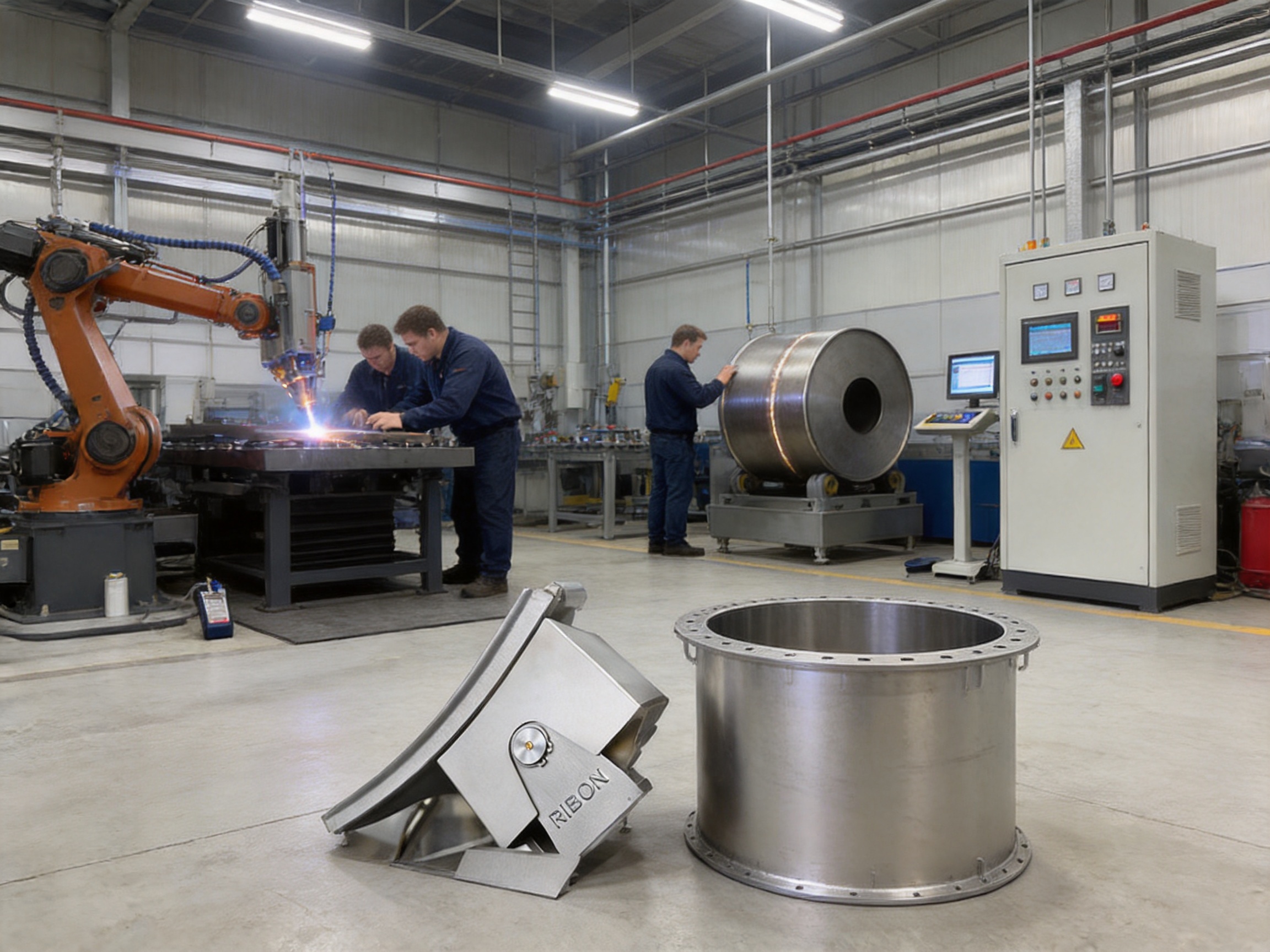
Modern meat processors face a demanding combination of requirements. Products must be safe, consistent, attractive, profitable, and suitable for increasingly complex production schedules. At the same time, processors must manage raw-material variation, changing ambient temperatures, strict hygiene expectations, labor costs, and pressure to improve yield. Marinating and tumbling are central to many of these challenges because they directly influence seasoning distribution, protein extraction, water retention, tenderness, texture, and final product weight.
A refrigerated vacuum tumbler provides an integrated solution for controlling these variables. By combining vacuum processing, controlled drum rotation, adjustable operating parameters, and an independent refrigeration system, the equipment helps maintain a stable product temperature throughout extended marinating and tumbling cycles. This capability is particularly valuable when processing poultry, pork, beef, seafood, prepared meat, and other products that require controlled absorption of brine, marinades, or functional ingredients.
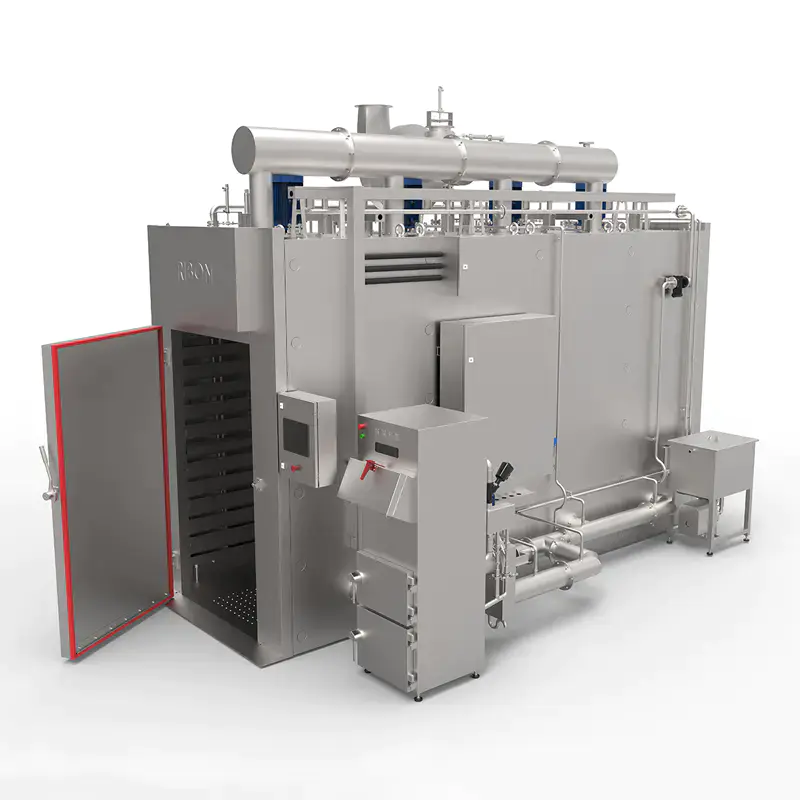
The refrigerated vacuum tumbler described in this article is designed and manufactured by Zhejiang Ribon Intelligent Equipment Co., Ltd., a China-based specialist in meat processing machinery. The company has focused on meat processing equipment since 2003 and has developed experience in vacuum tumblers, smokehouses, cutting systems, deboning lines, and related processing solutions. Its refrigerated tumbler combines a jacketed drum, independent cooling, vacuum operation, programmable controls, adjustable speed, tilting, and flexible internal carrier options.
Content
- 1 Why Temperature Control Matters During Tumbling
- 2 Integrated Refrigeration and Jacketed Drum Design
- 3 Vacuum Processing for Improved Marinade Contact
- 4 Adjustable Rotation for Different Meat Products
- 5 Tilting, Loading, and Unloading Flexibility
- 6 Internal Carriers for Product-Specific Processing
- 7 Programmable Control and Operator Convenience
- 8 Manufacturing Strength and Production Capacity
- 9 Automated Laser Cutting for Precision Components
- 10 Fully Automated Welding and Gas-Shielded Technology
- 11 Drum Balancing for Stable Operation
- 12 Quality Control for Key Components
- 13 International Electrical Components and Serviceability
- 14 Product Yield and Marinade Absorption
- 15 Model Range and Technical Specifications
- 16 Advantages Compared with Conventional Tumblers
- 17 Hygiene, Food Safety, and Operational Discipline
- 18 Maintenance and Long-Term Performance
- 19 Applications Across the Meat Industry
- 20 How to Select the Correct Model
- 21 Recommended Process Development Approach
- 22 Frequently Asked Questions
- 22.1 What is a refrigerated vacuum tumbler?
- 22.2 Why is refrigeration important during tumbling?
- 22.3 What is the rotation-speed range?
- 22.4 Can the machine operate with different vacuum patterns?
- 22.5 What is the maximum vacuum degree?
- 22.6 Can the drum be tilted?
- 22.7 What types of internal carriers are available?
- 22.8 What are the available drum capacities?
- 22.9 How does the equipment support product yield?
- 22.10 What manufacturing processes are used?
- 22.11 Is the machine suitable for different meat products?
- 22.12 What utilities should be considered before installation?
- 22.13 How can operators maintain consistent results?
- 23 Conclusion
- 24 References
- 25 Product: Refrigerated vacuum tumbler
Why Temperature Control Matters During Tumbling
Tumbling is not simply a mechanical mixing operation. It is a controlled treatment in which meat pieces are exposed to movement, vacuum, and a marinade or brine. The mechanical action helps distribute ingredients and encourages the extraction of myofibrillar proteins from the meat surface. These proteins contribute to binding, water retention, sliceability, juiciness, and the structure of the finished product.
However, the effectiveness of the process depends strongly on temperature. As meat warms during handling or extended processing, several problems may occur. Bacterial growth can accelerate, fat may soften undesirably, product structure can become inconsistent, and the functional performance of the marinade may change. In addition, a warm product can make it more difficult to maintain the intended texture and yield.
External environmental conditions can make temperature management even more difficult. A processing room may be cool in winter and significantly warmer in summer. Equipment operating near ovens, packaging areas, loading bays, or other heat-generating systems may also experience changing conditions. Without dedicated cooling, processors may need to rely on pre-chilled raw materials, shorter processing times, additional refrigeration rooms, or stricter environmental controls.
A refrigerated tumbler addresses these concerns by actively removing heat during the process. The drum is surrounded by a cooling jacket, while an independent refrigeration system supplies the required cooling capacity. This arrangement helps stabilize the temperature of the meat and marinade, even when ambient conditions fluctuate. The result is a more predictable processing environment and a stronger foundation for food safety and product consistency.
Integrated Refrigeration and Jacketed Drum Design
The central design feature of the equipment is the integration of refrigeration with the tumbler drum. The outer wall of the drum is surrounded by a jacket that allows cooling energy to be transferred to the product zone. Instead of depending only on room temperature or pre-cooling, the machine actively supports temperature control throughout the tumbling cycle.
This design is well suited to prolonged marinating applications. Long tumbling cycles may be used to improve ingredient absorption, develop texture, or process products with specific formulation requirements. During such cycles, the refrigeration system helps prevent the product temperature from rising beyond the desired operating range.
The listed cooling unit evaporation temperature is -5°C, and the specified cooling capacity ranges from 7,250 kcal/h for the RGR-800HY model to 25,000 kcal/h for the RGR-3500HY model. The different capacities allow processors to select a machine that corresponds to their production volume and drum size.
Cooling capacity should always be evaluated in relation to product temperature, loading quantity, marinade temperature, cycle duration, room conditions, and the required final temperature. Nevertheless, the availability of an independent refrigeration system gives the processor a significantly higher level of control than a conventional tumbler without integrated cooling.
Temperature control also supports production planning. When processing conditions are less dependent on external weather and room temperature, operators can follow a more consistent recipe and schedule. This can reduce the need for emergency adjustments, excessive use of ice, or unplanned interruptions caused by product warming.
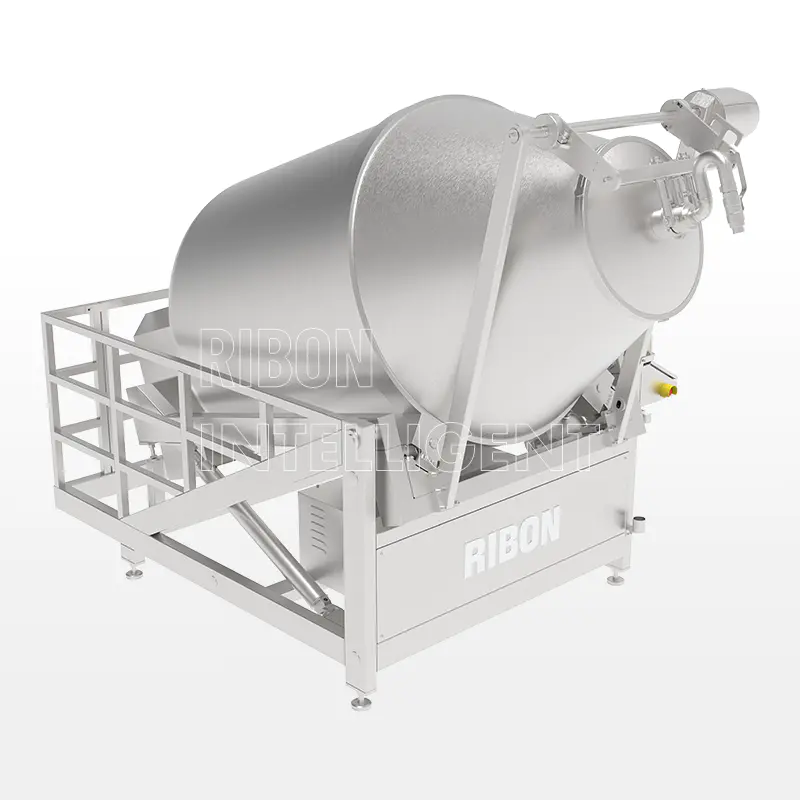
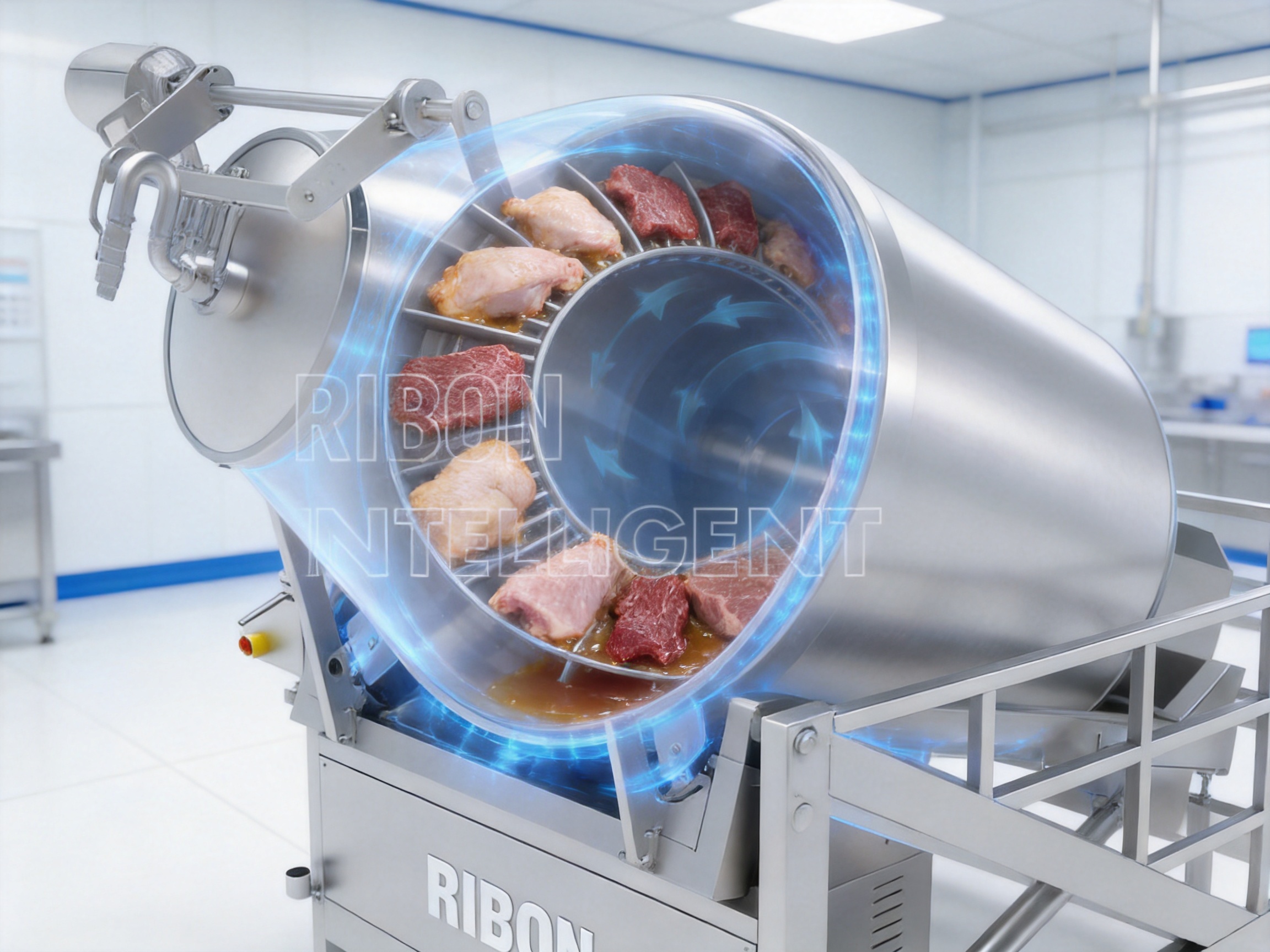
Refrigerated vacuum tumbler
Vacuum Processing for Improved Marinade Contact
Vacuum operation is another important feature of the system. When air is removed from the drum, the pressure around the product is reduced. This changes the interaction between the meat, the marinade, and the internal structure of the product. Combined with tumbling, the vacuum helps promote contact between the marinade and the meat surface.
The equipment can operate with continuous vacuum or breathing rotation. Continuous vacuum maintains a stable vacuum environment during the selected process. Breathing rotation alternates between vacuum and atmospheric conditions to support a different style of product treatment. These operating modes give processors additional flexibility when developing recipes for different meat types, cut sizes, and formulations.
The specified vacuum degree is -0.085 MPa at an altitude of up to 700 meters. Actual performance can be affected by altitude, product loading, sealing condition, operating procedures, and maintenance. Even so, the ability to combine vacuum with controlled rotation is a major advantage for processors seeking improved ingredient distribution and consistent product structure.
Vacuum tumbling can help reduce the presence of trapped air around the product and improve contact with brine or marinade. It may also support better protein extraction during mechanical movement. Extracted proteins contribute to binding and water retention, which can be important in products such as marinated cuts, formed products, cooked ham, poultry portions, and seasoned meat preparations.
The use of a water-sealed vacuum pump further supports reliable operation. A water-sealed design is suitable for industrial processing environments when properly installed and maintained. It provides the vacuum required for production while fitting into a machine designed for regular cleaning and hygienic operation.
Adjustable Rotation for Different Meat Products
Meat products differ considerably in size, shape, fat content, connective tissue, fragility, and marinade absorption. A single fixed drum speed cannot provide optimum treatment for every product. The refrigerated vacuum tumbler therefore uses a frequency inverter to adjust the drum speed from 2 to 12 revolutions per minute.
Lower speeds can be appropriate for delicate products or applications where gentle handling is important. Higher speeds may be used when stronger mechanical action is needed to promote protein extraction, distribute ingredients, or shorten the processing cycle. Operators can select a suitable speed according to the recipe, loading level, product condition, and required final characteristics.
Adjustable speed also improves process development. A processor can test different combinations of speed, vacuum time, rest time, and refrigeration settings to establish the most effective recipe. Once the preferred parameters are identified, they can be applied more consistently from batch to batch.
Controlled rotation helps reduce uncontrolled product impact. Excessive mechanical action may damage the surface of some products, while insufficient movement may produce uneven marination. The 2-to-12 rpm range provides a practical operating window for a broad range of meat processing applications.
Tilting, Loading, and Unloading Flexibility
The drum can be adjusted to any tilting angle from 0 to 20 degrees. This tilting capability supports dynamic marination by changing how the product moves inside the drum. It can also assist with loading and unloading, depending on the production layout and product characteristics.
An inclined drum changes the movement pattern of the meat and marinade. Product pieces may be lifted, rolled, and redistributed in a way that encourages more uniform contact. According to the supplied design information, the machine uses 12-degree inclined arc-shaped carriers inside the drum to support effective absorption of marinades.
The tiltable frame is operated through a hydraulic system. Hydraulic tilting provides a controlled way to reposition the drum and can be integrated into production procedures for different product types. It may also help operators reduce manual handling when transferring product between the tumbler and other processing equipment.
Different loading options are available for different products. This is important because production facilities may process several product formats on the same equipment. Whole muscle cuts, diced meat, poultry portions, formed items, and products with liquid marinades may require different loading practices. A flexible loading arrangement helps processors adapt the machine to their specific workflow.
Proper loading is essential for obtaining good results. Overloading can reduce the free space needed for product movement and prevent uniform contact with the marinade. Underloading may increase product impact or reduce processing efficiency. The maximum loading quantities supplied for the listed models provide a useful reference, but the final loading level should be determined according to product density, shape, formulation, and desired movement pattern.
Internal Carriers for Product-Specific Processing
The internal carriers influence how the product moves within the drum. The equipment can be fitted with arc-shaped or blade-shaped carriers, depending on the processing requirement. These configurations enable the machine to be adapted for products that require different lifting, rolling, or folding actions.
Arc-shaped carriers can support smoother movement and may be particularly useful when the goal is to encourage even product distribution while limiting excessive impact. Blade-shaped carriers may provide a more pronounced lifting and turning action for products that require stronger mechanical treatment.
Carrier selection should be considered together with drum speed, vacuum mode, tilting angle, batch size, and process time. A product that is easily damaged may require a gentler carrier arrangement and lower speed. A dense or irregular product may benefit from stronger lifting action and a different operating sequence.
This level of mechanical flexibility is one of the important advantages of a specialized industrial tumbler. Rather than treating every product in the same way, processors can configure the equipment to better match their formulations and product specifications.
Programmable Control and Operator Convenience
The refrigerated vacuum tumbler is controlled through a PLC and touch screen. This control architecture allows operators to manage important process parameters from a central interface. Depending on the configured program, the operator can control or monitor drum rotation, vacuum operation, tilting, timing, and other production functions.
PLC control supports repeatability. Once a validated recipe has been established, operators can use the same programmed sequence for subsequent batches. This reduces dependence on manual timing and helps limit variation between shifts or production teams.
A touch-screen interface also improves visibility. Operators can review operating status and adjust parameters according to authorized production procedures. Clear control screens can make it easier to identify the current stage of a process, confirm that the equipment is operating correctly, and respond to alarms or abnormal conditions.
For processors managing multiple product lines, programmable control can support recipe organization. Different products may require different speeds, vacuum patterns, tumbling times, tilting angles, and cooling requirements. A controlled system makes it easier to establish distinct operating programs while maintaining disciplined process management.
Automation does not eliminate the need for trained personnel. Operators still need to verify raw-material condition, loading quantity, ingredient formulation, sanitation status, and final product temperature. However, automated control reduces unnecessary variation and gives production staff a more reliable tool for executing approved procedures.
Manufacturing Strength and Production Capacity
The manufacturer has positioned vacuum tumbler production as a central area of specialization rather than as a minor product category within a broad machinery portfolio. The supplied information states that the company has a production capacity of approximately 1,000 vacuum tumblers per year and ranks first in vacuum tumbler production capacity in Asia.
High production capacity can provide several practical advantages. A manufacturer producing a large number of similar machines has more opportunities to refine design details, standardize assembly procedures, improve quality-control routines, and accumulate application experience. It may also be better prepared to support customers requiring several machines or complete processing lines.
Specialization is particularly valuable for refrigerated tumblers because the equipment combines mechanical, electrical, hydraulic, vacuum, refrigeration, and hygienic design requirements. A company with experience in vacuum tumblers is more likely to understand the interaction between drum construction, product movement, sealing, vacuum stability, cooling, and operator control.
Production capacity alone does not determine equipment quality. It must be supported by accurate manufacturing, appropriate materials, process inspection, final testing, and technical support. The manufacturing methods described for this equipment indicate a focus on repeatability and structural reliability.
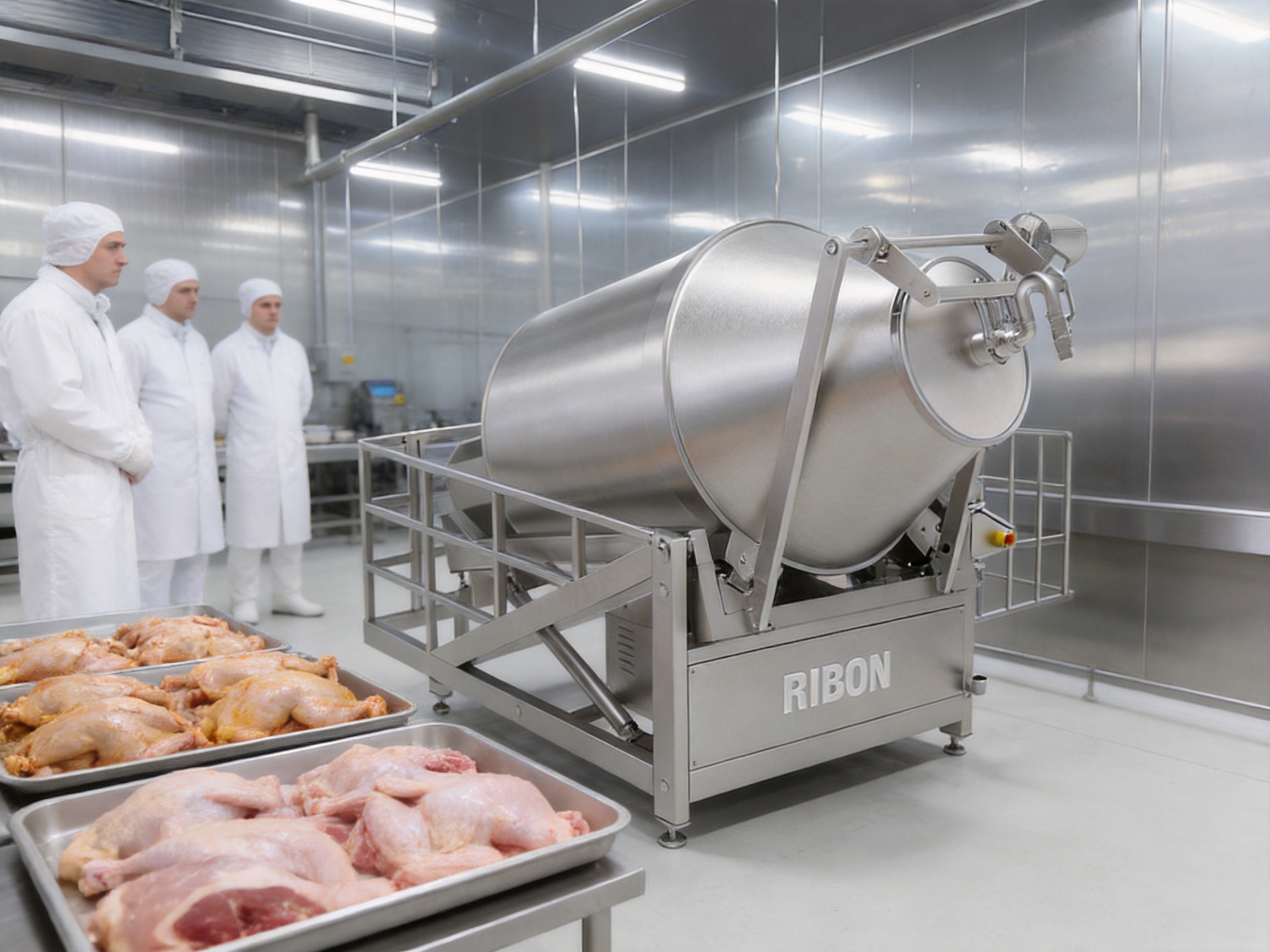
Automated Laser Cutting for Precision Components
Related parts are cut using fully automated laser cutting equipment. Laser cutting enables manufacturers to produce components with accurate dimensions, clean edges, and consistent repeatability. This is especially important when parts must fit together during drum fabrication, frame assembly, jacket construction, and cover installation.
Accurate cutting contributes to more than appearance. Dimensional consistency helps ensure that welded components align correctly and that assembled parts maintain the intended geometry. Precise components can reduce the need for manual correction during fabrication, improve assembly efficiency, and support more consistent performance across machines.
Laser cutting is also suitable for producing complex profiles and repeated parts. When a manufacturer produces many units, automated cutting allows production data to be reused while maintaining consistent dimensions. This helps create a stable manufacturing process and supports replacement-part compatibility.
For a refrigerated tumbler, precision is important in areas such as the drum shell, structural supports, covers, brackets, and components associated with the cooling jacket. Small dimensional errors can become more significant when several parts are combined into a large rotating assembly. Automated cutting helps reduce this risk at an early stage of production.
Fully Automated Welding and Gas-Shielded Technology
The drum and tumbler lid are welded using fully automatic welding machines with gas-shielded welding technology. Automated welding helps improve consistency in weld placement, travel speed, heat input, and overall finish. Consistent welding is especially important for a rotating vessel that must withstand repeated mechanical movement and cleaning operations.
The supplied information states that the selected welding method provides deeper weld penetration than argon arc welding. Deeper penetration can support a stronger joint when the process is correctly controlled and matched to the material and thickness. The manufacturer describes the resulting construction as capable of providing lifelong, maintenance-free performance in the welded areas.
Although all industrial equipment requires inspection and maintenance, strong and well-finished welds can reduce the risk of leakage, surface defects, crevice formation, and structural weakness. Smooth welds are also valuable in hygienic processing environments because uneven surfaces may be more difficult to clean and inspect.
Automated welding provides a competitive advantage over inconsistent manual fabrication when production volume is high. Manual welding can be effective in skilled hands, but it may show greater variation from operator to operator. Automated processes allow manufacturers to establish repeatable settings and produce more uniform drums and lids.
Welding quality should still be verified through appropriate inspection. Visual inspection, dimensional checks, leak testing, and other procedures may be used according to the component and the customer’s requirements. Automation improves process consistency, while inspection confirms that the finished assembly meets the applicable specifications.
Drum Balancing for Stable Operation
After drum welding is completed, the drum is balanced to support stable operation. This step is essential because the drum is a rotating component carrying a substantial product load. Any imbalance can create vibration, increase mechanical stress, generate noise, and reduce the service life of bearings, drive components, and structural elements.
Balancing after welding is particularly important because welding can introduce small dimensional changes or uneven distribution of material. By checking and correcting the drum after fabrication, the manufacturer can improve the operating stability of the completed rotating assembly.
Stable rotation benefits both the machine and the product. Reduced vibration can make operation more comfortable for personnel and reduce stress on the installation. It can also help maintain a predictable movement pattern inside the drum, supporting more consistent tumbling and marination results.
For large-capacity models, balancing becomes even more significant. The RGR-3500HY has a drum capacity of 3,500 liters and a maximum loading capacity of up to 2,100 kilograms, depending on the product. At this scale, even a small imbalance can produce substantial dynamic forces. Post-welding balancing is therefore an important indicator of responsible manufacturing practice.
Quality Control for Key Components
The manufacturer describes a quality-control process covering incoming material inspection, in-process parameter monitoring, and dimensional accuracy verification. Key components are tested against predefined specifications before they are approved for assembly.
Incoming inspection is the first line of control. Materials and purchased components must be checked before entering production to confirm that they meet the required specifications. This may include dimensional checks, material verification, appearance inspection, and review of supplier documentation, depending on the component.
In-process monitoring helps identify deviations before they affect a completed machine. Cutting, forming, welding, assembly, electrical installation, refrigeration installation, and testing all provide opportunities for inspection. Detecting a problem during production is generally more efficient than discovering it after final assembly or shipment.
Dimensional verification is important for the drum, frame, covers, carriers, and connection points. Accurate dimensions support alignment, sealing, rotation, tilting, and safe operation. They also contribute to consistent performance between machines of the same model.
Key components receive particular attention because they directly influence reliability and production results. These may include drive components, vacuum-related parts, cooling components, hydraulic elements, control devices, seals, and structural assemblies. A disciplined inspection system helps reduce the risk that a nonconforming part will be incorporated into the finished machine.
International Electrical Components and Serviceability
Electrical components are procured from leading international brands. This approach offers several practical benefits for customers operating in different countries. Familiar brands may be easier for local technicians to identify, source, replace, and maintain than obscure or highly specialized alternatives.
Local availability of replacement components can reduce downtime. In a meat-processing facility, an extended equipment interruption can affect production schedules, labor planning, raw-material utilization, and customer deliveries. Using internationally recognized electrical components may simplify troubleshooting and shorten the time required to obtain replacements.
Standardized electrical components can also support training. Maintenance personnel who already work with common control, switching, protection, and drive products may be able to understand the system more quickly. This is useful for processors that operate multiple types of machinery from different suppliers.
Electrical system selection must be matched to the destination country, voltage, frequency, safety standards, and customer requirements. The final configuration should be confirmed during technical discussions before purchase. Appropriate installation, grounding, protection, and maintenance remain necessary for safe operation.
Product Yield and Marinade Absorption
Yield is one of the most important commercial considerations in meat processing. Yield is influenced by raw-material quality, formulation, injection or mixing procedures, tumbling conditions, cooking losses, cooling, slicing, and packaging. The refrigerated vacuum tumbler contributes to this chain by supporting consistent protein extraction, marinade distribution, and water retention.
During tumbling, mechanical action helps release functional proteins from the meat surface. Under suitable conditions, these proteins can improve the ability of the product to bind water and hold together during cooking and slicing. Vacuum processing can support closer contact between the product and the marinade, while refrigeration helps maintain a stable temperature during the treatment.
The drum’s adjustable tilt provides an additional tool for improving product movement and absorption. The supplied design information identifies a 12-degree inclined arc-shaped carrier arrangement as a feature supporting effective marinade absorption. The actual result will depend on formulation, product geometry, loading quantity, time, speed, vacuum level, and temperature.
Better yield is not simply a matter of adding more liquid. Excessive or uneven uptake can lead to purge, poor texture, inconsistent cooking behavior, or customer dissatisfaction. The objective is controlled absorption that delivers the desired product characteristics while remaining within the formulation and quality requirements.
By combining cooling, vacuum, controlled rotation, and adjustable mechanical movement, the equipment gives processors a broader set of tools for optimizing yield than a basic non-refrigerated tumbler.
Model Range and Technical Specifications
The refrigerated vacuum tumbler range includes four models. Their drum capacities extend from 800 liters to 3,500 liters, while maximum loading capacities range from 500 to 2,100 kilograms, depending on the characteristics of the product being processed.
| Specification | RGR-800HY | RGR-1700HY | RGR-2500HY | RGR-3500HY |
|---|---|---|---|---|
| Power | 5.9 kW | 7.4 kW | 9.2 kW | 11.7 kW |
| Drum capacity | 800 L | 1,700 L | 2,500 L | 3,500 L |
| Maximum loading capacity | Up to 500 kg | Up to 1,000 kg | Up to 1,500 kg | Up to 2,100 kg |
| Drum rotation speed | 2–12 rpm | 2–12 rpm | 2–12 rpm | 2–12 rpm |
| Vacuum degree | -0.085 MPa | -0.085 MPa | -0.085 MPa | -0.085 MPa |
| Cooling unit evaporation temperature | -5°C | -5°C | -5°C | -5°C |
| Cooling capacity | 7,250 kcal/h | 12,300 kcal/h | 19,250 kcal/h | 25,000 kcal/h |
The model range allows small, medium, and large processors to select equipment according to their required batch size. The 800-liter model may be suitable for businesses seeking a compact industrial solution or processors producing multiple smaller batches. The larger models can support high-throughput operations that need to process substantial quantities in each cycle.
All listed models provide the same stated rotation-speed range, vacuum degree, and evaporation temperature. The main differences are drum capacity, maximum loading quantity, power, and cooling capacity. Final selection should consider the required production volume, product density, recipe cycle, available floor space, electrical supply, refrigeration conditions, and handling system.
Advantages Compared with Conventional Tumblers
A conventional tumbler without integrated refrigeration may still provide mechanical movement and vacuum, but it gives the processor less direct control over temperature. The operator may need to depend on cold raw material, chilled marinade, room cooling, ice addition, or shorter cycles. These methods can work in some circumstances, but they may introduce additional variables and limit recipe flexibility.
The refrigerated design offers several advantages:
First, it actively supports temperature stability during prolonged processing. This is valuable for food safety management and product quality.
Second, it reduces dependence on ambient conditions. Production can be more consistent when the room temperature changes throughout the year.
Third, it helps protect the functional performance of the process. Protein extraction, water retention, and marinade absorption are more controllable when temperature is managed properly.
Fourth, it combines several functions in one machine. Vacuum, cooling, rotation, tilting, and programmable control are integrated rather than handled by separate pieces of equipment.
Fifth, its manufacturing process emphasizes automated cutting, automated welding, drum balancing, component inspection, and internationally recognized electrical parts. These features can contribute to structural reliability, operating stability, and serviceability.
Compared with a basic tumbler, the refrigerated vacuum tumbler is therefore better suited to processors that require extended cycles, stable temperature, repeatable recipes, and higher control over product quality.
Hygiene, Food Safety, and Operational Discipline
Refrigeration supports food safety by helping inhibit bacterial growth, but it is only one part of a complete food-safety program. Operators must still control raw-material temperature, sanitation, personal hygiene, cleaning procedures, cross-contamination risks, and post-process storage.
The equipment should be installed in a hygienically designed processing area with suitable drainage, access for cleaning, and separation from contamination sources. Product-contact surfaces should be cleaned and sanitized according to the facility’s validated procedures. Seals, covers, carriers, drum surfaces, and connections should be inspected regularly.
Temperature records should be maintained as part of the plant’s process-control system. Operators may need to verify product temperature before loading, during processing, and after unloading. Vacuum performance, cooling operation, rotation, and loading quantities should also be monitored according to the approved standard operating procedure.
The use of smooth, properly finished welded surfaces can make cleaning and inspection easier. However, hygienic performance depends on the complete machine installation, including accessible design, drainage, cleaning chemicals, water quality, maintenance, and operator training.
Maintenance and Long-Term Performance
Preventive maintenance is essential for preserving the performance of a refrigerated vacuum tumbler. Maintenance schedules should cover the vacuum pump, seals, drive system, bearings, hydraulic system, refrigeration unit, electrical cabinet, sensors, safety devices, and structural connections.
The vacuum system should be inspected for leaks, unusual noise, reduced vacuum performance, and water-seal condition. A damaged seal or loose connection can reduce vacuum efficiency and increase cycle variability.
The drive system should be checked for abnormal vibration, overheating, noise, and wear. Drum balancing at the manufacturing stage supports stable operation, but routine maintenance remains necessary because product loading, cleaning, and long-term use can affect mechanical components.
The refrigeration system should be serviced according to the supplier’s recommendations. Operators should monitor cooling performance, condenser cleanliness, pressure conditions, and any signs of refrigerant or component problems. Good airflow and appropriate room conditions can also support refrigeration efficiency.
Electrical components should be inspected by qualified personnel. Connections, protection devices, sensors, inverters, and control functions should be checked during scheduled maintenance. The use of recognized international components can make diagnosis and replacement more straightforward, but all work should follow applicable safety procedures.
Regular maintenance protects product quality as well as equipment life. A machine that rotates inconsistently, loses vacuum, or cools inadequately may produce batches that vary in texture, yield, and marinade distribution.
Applications Across the Meat Industry
The equipment can be used in a wide range of applications where meat products require controlled marination, seasoning, or protein extraction. Potential applications include poultry portions, pork cuts, beef products, bacon-related preparations, cooked meat products, prepared foods, seafood, and other formulations requiring vacuum tumbling.
Poultry processors may use the machine for marinated breast, thigh, wing, or portion products. Adjustable speed and carrier selection can help accommodate differences in product size and fragility.
Pork processors may use refrigerated vacuum tumbling for products requiring seasoning distribution, improved binding, or controlled water retention. The cooling function is particularly useful during longer cycles or when working with formulations sensitive to temperature.
Beef processors can benefit from controlled vacuum contact when processing cuts or prepared products that require uniform seasoning. The appropriate operating parameters will depend on cut thickness, connective tissue, fat content, and final product specification.
Prepared-food manufacturers may use the equipment as part of a broader production line. It can be connected operationally with weighing, loading, injection, cooking, cooling, slicing, and packaging processes. The PLC-controlled system can support recipe-based production and integration with the facility’s quality procedures.
How to Select the Correct Model
Model selection should begin with the required batch size. The maximum loading figures are product-dependent, so processors should not select a model solely by comparing drum volume. Meat density, shape, marinade quantity, desired movement, and free space inside the drum all influence practical capacity.
Production planners should calculate the number of batches needed per shift and compare that requirement with the complete cycle time. The cycle may include loading, vacuum creation, tumbling, cooling, rest periods, unloading, and cleaning. A larger machine is not always the best choice if the facility requires frequent product changes or smaller batch flexibility.
Available utilities must also be reviewed. Important considerations include electrical voltage and frequency, water pressure, drainage, refrigeration conditions, access space, floor loading, and material-handling equipment. The specified water pressure is at least 0.2 MPa, while the cooling unit supply pressure is listed as no more than 0.15 MPa. These requirements should be confirmed during engineering review.
Product testing is recommended before final selection. A processor should evaluate the desired texture, absorption, yield, temperature profile, and appearance using representative raw materials and the intended formulation. Testing can help determine the most appropriate carrier shape, loading level, speed, vacuum pattern, and process duration.
Recommended Process Development Approach
A successful tumbling recipe should be developed systematically. Start by recording the raw-material temperature, product weight, cut dimensions, marinade formulation, and target yield. Load the product consistently and establish a safe starting speed.
Next, evaluate the effects of vacuum. Compare continuous vacuum with breathing rotation where appropriate. Monitor product appearance, marinade distribution, surface condition, and texture after processing.
Then evaluate rotation speed and tilting angle. Small changes can affect the movement pattern significantly. The goal is to achieve sufficient product-to-marinade contact without excessive impact or product damage.
Temperature should be measured throughout the process. Record the starting temperature, temperature during tumbling, and temperature after unloading. The refrigeration setting and cycle duration can then be adjusted to maintain the desired range.
Finally, test the product after cooking, cooling, slicing, and packaging. Tumbling performance should be judged by the finished product, not only by the appearance immediately after processing. Yield, purge, texture, flavor distribution, bite, color, and customer acceptance should all be considered.
Frequently Asked Questions
What is a refrigerated vacuum tumbler?
A refrigerated vacuum tumbler is a meat-processing machine that combines drum rotation, vacuum treatment, and active cooling. The product is placed in a rotating drum surrounded by a cooling jacket. The machine removes air from the drum and tumbles the product to support marinade distribution, protein extraction, water retention, and consistent texture while controlling temperature.
Why is refrigeration important during tumbling?
Refrigeration helps maintain a stable product temperature during extended marination and tumbling. It can inhibit bacterial growth, reduce the effects of warm processing environments, and support consistent protein extraction, water retention, and product quality.
What is the rotation-speed range?
The drum rotation speed can be adjusted from 2 to 12 revolutions per minute through a frequency inverter. This allows operators to select gentler or more intensive mechanical action according to the product and recipe.
Can the machine operate with different vacuum patterns?
Yes. The machine can operate with continuous vacuum or breathing rotation. The appropriate mode depends on the product, formulation, desired texture, and process objective.
What is the maximum vacuum degree?
The listed vacuum degree is -0.085 MPa at an altitude of up to 700 meters. Actual performance may vary according to altitude, sealing condition, product loading, pump condition, and operating practice.
Can the drum be tilted?
Yes. The drum can be adjusted to a tilting angle from 0 to 20 degrees through a hydraulic system. Tilting can support dynamic marination and may assist with loading and unloading procedures.
What types of internal carriers are available?
Arc-shaped and blade-shaped carriers are available for different products. Carrier selection affects product movement, lifting, rolling, and mechanical intensity.
What are the available drum capacities?
The listed models have drum capacities of 800, 1,700, 2,500, and 3,500 liters. Maximum loading capacities range from up to 500 kilograms to up to 2,100 kilograms, depending on the product.
How does the equipment support product yield?
Controlled vacuum, tumbling, cooling, and carrier movement can promote protein extraction, marinade absorption, and water retention. These factors may support improved yield and more consistent finished-product quality when the recipe and loading conditions are properly developed.
What manufacturing processes are used?
The supplied information identifies fully automated laser cutting, fully automated gas-shielded welding, post-welding drum balancing, inspection of key components, and the use of internationally recognized electrical components. These processes support precision, structural consistency, stable operation, and easier service.
Is the machine suitable for different meat products?
Yes. The adjustable speed, vacuum modes, tilting system, loading options, and carrier configurations allow the equipment to be adapted to different meat products. The final process parameters should be established through product testing.
What utilities should be considered before installation?
Processors should review electrical supply, water pressure, drainage, floor space, access for loading and maintenance, refrigeration conditions, and material-handling equipment. The listed water-pressure requirement is at least 0.2 MPa, and the cooling unit supply pressure is listed as no more than 0.15 MPa.
How can operators maintain consistent results?
Consistency depends on standardized raw materials, loading quantities, marinade formulation, vacuum settings, rotation speed, tilting angle, cooling performance, cycle time, and cleaning procedures. PLC control and recipe-based operation can help reproduce approved process conditions.
Conclusion
A refrigerated vacuum tumbler is a high-value solution for meat processors seeking greater control over temperature, marination, texture, yield, and food-safety conditions. By combining an independent refrigeration system with a jacketed drum, vacuum operation, adjustable rotation, hydraulic tilting, programmable control, and product-specific carrier options, the equipment addresses several limitations associated with conventional tumbling systems.
The RGR-800HY, RGR-1700HY, RGR-2500HY, and RGR-3500HY models provide a capacity range suitable for different production scales. Their cooling capacities, drum volumes, loading capabilities, and adjustable process functions allow processors to select equipment according to their product and output requirements.
The manufacturing approach is another important strength. Automated laser cutting supports dimensional precision, automatic gas-shielded welding supports consistent drum and lid construction, and post-welding balancing helps achieve stable rotation. Strict inspection of key components and the use of international electrical brands further support reliability and serviceability.
For processors comparing equipment suppliers, the most important consideration is not only the machine’s nominal capacity. The complete value lies in the combination of process control, refrigeration performance, mechanical design, manufacturing quality, production experience, maintenance support, and application flexibility. A properly selected and correctly operated refrigerated vacuum tumbler can become a central part of a modern meat-processing line, helping manufacturers produce safer, more consistent, and higher-value products.
References
1. Zhejiang Ribon Intelligent Equipment Co., Ltd. Product information for refrigerated vacuum tumblers, including operating features, manufacturing processes, and technical specifications.
2. Zhejiang Ribon Intelligent Equipment Co., Ltd. Company information concerning meat-processing machinery manufacturing, product development, production capacity, and international applications.
3. General principles of meat marination, vacuum tumbling, protein extraction, water retention, and temperature management in processed-meat production.
4. General industrial practices for hygienic equipment design, preventive maintenance, refrigeration management, and quality control in food-processing facilities.