

 English
 русский
 Español
 عربى

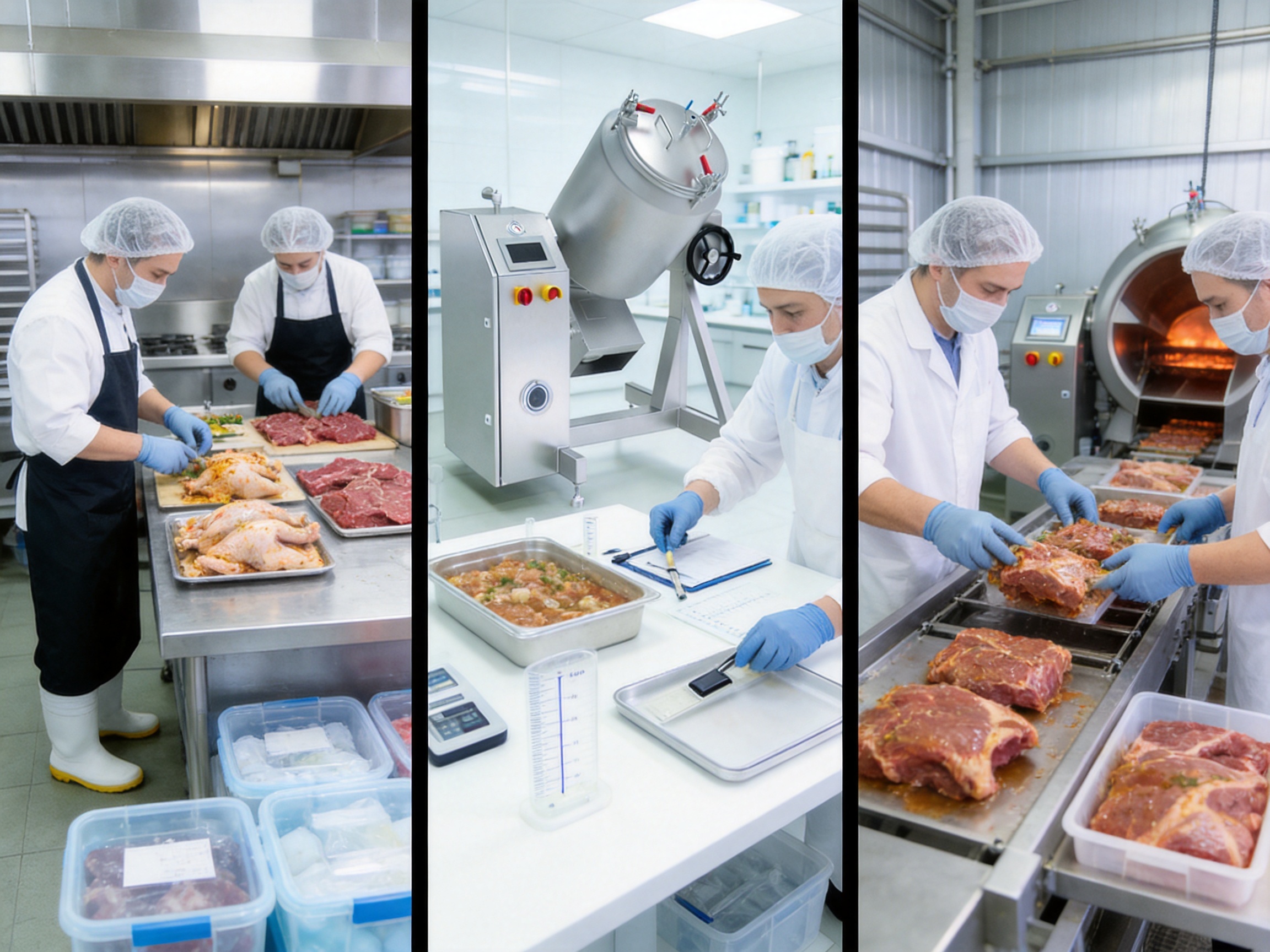
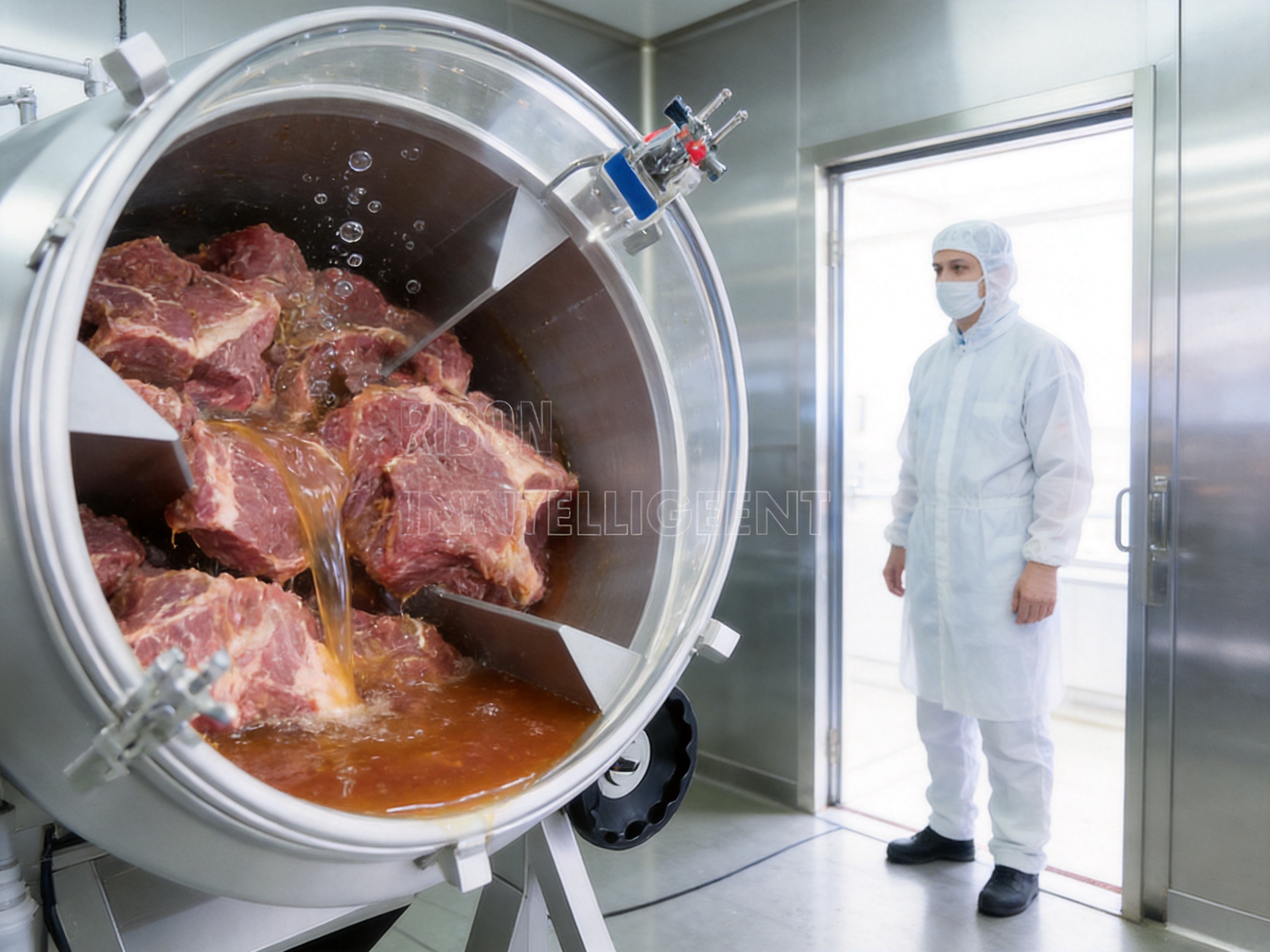
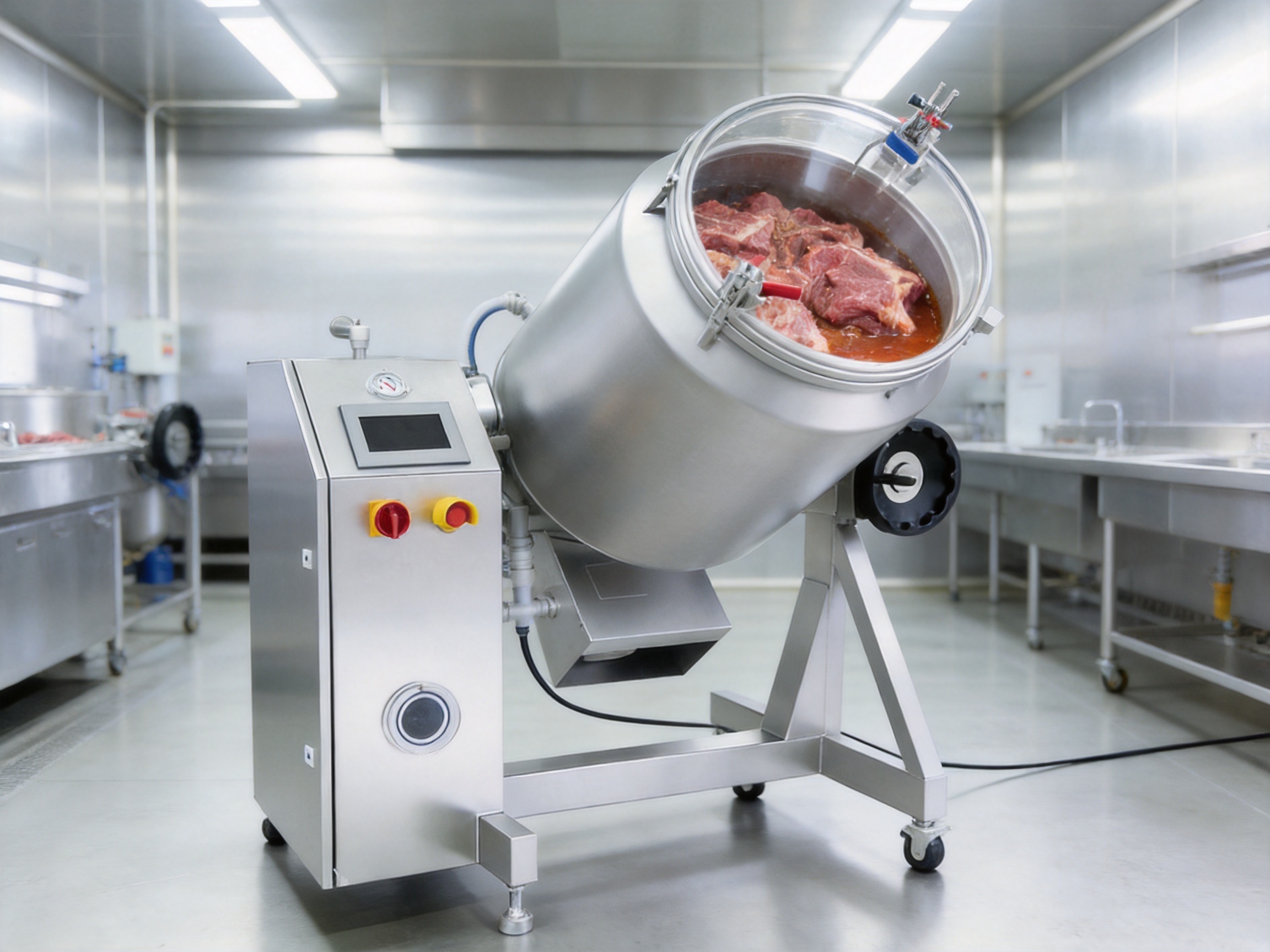
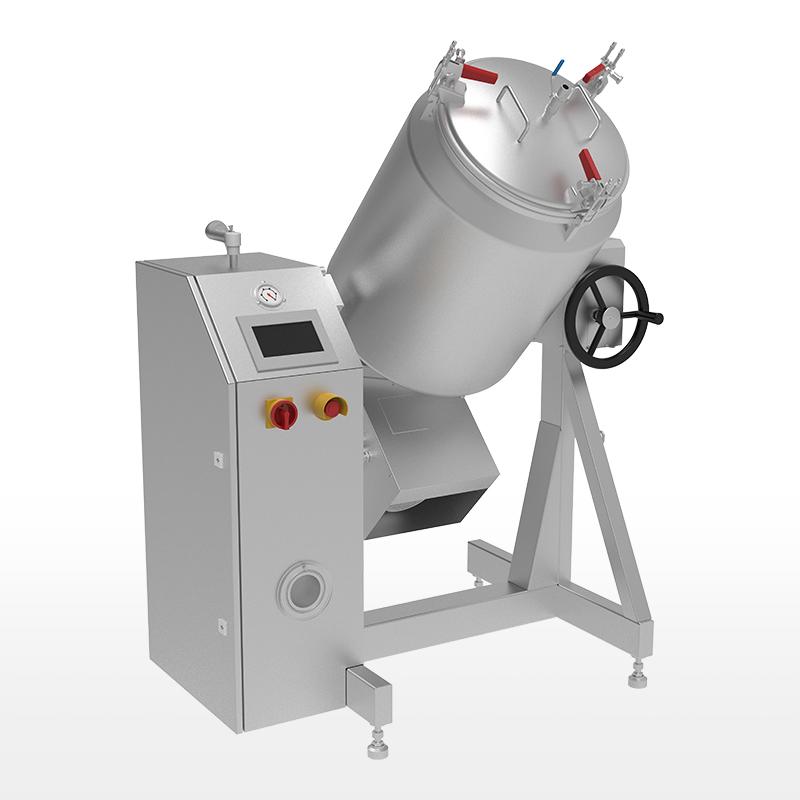
Vacuum Tumbler RGR-150VF
Modern meat processors, restaurant kitchens, food laboratories, and specialty food manufacturers need equipment that can improve product consistency without creating unnecessary complexity. The Restaurant Commercial 150L Vacuum Tumbler is designed for this purpose. With a 150-liter drum, adjustable rotation, continuous vacuum capability, configurable operating time, and optional paddle designs, the RGR-150VF supports efficient marination, seasoning, tenderization, and extraction processes for a wide range of meat products.
Vacuum tumbling is an important stage in the preparation of processed meat. It helps marinades penetrate more effectively, supports the extraction and dissolution of functional meat proteins, and improves the distribution of brine throughout the product. In practical production, the process can contribute to better flavor, improved binding, more attractive appearance, and a more consistent texture.
The RGR-150VF is particularly suited to restaurant production and laboratory testing. It provides a useful capacity for businesses that need more than a small countertop machine but do not require the footprint or output of a large industrial tumbler. This makes it appropriate for product development, pilot production, central kitchens, catering operations, restaurants, test kitchens, and small-to-medium meat processing facilities.
Manufactured by Zhejiang Ribon Intelligent Equipment Co., Ltd., the vacuum tumbler reflects the company’s long-term focus on meat processing machinery, practical engineering, and integrated processing solutions. Since its founding in 2003, the company has developed equipment for meat processing smokehouses, vacuum tumblers, slaughtering systems, cutting lines, deboning solutions, and related machinery.
Content
- 1 What Is a Vacuum Tumbler?
- 2 Product Overview
- 3 How the RGR-150VF Works
- 4 Main Advantages of the 150L Vacuum Tumbler
- 5 Benefits for Meat Quality and Processing Efficiency
- 6 Applications in Restaurants and Commercial Kitchens
- 7 Applications in Laboratories and Product Development
- 8 Advantages Compared with Less Specialized Equipment
- 9 Manufacturing Strengths of the Equipment Supplier
- 10 Process Development Recommendations
- 11 Food Safety and Operating Precautions
- 12 Cleaning and Maintenance
- 13 Installation and Workflow Considerations
- 14 How to Select the Correct Tumbler Configuration
- 15 Why This Equipment Is Valuable for Growing Businesses
- 16 Frequently Asked Questions
- 16.1 What is the capacity of the RGR-150VF?
- 16.2 How long does meat typically remain in the vacuum tumbler?
- 16.3 Can the rotation speed be adjusted?
- 16.4 Can the rotation direction be set?
- 16.5 What paddle options are available?
- 16.6 Is the tumbler suitable for laboratory testing?
- 16.7 What types of products can be processed?
- 16.8 Does vacuum tumbling tenderize meat?
- 16.9 Can vacuum tumbling improve brine penetration?
- 16.10 What safety precautions are necessary?
- 16.11 How should the tumbler be cleaned?
- 16.12 Why choose a 150-liter model instead of a larger industrial tumbler?
- 16.13 What information should be provided when requesting a quotation?
- 17 Conclusion
- 18 References
- 19 Product: Vacuum Tumbler RGR-150VF
What Is a Vacuum Tumbler?
A vacuum tumbler is a mechanical meat-processing machine that rotates a drum or vessel while reducing the air pressure inside it. Meat and marinade are placed into the drum, where paddles or internal blades lift, move, and massage the product. The combination of mechanical action and reduced pressure encourages the marinade to move into spaces within the meat and supports the extraction of soluble proteins.
Traditional marination methods often rely on passive soaking. While soaking can be useful, it may require a long time and can produce uneven results, particularly when the meat pieces vary in thickness or density. Vacuum tumbling introduces controlled mechanical energy. The meat is repeatedly lifted and dropped, folded, or moved through the marinade, allowing more surfaces to contact the liquid.
The vacuum environment provides an additional processing effect. Air naturally present in the meat structure can be reduced, allowing the marinade to occupy some of the available spaces. When the process alternates between vacuum and natural pressure conditions, the pressure difference can assist the movement of brine and flavoring ingredients into the product.
The RGR-150VF is designed around this principle. Its internal paddle rotates the meat under controlled conditions, while the vacuum system supports continuous vacuum operation. The operator can also adjust the rotation speed, direction, and time according to the product and recipe requirements.
Product Overview
The Restaurant Commercial 150L Vacuum Tumbler has a drum volume of 150 liters. This size places the machine between small experimental units and larger production tumblers. It can accommodate the needs of professional kitchens and product-development departments that require repeatable processing but also need flexibility for different recipes and batch sizes.
| Item | Specification or Feature | Processing Benefit |
|---|---|---|
| Product model | RGR-150VF | Identifies the commercial vacuum tumbler configuration |
| Drum volume | 150 liters | Suitable for restaurant production, laboratory trials, and pilot batches |
| Vacuum operation | Continuous vacuum function | Supports consistent pressure conditions during processing |
| Rotation speed | Adjustable from 3 to 17 rpm | Allows gentle or more intensive tumbling according to the product |
| Rotation direction | Settable by the operator | Provides greater control over product movement and recipe development |
| Processing time | Settable according to the recipe | Helps standardize production and repeat successful trials |
| Paddle options | V-shaped or blade-shaped paddles | Allows the machine to be configured for different meat products |
| Primary applications | Marination, massaging, tenderization, and protein extraction | Supports several stages of processed-meat preparation |
A 150-liter drum can be useful for businesses that need to test a new product before investing in a larger line. It can also serve as a dedicated production machine for premium restaurant products, prepared meats, marinated poultry, seasoned beef, pork products, and specialty items.
The actual working load should be determined according to the product type, recipe, bulk density, drum geometry, and the manufacturer’s operating recommendations. A drum should not simply be filled to its maximum physical volume because sufficient free space is necessary for effective product movement.
How the RGR-150VF Works
Loading the Product
The process begins by loading prepared meat into the drum. The meat may consist of whole-muscle pieces, strips, cubes, poultry portions, or other products suitable for tumbling. The marinade, brine, seasoning mixture, or functional ingredients are added according to the recipe.
Good loading practice is essential. Meat pieces should be reasonably uniform when possible, and the amount of liquid should match the recipe. Excessive loading can restrict movement and reduce the effectiveness of the paddles. Insufficient loading can cause the product to move too aggressively or fail to contact the paddle consistently.
Creating the Vacuum
Once the drum is loaded and closed, the vacuum function reduces the pressure inside the processing chamber. Continuous vacuum operation helps maintain the selected vacuum condition throughout the programmed cycle rather than allowing pressure to change unnecessarily during production.
The vacuum helps remove or reduce air in the spaces between meat fibers and around the product surfaces. This can support contact between the meat and marinade. It may also improve the visual appearance of the finished product by reducing the presence of unwanted air pockets.
Mechanical Tumbling
The rotating paddle lifts and moves the meat through the marinade. Depending on the paddle configuration and speed, the product may be gently folded, rolled, massaged, or more actively agitated. This mechanical action distributes liquid over the meat and encourages contact between the marinade and the product surface.
The RGR-150VF allows the operator to set a rotation speed between 3 and 17 rpm. Lower speeds can be suitable for delicate products or recipes where excessive mechanical action could cause surface damage. Higher speeds may be appropriate when more active mixing, massaging, or rapid distribution is required.
Pressure and Natural-Pressure Conditions
The equipment is designed to process meat under vacuum and natural pressure conditions. Alternating or managing these conditions can assist the infiltration of brine and the movement of soluble ingredients. This is particularly relevant when a recipe requires the marinade to penetrate beyond the outer surface of the meat.
Processing conditions should always be established through testing. The most suitable vacuum level, speed, paddle type, and duration depend on the composition of the meat, the size of the pieces, the amount of fat and connective tissue, the viscosity of the marinade, and the target texture.
Main Advantages of the 150L Vacuum Tumbler
Adjustable Rotation Speed
One of the main advantages of the RGR-150VF is its adjustable rotation speed range of 3 to 17 rpm. A fixed-speed tumbler may be adequate for a narrow product range, but a commercial kitchen or laboratory often needs to process several recipes. Adjustable speed provides a practical way to adapt the mechanical treatment to the product.
For delicate poultry portions, a lower speed may help reduce tearing and excessive abrasion. For denser beef or pork pieces, a higher speed may promote more active movement and faster marinade distribution. For product development, the ability to compare different speeds can help technicians identify the best relationship between processing time, yield, appearance, and texture.
Continuous Vacuum Function
The continuous vacuum function is another important advantage. Maintaining a stable vacuum environment supports repeatability and reduces dependence on occasional or manually controlled pressure changes. Consistency is especially valuable when a restaurant or processor wants the same result from one batch to the next.
Vacuum processing can also help reduce the amount of entrapped air in the product and marinade. This may support a more uniform appearance and improve contact between the meat and liquid ingredients. The exact effect depends on the recipe and product structure, but controlled vacuum is generally more predictable than open-air mixing alone.
Programmable Rotation Direction and Time
The ability to set rotation direction and processing time gives the operator greater control over product handling. Different directions can create different movement patterns inside the drum. This may help distribute the product evenly and adapt the action to different paddle designs.
Settable time is essential for standardization. A recipe can be documented using a defined cycle instead of relying only on operator judgment. Once a suitable cycle has been established, it can be repeated for future batches, helping reduce variation between shifts and production days.
Optional Paddle Configurations
The RGR-150VF can be equipped with either V-shaped or blade-shaped paddles for different products. Paddle geometry affects how the meat is lifted, folded, pressed, and released during rotation.
A V-shaped paddle may be selected when a particular folding or channeling movement is preferred. A blade-shaped paddle may be better suited to another product or processing objective. Offering options allows the machine to be configured around the product rather than forcing every recipe to use the same mechanical treatment.
Suitable Intermediate Capacity
A 150-liter drum offers a practical middle ground. Small restaurants may need more output than a compact test machine can provide, while large industrial equipment may be unnecessarily expensive or difficult to install. The RGR-150VF can support professional production while remaining relevant to pilot-scale development.
This intermediate capacity is also useful for companies that are expanding gradually. A processor can use the equipment to establish demand, refine recipes, and build production records before adding larger machinery. For laboratories, the machine provides enough capacity to create meaningful test batches without committing to a full-scale production tumbler.
Benefits for Meat Quality and Processing Efficiency
Improved Marinade Distribution
Continuous movement helps distribute marinade across more of the meat surface. Compared with static soaking, tumbling can shorten the time required to achieve a consistent coating. Vacuum conditions may further support the movement of liquid into the product structure.
Improved distribution can be valuable for seasoned meat, marinated poultry, prepared beef, pork cuts, sausage ingredients, and other products in which flavor must be spread evenly. A consistent marinade also helps reduce the risk of some pieces being under-seasoned while others receive excessive surface liquid.
Support for Protein Extraction
Mechanical massaging can promote the dissolution and extraction of functional meat proteins, sometimes referred to in processing terminology as salt-soluble proteins. These proteins contribute to binding, emulsion stability, water-holding performance, and the structure of certain processed products.
When meat is mixed with salt, brine, or other functional ingredients, controlled mechanical action can improve contact between the ingredients and the muscle proteins. This does not replace the need for a correctly formulated recipe, but it can support the intended result of the formulation.
More Consistent Texture
Tumbling can support a more consistent texture by applying repeated mechanical treatment throughout the batch. The result depends on the meat type and process settings. Excessive tumbling can damage delicate products, while insufficient treatment may not provide adequate extraction or marinade penetration.
The adjustable speed and time of the RGR-150VF allow processors to develop a balance between tenderization, binding, and product integrity. This flexibility is an advantage over equipment that offers only one fixed operating mode.
Potential Reduction in Processing Time
Vacuum tumbling may reduce the time required for marination compared with passive soaking. The combination of rotation and pressure control increases product-to-marinade contact and can accelerate the movement of ingredients into the meat.
Actual processing time varies substantially. Some products may require only 30 minutes, while larger pieces, dense muscles, or more complex recipes may require several hours. The correct cycle must be determined through trials, quality checks, and recipe validation.
Better Recipe Repeatability
Repeatability is one of the most important benefits for commercial food production. A recipe that depends entirely on individual operator experience may produce different results from one shift to another. A vacuum tumbler with defined speed, direction, time, and vacuum conditions helps convert practical experience into a documented production method.
Once the desired outcome has been confirmed, the operating parameters can be recorded. This supports staff training, quality control, production planning, and future scale-up.
Applications in Restaurants and Commercial Kitchens
The RGR-150VF is suited to restaurants that prepare their own marinated products rather than purchasing all items ready-made. In-house preparation can help chefs control flavor, ingredient selection, portion size, and product positioning.
Potential restaurant applications include marinated beef strips, seasoned pork, chicken portions, kebab ingredients, barbecue products, cured or brined items, and specialty dishes requiring consistent seasoning. The equipment can also support central kitchens that prepare products for multiple restaurant locations.
For catering companies, vacuum tumbling can assist with advance preparation. Large batches can be processed according to a documented recipe, chilled under suitable food-safety conditions, and portioned for later cooking. Proper refrigeration, handling, and validated shelf-life procedures remain essential.
Restaurants can also use the tumbler for seasonal product development. A chef may compare different marinades, processing times, or paddle settings and evaluate the resulting taste and texture. Because the machine is suitable for laboratory testing as well as restaurant production, it can support a structured development process.
Applications in Laboratories and Product Development
Food laboratories need equipment that can produce representative results without requiring a full industrial installation. The 150-liter capacity is useful for pilot batches that are large enough for sensory evaluation, cooking trials, yield measurement, packaging tests, and customer demonstrations.
Researchers can vary one parameter at a time, such as rotation speed, tumbling duration, marinade concentration, or paddle configuration. The results can then be compared using standardized measurements. This approach helps identify the process window that delivers the best product performance.
The machine can also help bridge the gap between bench-scale experiments and factory production. A recipe that performs well in a small laboratory mixer may behave differently when exposed to larger-scale movement. A 150-liter tumbler provides a more realistic intermediate test environment.
When a product is ready for scale-up, the data collected from the RGR-150VF can inform larger equipment selection. Important records may include fill level, meat-to-marinade ratio, vacuum condition, rotation speed, direction, cycle time, product temperature, appearance, yield, and texture.
Advantages Compared with Less Specialized Equipment
Compared with Static Marination
Static marination depends primarily on diffusion and time. It may work for thin or highly permeable products, but it can be slow and uneven for larger pieces. A vacuum tumbler adds mechanical movement and pressure control, helping the marinade reach more surfaces and potentially reducing the required holding time.
Compared with Open-Air Mixing
Open-air mixing can distribute ingredients, but it does not provide the same controlled vacuum environment. Air may remain trapped between pieces or within the marinade. The RGR-150VF is designed specifically to combine movement with vacuum processing, giving it a functional advantage for recipes that require improved penetration and reduced air entrapment.
Compared with Fixed-Speed Tumblers
A fixed-speed machine may offer simplicity, but it provides less flexibility for different products. The adjustable 3-to-17-rpm range of the RGR-150VF allows operators to use a gentler or more active cycle. This is especially useful for businesses with varied product lines.
Compared with Oversized Industrial Equipment
Large industrial tumblers can be appropriate for high-volume factories, but they may be excessive for restaurants, laboratories, and smaller processors. An oversized system can require more floor space, higher investment, and larger supporting infrastructure. A 150-liter model offers a more proportionate solution for intermediate production requirements.
Compared with Unconfigurable Paddle Systems
Different meat products respond differently to mechanical action. Optional V-shaped and blade-shaped paddles give the RGR-150VF greater adaptability than a machine that uses only one permanent paddle design. This can be beneficial when a business processes multiple product categories or regularly develops new recipes.
Manufacturing Strengths of the Equipment Supplier
Zhejiang Ribon Intelligent Equipment Co., Ltd. was founded in 2003 by Mr. Shi Ming and specializes in the research, development, and manufacturing of meat processing machinery. The company’s experience includes smokehouses, vacuum tumblers, slaughtering equipment, cutting and deboning lines, and complete meat processing solutions.
A supplier with a broad product range can understand how a vacuum tumbler fits into the wider production process. Meat preparation does not occur in isolation. Products may move from slaughtering and cutting to trimming, injection, tumbling, smoking, cooking, chilling, slicing, and packaging. Experience across several stages helps the manufacturer consider material flow, product handling, sanitation, and production efficiency.
The company states that its technologies and solutions have been continuously optimized and are used in markets around the world. International application experience can expose equipment designers to different production conditions, product types, regulatory expectations, and customer requirements.
Its focus on practical design is also important. Meat-processing machinery must be more than technically functional. It must be usable by operators, compatible with cleaning routines, serviceable over time, and adaptable to the customer’s actual production conditions. Practical engineering can provide value by reducing unnecessary complexity and helping staff operate the machine consistently.
Research and Development Orientation
Research and development in meat machinery involves more than adding features. It requires understanding how mechanical movement affects product quality, how equipment interacts with different formulations, and how production requirements change from one customer to another.
The RGR-150VF reflects this application-oriented approach through adjustable speed, settable direction, configurable time, continuous vacuum operation, and paddle choices. These features are directly related to real processing variables rather than being decorative additions.
Manufacturing and Quality Focus
Reliable machinery depends on controlled manufacturing. Important areas include structural fabrication, drum assembly, paddle alignment, drive-system integration, vacuum-system installation, electrical control, sealing, surface finishing, and final testing.
For a vacuum tumbler, the drum and lid must work together to support the intended pressure condition. Rotating components need suitable alignment and stability. Controls must respond consistently to the operator’s settings. The final machine should be inspected for mechanical operation, vacuum performance, safety functions, and general workmanship before delivery.
Manufacturing quality also affects sanitation and maintenance. Food-processing equipment must be designed with cleaning in mind, and surfaces that contact meat or marinade should be appropriate for the application. Smooth, accessible, and properly finished areas can make routine cleaning more manageable and reduce the risk of residue accumulation.
Integrated Solution Capability
Because Zhejiang Ribon Intelligent Equipment Co., Ltd. supplies equipment for several meat-processing stages, customers can discuss the relationship between the tumbler and other machinery. This can be useful when a business is planning a new facility, upgrading a production line, or seeking a coordinated solution rather than buying isolated machines from unrelated sources.
An integrated equipment supplier may help customers evaluate capacity balance. For example, the tumbler should not be selected without considering the output of cutting equipment, the availability of chilled storage, the capacity of downstream cooking or smoking equipment, and the labor required for loading and unloading.
Process Development Recommendations
Define the Product Before Setting the Machine
The first step in developing a tumbling cycle is to define the product. Record the meat species, cut, piece size, starting temperature, fat content, connective tissue, marinade composition, target yield, and desired texture.
A thin poultry strip may require a different cycle from a large beef muscle. A product containing a high-viscosity sauce may move differently from a low-viscosity brine. A recipe intended for slicing may require a different level of protein extraction than a recipe intended for immediate grilling.
Start with Conservative Settings
Initial trials should generally begin with moderate mechanical action. Operators can start at a lower or intermediate rotation speed and use a manageable processing time. The product can then be inspected at defined intervals.
This approach helps prevent over-processing during the first trial. If the meat remains too firm or the marinade is uneven, the cycle can be extended or intensified. If the product shows excessive tearing, smearing, or structural damage, the speed or duration can be reduced.
Compare Paddle Designs
Where both paddle options are available, processors should compare the V-shaped and blade-shaped configurations using the same recipe. The evaluation should consider product movement, surface damage, marinade distribution, yield, and final texture.
A paddle that performs well for one product may not be ideal for another. Testing is therefore more reliable than assuming that one design will deliver the best results in every application.
Control Product Temperature
Temperature has a major effect on meat quality and food safety. The product should be kept within the appropriate temperature range before, during, and after processing according to the applicable food-safety program.
Mechanical action can generate some heat through friction, and processing time may influence product temperature. Operators should monitor the product and use suitable refrigerated handling procedures where required. The vacuum tumbler should not be treated as a substitute for a validated cold-chain system.
Document Each Trial
For product development, every trial should be recorded. Useful information includes the batch weight, ingredient ratios, drum load, vacuum condition, speed, direction, cycle time, paddle type, product temperature, and observations during unloading.
Quality results may include marinade pickup, cooking yield, slicing performance, sensory results, tenderness, visual appearance, and customer feedback. Documentation turns the machine from a simple piece of equipment into a tool for process optimization.
Food Safety and Operating Precautions
Safe operation begins with correct installation. The tumbler should be placed on a stable, level surface capable of supporting the machine and its operating load. Adequate clearance should be provided for loading, unloading, inspection, cleaning, and maintenance.
Electrical connections should be installed according to applicable requirements. The equipment should be properly grounded, and operators should avoid using electrical equipment in wet or unsuitable conditions. Only trained personnel should access electrical components or perform electrical maintenance.
Operators should wear appropriate personal protective equipment. Gloves may be useful during loading and unloading, while eye protection may be appropriate during cleaning or maintenance activities. Loose clothing, jewelry, and unsecured hair should be kept away from moving parts.
The lid, door, seals, controls, and safety features should be checked before operation. The machine should not be run if a guard, interlock, seal, or emergency-stop function appears damaged or unreliable.
Operators should follow the manufacturer’s recommended loading procedure. The drum should not be overloaded, and foreign objects should not be placed inside the chamber. The machine should be stopped before attempting to adjust, inspect, or remove product from moving areas.
Personnel should know the location and operation of the emergency-stop mechanism. If unusual noise, vibration, leakage, loss of vacuum, or other abnormal behavior occurs, the machine should be stopped and inspected by authorized personnel.
Ventilation should be adequate in the operating area. While meat tumbling is not normally associated with significant fumes, general food-processing conditions may include cleaning chemicals, refrigeration systems, or other sources requiring suitable ventilation.
Cleaning and Maintenance
Cleaning should be performed according to the manufacturer’s procedures and the facility’s sanitation program. Meat residue, fat, brine, and seasoning can accumulate if cleaning is delayed. Prompt cleaning helps maintain hygiene and protects equipment surfaces.
Before cleaning, the machine should be stopped, isolated from energy sources when required, and allowed to reach a safe condition. Operators should follow lockout and isolation procedures for maintenance activities.
The drum, paddles, lid area, seals, outlets, and product-contact surfaces should be inspected after each production cycle. Residue can remain in corners, joints, or around sealing components if the equipment is not cleaned thoroughly.
Cleaning chemicals should be compatible with the machine materials and used at the correct concentration. Rinsing should remove chemical residues, and the equipment should be allowed to dry or be drained as required by the sanitation procedure.
Routine maintenance should include inspection of moving parts, drive components, seals, vacuum connections, control functions, and structural fasteners. A planned maintenance schedule is preferable to waiting for a failure because unexpected downtime can disrupt production and affect customer orders.
Maintenance records should include the date, work performed, parts replaced, observations, and the name of the responsible technician. These records can help identify recurring issues and support long-term equipment planning.
Installation and Workflow Considerations
The vacuum tumbler should be positioned as part of a logical production flow. Raw meat should enter the processing area in a controlled manner, and finished or marinated product should move toward the next stage without crossing paths unnecessarily with unprocessed material.
Space should be reserved for ingredient weighing, loading carts, containers, cleaning tools, and product inspection. The operator should be able to see the controls and access the machine without standing in an unsafe position.
The facility should also consider drainage, water supply, cleaning access, ventilation, lighting, and chilled storage. These supporting conditions can have as much effect on practical productivity as the tumbler’s nominal capacity.
For laboratory use, the equipment should be positioned where test batches can be labeled, sampled, weighed, and transferred efficiently. For restaurant use, the machine should be integrated into the kitchen’s preparation schedule so that loading, tumbling, chilling, cooking, and cleaning can be completed without interfering with peak service periods.
How to Select the Correct Tumbler Configuration
Customers should consider the average batch size rather than selecting equipment solely by maximum drum volume. The working load must permit enough product movement for effective tumbling. The type of meat, marinade, and target result should also influence the selection.
Rotation flexibility is important when the machine will process several products. If the product range includes delicate items and dense cuts, adjustable speed can be more valuable than a machine designed around one fixed recipe.
Paddle configuration should be discussed early. Customers should explain their current and planned products to the supplier and request guidance on whether a V-shaped or blade-shaped paddle is more suitable. Where possible, product trials can help confirm the choice.
Vacuum requirements should also be evaluated. Continuous vacuum may be particularly important for recipes that require improved penetration, reduced air entrapment, or consistent pressure conditions throughout the cycle.
Finally, customers should consider after-sales support, spare parts, technical documentation, training, installation assistance, and the supplier’s experience with related meat-processing equipment. The lowest purchase price does not always represent the lowest total cost of ownership.
Why This Equipment Is Valuable for Growing Businesses
Growing businesses often need equipment that supports immediate production while leaving room for future development. The RGR-150VF can serve as a production tumbler for a restaurant or small processor, while also providing a platform for recipe development and process standardization.
Its adjustable features can help a business expand its product range without purchasing a separate machine for every recipe. The same unit may be used for poultry, pork, beef, specialty marinated products, and trial batches, provided that the operating conditions are correctly established for each product.
The equipment can also help businesses move from informal preparation to documented production. Defined time, speed, and direction settings make it easier to train employees and reproduce results. This can support expansion to additional shifts, additional locations, or larger downstream processing systems.
For companies considering a full meat-processing line, the 150-liter tumbler can also function as a valuable intermediate step. It can generate production data, reveal workflow requirements, and help management determine whether the next investment should focus on tumbling capacity, cutting, cooking, smoking, chilling, or packaging.
Frequently Asked Questions
What is the capacity of the RGR-150VF?
The drum volume is 150 liters. The appropriate working load depends on the product, recipe, bulk density, and required movement inside the drum. Operators should follow the supplier’s loading guidance rather than filling the vessel completely in every application.
How long does meat typically remain in the vacuum tumbler?
Processing time can range from approximately 30 minutes to several hours. Smaller or thinner pieces may require less time, while larger pieces or recipes requiring deeper penetration may need longer processing. Rotation speed, vacuum conditions, marinade composition, paddle design, and product temperature also affect the cycle.
Can the rotation speed be adjusted?
Yes. The rotation speed can be adjusted from 3 to 17 rpm. This allows the operator to select gentler movement for delicate products or more active movement for recipes requiring faster mixing and massaging.
Can the rotation direction be set?
Yes. The rotation direction can be set according to the recipe and desired product movement. Directional control can assist process development and may help operators optimize the action of the selected paddle.
What paddle options are available?
The machine can be configured with a V-shaped paddle or a blade-shaped paddle. The best selection depends on the product type, desired movement, and processing objective.
Is the tumbler suitable for laboratory testing?
Yes. The machine is suitable for restaurant production and laboratory testing. Its adjustable settings allow product developers to compare cycles and establish recipes before transferring them to larger-scale equipment.
What types of products can be processed?
Potential applications include marinated beef, pork, poultry, seasoned meat portions, prepared barbecue products, brined items, and other suitable meat products. The exact suitability should be confirmed through product testing because meat structure and recipe composition vary.
Does vacuum tumbling tenderize meat?
Vacuum tumbling can support mechanical tenderization and improve marinade contact, but the final result depends on the meat cut, formulation, time, speed, and other processing conditions. It should be considered one part of a complete product-development process.
Can vacuum tumbling improve brine penetration?
Vacuum tumbling is designed to assist brine infiltration by combining mechanical movement with reduced pressure. The effectiveness depends on the product and recipe. Product trials are recommended to determine the required cycle.
What safety precautions are necessary?
The machine should be installed on a stable, level surface, correctly grounded, and operated only by trained personnel. Operators should use appropriate protective equipment, follow loading procedures, monitor the machine, understand the emergency stop, and complete cleaning and maintenance according to the manufacturer’s instructions.
How should the tumbler be cleaned?
The drum, paddles, lid, seals, outlets, and other product-contact areas should be cleaned promptly after use. The facility should use compatible cleaning agents and follow its validated sanitation procedures. The machine should be isolated from energy sources before maintenance or activities involving hazardous moving parts.
Why choose a 150-liter model instead of a larger industrial tumbler?
A 150-liter machine can be more appropriate for restaurants, laboratories, pilot production, and small-to-medium processors. It provides professional control without requiring the floor space, investment, or production volume associated with a large industrial system.
What information should be provided when requesting a quotation?
Customers should provide the meat type, average batch size, product dimensions, marinade formula, desired production output, preferred paddle style, available utilities, facility layout, and intended application. This information helps the supplier recommend a suitable configuration and supporting equipment.
Conclusion
The Restaurant Commercial 150L Vacuum Tumbler is a flexible solution for businesses that need controlled meat marination, mechanical massaging, brine distribution, and product-development capability. Its 150-liter drum provides a practical capacity for restaurants, laboratories, pilot production, and smaller commercial processors.
Its main advantages include continuous vacuum operation, adjustable rotation from 3 to 17 rpm, settable rotation direction, programmable processing time, and optional V-shaped or blade-shaped paddles. Together, these features allow the equipment to be adapted to different meat products and recipes instead of limiting the operator to one fixed processing method.
Compared with static marination, open-air mixing, fixed-speed tumbling, and oversized industrial equipment, the RGR-150VF offers a balanced combination of process control, capacity, and flexibility. It can help improve marinade distribution, support protein extraction, develop more consistent texture, and establish repeatable production procedures.
The strength of the equipment is supported by the broader experience of Zhejiang Ribon Intelligent Equipment Co., Ltd. in meat-processing machinery. The company’s involvement in smokehouses, vacuum tumblers, slaughtering equipment, cutting lines, deboning solutions, and integrated processing systems provides a wider perspective on production requirements.
As with any food-processing machine, the best results depend on correct installation, appropriate loading, recipe development, temperature control, sanitation, maintenance, and operator training. When these elements are managed together, the RGR-150VF can become a valuable part of a modern meat-processing workflow and a practical foundation for future production growth.
References
1. Product information supplied for the RGR-150VF Restaurant Commercial 150L Vacuum Tumbler.
2. General principles of vacuum tumbling, meat massaging, brine distribution, and functional protein extraction in processed-meat manufacture.
3. General food-processing equipment sanitation and preventive-maintenance practices.
4. General principles of hazard control, personnel protection, electrical safety, and emergency procedures for commercial food-processing machinery.
5. Company information supplied for Zhejiang Ribon Intelligent Equipment Co., Ltd., including its meat-processing machinery manufacturing history and product scope.