

 English
 русский
 Español
 عربى

Content
- 1 Introduction
- 2 Why Rapid Cooling Matters in Meat Processing
- 3 How the Meat Smokehouse Chiller Works
- 4 Product Compatibility
- 5 Core Advantages Over Conventional Cooling Methods
- 6 Adjustable Process Parameters
- 7 Refrigerant Options
- 8 Modularized Chamber Construction
- 9 Capacity and Technical Configuration
- 10 Manufacturing Strengths and Engineering Experience
- 11 Quality, Hygiene, and Process Control
- 12 Managing Condensation and Icing
- 13 Energy and Environmental Responsibility
- 14 Installation and Integration Considerations
- 15 Operation and Maintenance Best Practices
- 16 Competitive Position of the Chiller
- 17 Applications in Different Production Environments
- 18 Q&A
- 18.1 What is a Meat Smokehouse Chiller?
- 18.2 Which products can be cooled in the system?
- 18.3 What core temperature can products reach after cooling?
- 18.4 How much cooling time can the chiller save?
- 18.5 Why are both water showering and cold air used?
- 18.6 Can the cooling program be adjusted for different products?
- 18.7 What refrigerants are available?
- 18.8 Is Freon suitable for every new project?
- 18.9 How does the system reduce product weight loss?
- 18.10 How does the chiller support food safety?
- 18.11 What does modularized chamber construction mean?
- 18.12 What are the listed capacity options?
- 18.13 What should be checked before purchasing?
- 18.14 How should condensation and icing be controlled?
- 18.15 Why is the manufacturer's broader product portfolio important?
- 19 Conclusion
- 20 References
- 21 Product: Chiller
Meat Smokehouse Chiller: Advanced Rapid Cooling for Sausage, Ham, and Processed Meat Production
Introduction
Cooling is one of the most important stages in modern meat processing. After cooking, smoking, or another thermal treatment, processed meat products must be cooled quickly, evenly, and hygienically. The cooling stage affects food safety, product texture, casing quality, production capacity, weight loss, energy consumption, and the time required before packing. A well-designed chiller is therefore much more than a cold room. It is an integrated process system that combines controlled water showering, cold-air circulation, refrigeration, temperature monitoring, and programmable operating conditions.
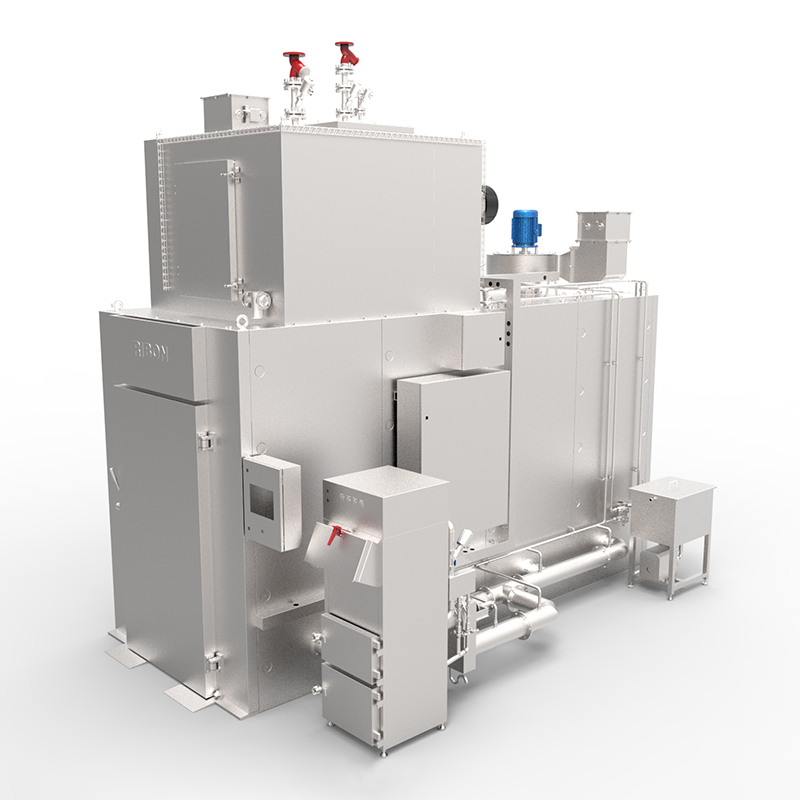
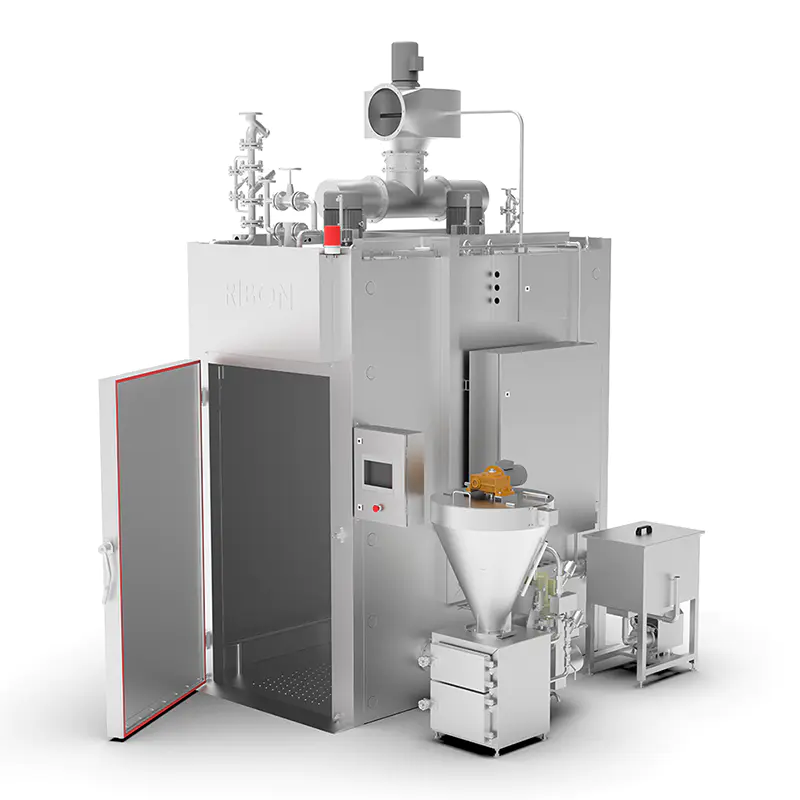
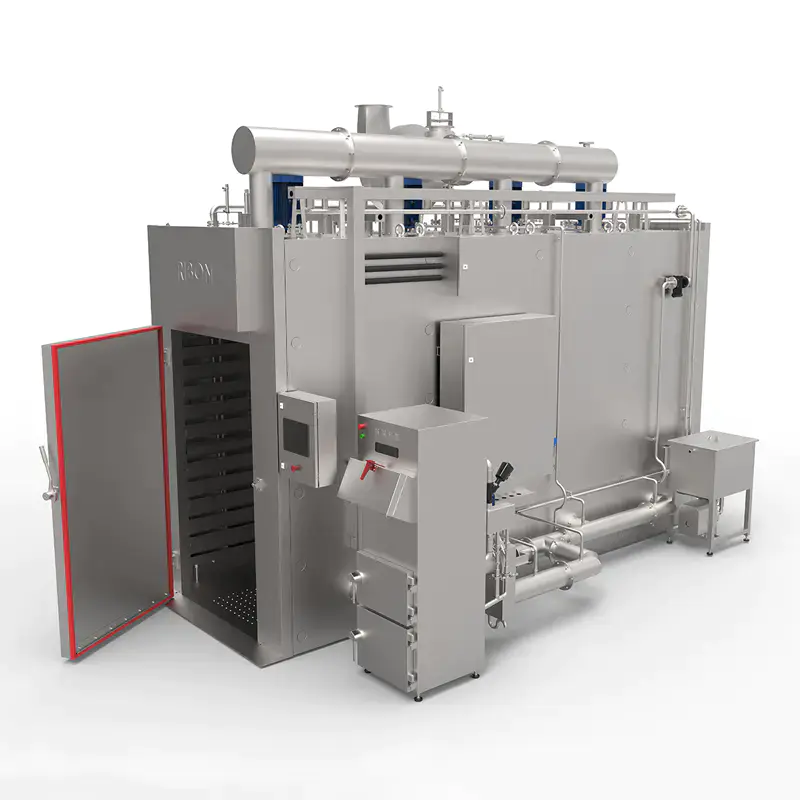
The Meat Smokehouse Chiller is designed for products that have completed thermal treatment in a smokehouse or another cooking system. Sausages, hams, and similar products are transferred into the chiller, where water showering and cold-air cooling work together to reduce the product temperature. Once the required core temperature is reached, the products can be transported directly to the packing area. Under normal operating conditions, the core temperature after chilling is generally between 6 and 8°C, while the equipment can provide a lowest temperature range of approximately 0 to 4°C according to the product and operating requirements.
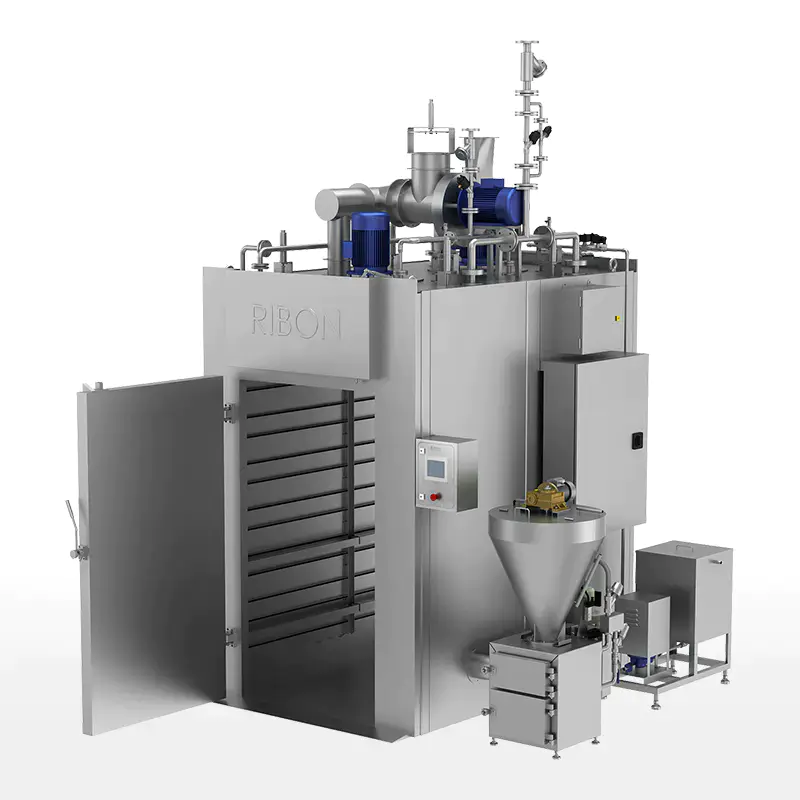
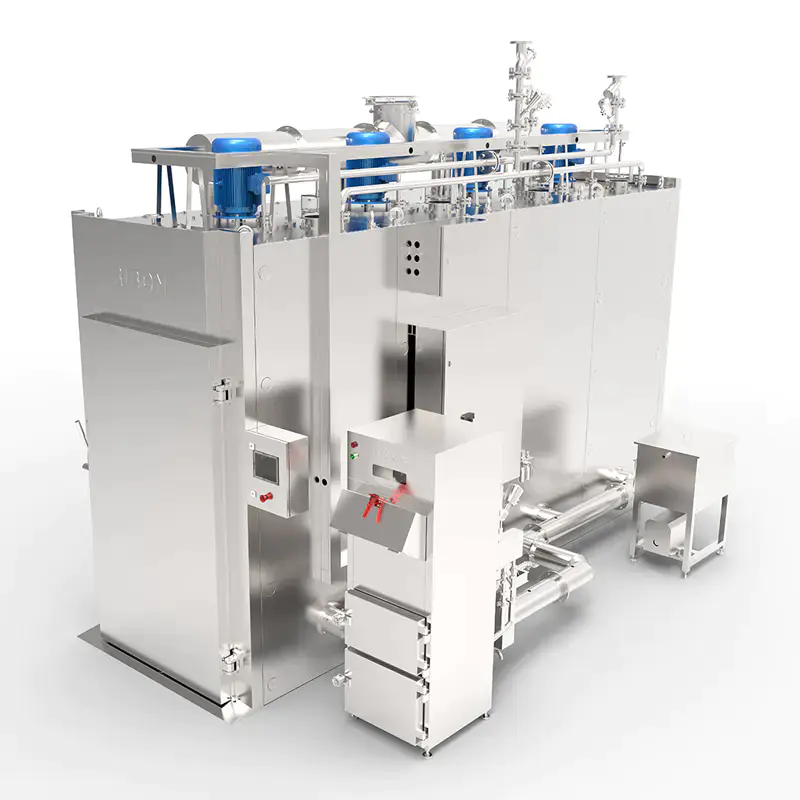
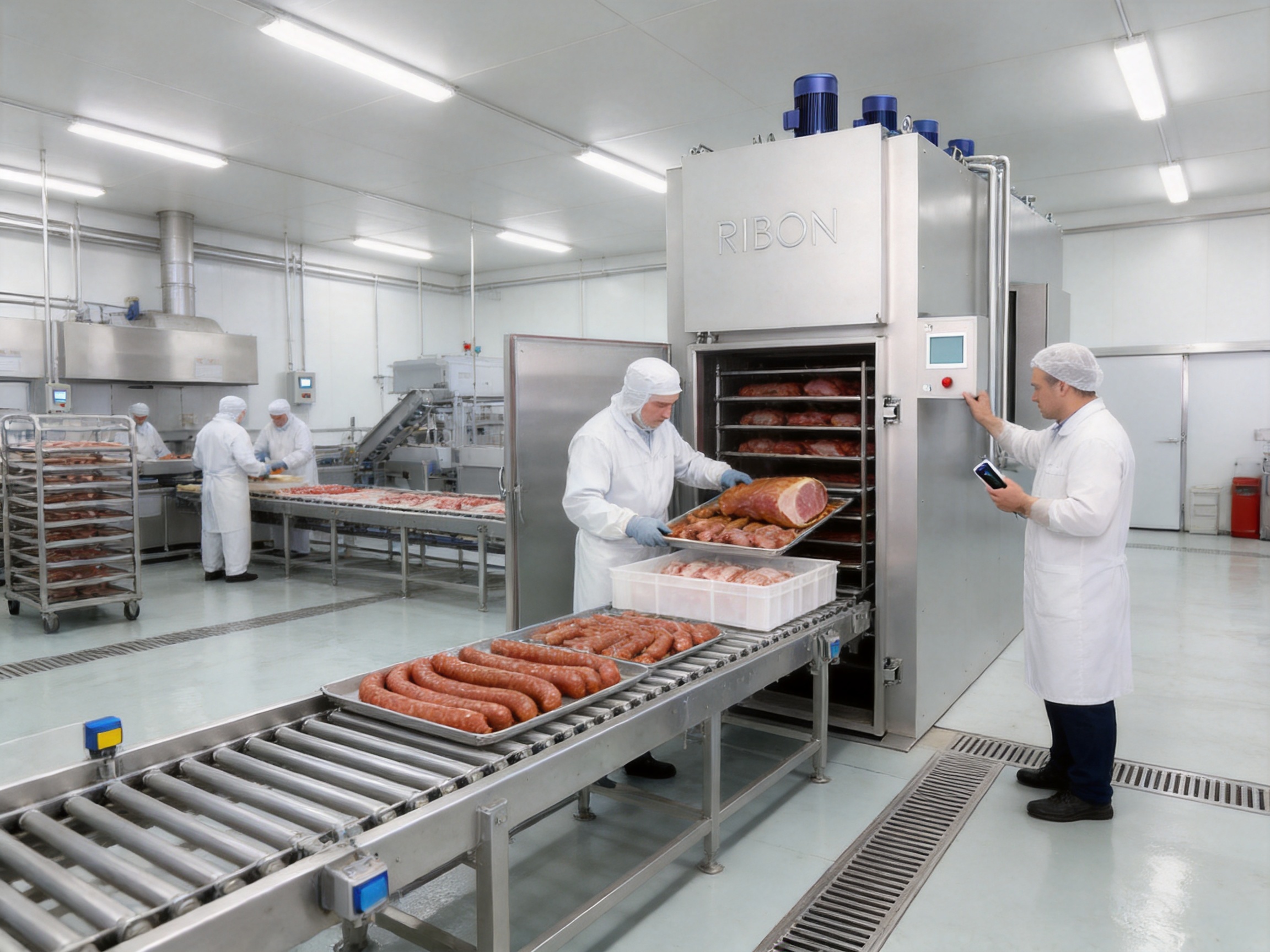
This equipment is suitable for manufacturers seeking a more controlled alternative to slow ambient cooling or basic cold-room storage. Its modular chamber construction, adjustable cooling parameters, optional refrigerant configurations, and trolley-based capacity options allow it to serve different production scales. The available configurations include a two-trolley model with a listed capacity of 500 kg and a four-trolley model with a listed capacity of 1,000 kg. Their listed power ratings are 9 kW and 18 kW respectively.
Manufactured by Zhejiang Ribon Intelligent Equipment Co., Ltd., the chiller forms part of a broader portfolio of meat processing machinery, including smokehouses, vacuum tumblers, slaughtering equipment, cutting systems, and deboning solutions. The company has specialized in meat processing machinery since 2003 and has supplied equipment and processing solutions to customers in markets around the world. Its experience in developing complete meat processing equipment helps the chiller integrate naturally with upstream thermal treatment and downstream packing operations.
Chiller
Why Rapid Cooling Matters in Meat Processing
Thermal treatment is essential for many processed meat products, but the cooking stage is not the end of the process. Immediately after cooking or smoking, products retain substantial heat. If they remain warm for too long, several problems may occur. Microorganisms can multiply rapidly within temperature ranges that are favorable to bacterial growth. Product texture may continue changing after cooking, casings may become wrinkled or damaged, and moisture may be lost through prolonged exposure to warm air.
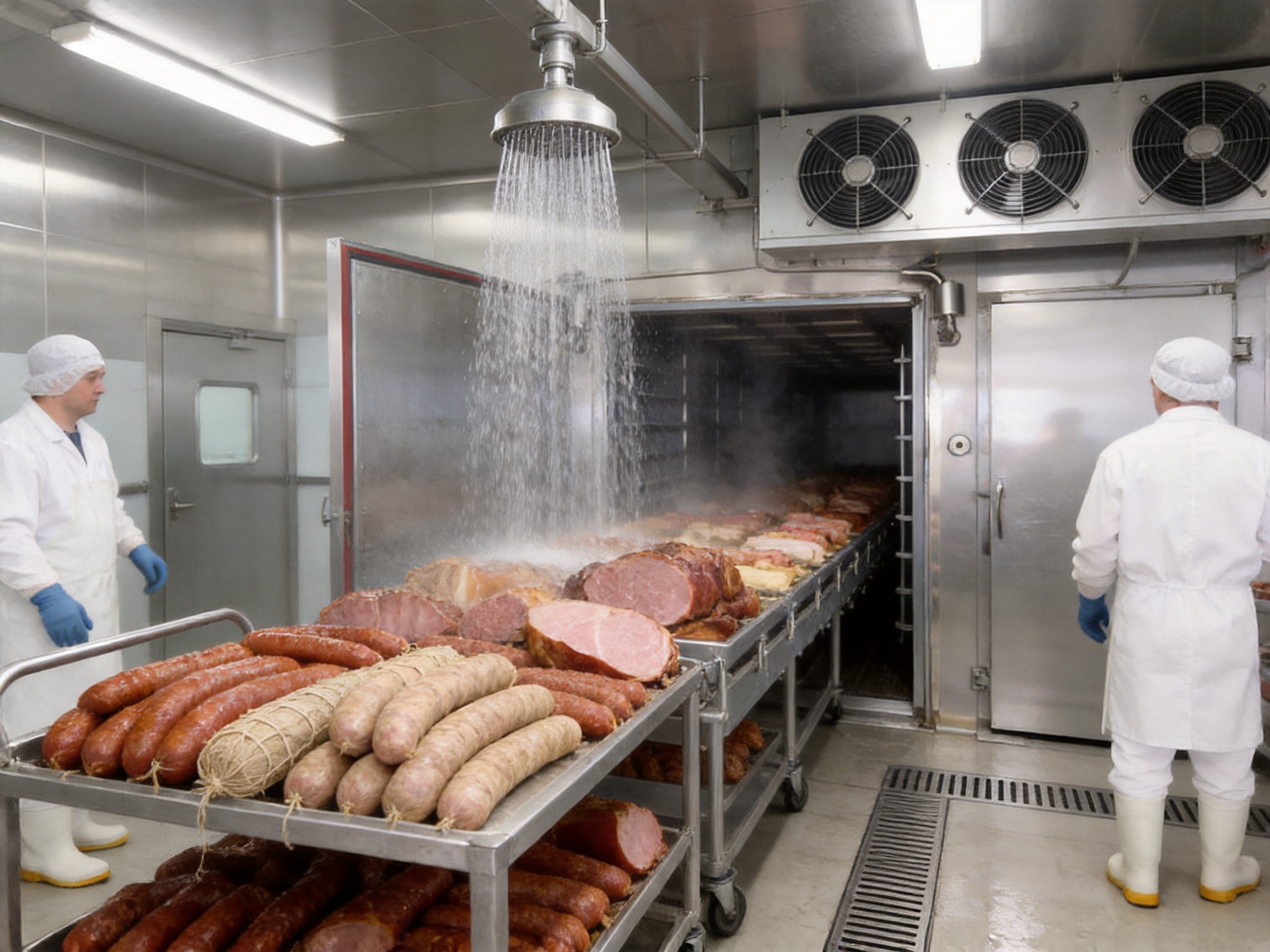
Rapid cooling helps move products through the sensitive temperature range of approximately 15 to 55°C more quickly. This range is associated with conditions in which bacteria can reproduce rapidly. By combining water showering with cold-air circulation, the chiller removes heat more efficiently than air cooling alone. Water transfers heat from the product surface quickly, while cold air continues to reduce the temperature and supports more uniform cooling throughout the chamber.
Cooling also prepares the product for efficient handling and packing. A product that reaches the specified core temperature can be sent to the packing area directly instead of waiting for an additional holding period. This can shorten the overall production cycle, reduce intermediate storage requirements, and help manufacturers maintain a more predictable production schedule.
For sausages and ham products, the cooling process must be fast but controlled. Excessively aggressive cooling can create unnecessary stress on casings or cause uneven temperature distribution between the product surface and its core. Insufficient cooling can leave the center too warm even when the exterior feels cold. The chiller addresses this challenge by providing adjustable showering time, cold-air temperature, cooling time, and final core temperature settings.
How the Meat Smokehouse Chiller Works
Transfer from Thermal Treatment
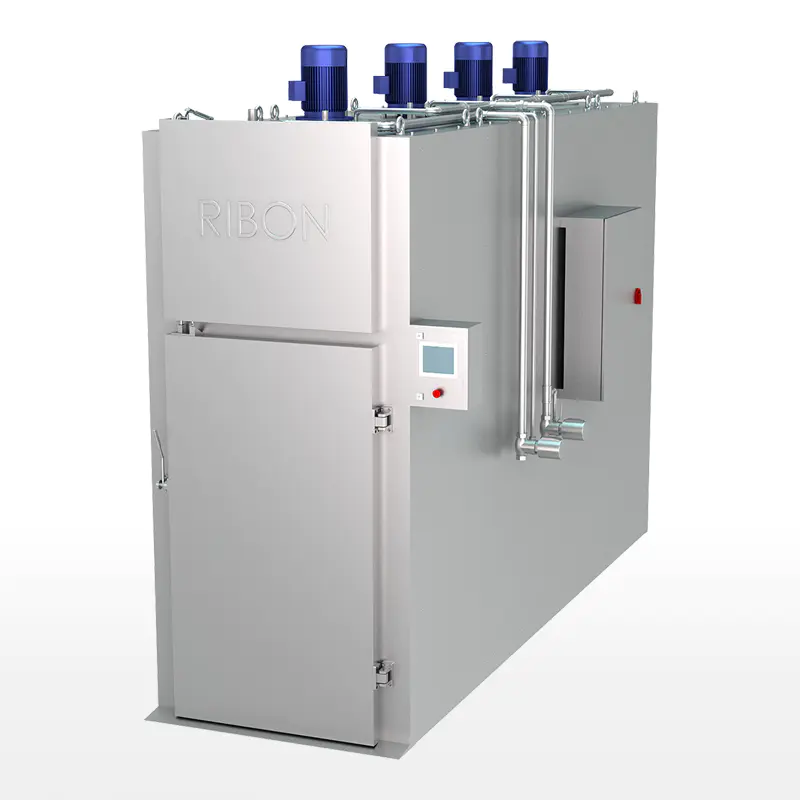
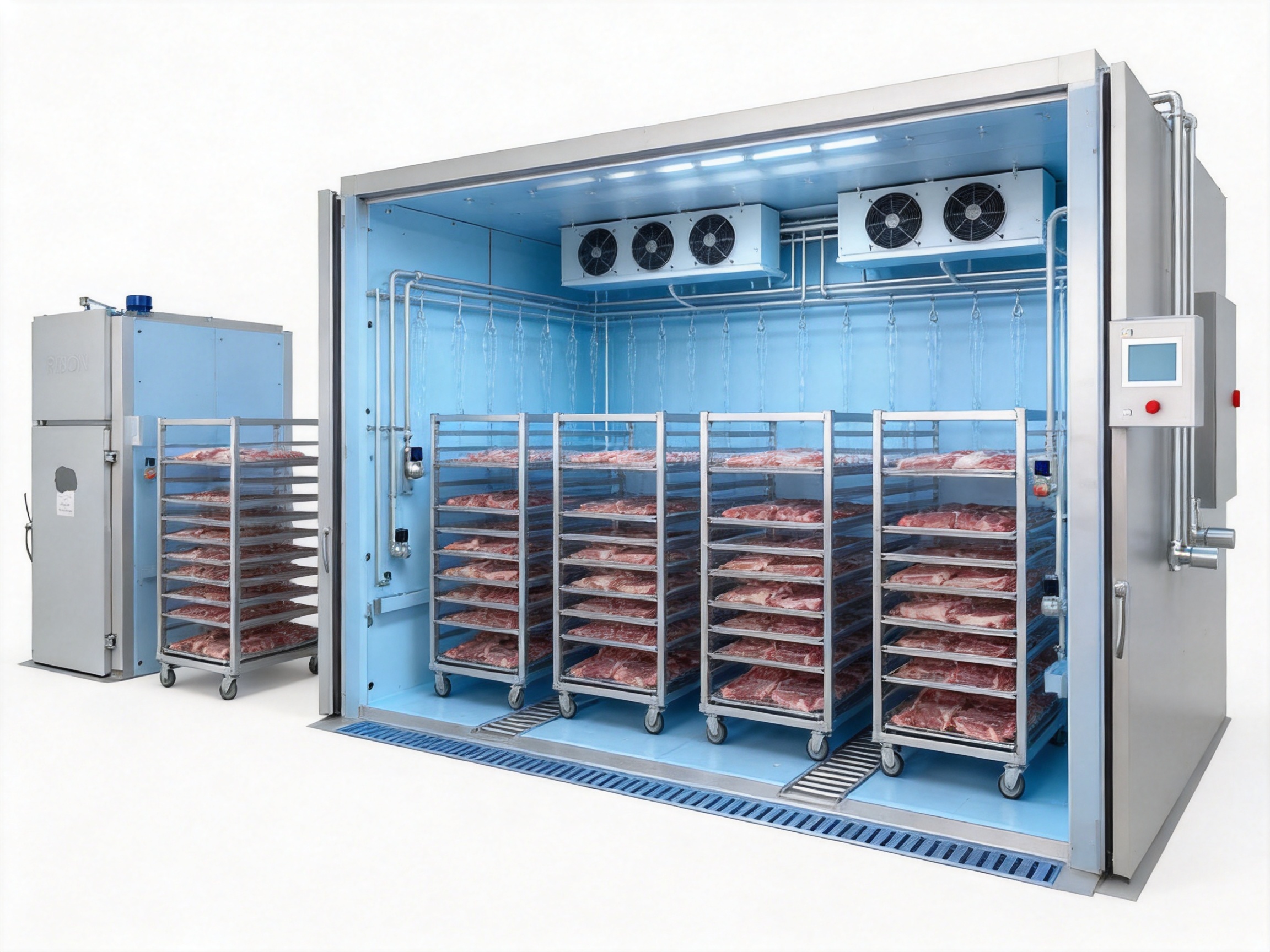
After products have completed cooking, smoking, or another heat-treatment program, they are moved into the chiller on trolleys. The trolley-based arrangement supports organized loading and unloading while making it possible to match the equipment capacity with the production line. Depending on the configuration, the chamber can accommodate two or four trolleys.
The transfer process is designed to maintain a logical flow from the smokehouse to the cooling area and then to packing. This reduces unnecessary handling and helps protect the hygienic condition of the products. Because the products remain on their transport trolleys, operators can minimize manual movement and improve production consistency.
Water Showering
The first cooling action can involve water showering over the thermally treated products. Water has a high heat-transfer capacity, so it can remove heat quickly from the surface of sausages, ham, and similar products. The showering stage is adjustable, allowing the operator or production control system to select a suitable duration for the product type, batch size, and desired result.
Water showering can be particularly useful immediately after cooking because the product surface is still hot. The process rapidly reduces surface temperature before the cold-air stage completes the cooling cycle. It can also help prevent the product from remaining too long in the bacterial growth range. The exact showering program should be established according to the product recipe, casing type, thermal treatment profile, plant hygiene requirements, and local food safety procedures.
Cold-Air Cooling
Following or accompanying water showering, cold air circulates through the chamber. Cold-air cooling provides continuous heat removal and helps reduce the core temperature after the surface has been cooled. Air circulation is important because it promotes a more even environment around the products and limits areas of stagnant air.
The cold-air temperature and cooling time can be adjusted to suit different products. Natural-casing sausages, fibrous-casing sausages, cooked hams, and comparable items may have different thermal properties and cooling requirements. A programmable cold-air stage enables manufacturers to use a process that is more appropriate than a single fixed cooling setting for every product.
Core Temperature Control
Surface temperature alone cannot determine whether a cooked meat product is ready for packing. The center of the product may remain warmer than the outside, particularly when the product is large, dense, or tightly packed. For this reason, the final core temperature is a critical operating target.
The chiller allows the final core temperature to be selected as part of the cooling process. In typical use, products may reach a core temperature of approximately 6 to 8°C after chilling. The listed lowest temperature range is 0 to 4°C, depending on the model and operating conditions. Operators should select the actual target based on the product specification, packing requirements, storage conditions, and applicable food safety standards.
Direct Transfer to Packing
When the products reach the required core temperature, they can be transported directly to the packing area. This direct transfer reduces the need for additional cooling rooms or extended waiting periods. It can also make production planning easier because the chiller provides a defined transition point between thermal treatment and packing.
For high-volume manufacturers, this connection between cooling and packing is especially valuable. A faster and more predictable cooling cycle can help increase turnover, reduce bottlenecks, and improve the utilization of downstream packing equipment.
Product Compatibility
The Meat Smokehouse Chiller is intended for a range of thermally treated meat products. Its product compatibility includes sausages with natural casings, sausages with fibrous casings, ham, and other similar processed meat products. The equipment can therefore serve manufacturers producing multiple product categories rather than a single specialized item.
Natural-Casing Sausages
Natural-casing sausages require careful cooling because the casing can be sensitive to moisture, temperature changes, and handling. A controlled combination of showering and cold air can reduce heat quickly while avoiding reliance on prolonged exposure to uncontrolled ambient conditions. Adjustable process parameters allow the manufacturer to establish a cooling cycle that supports casing appearance and product quality.
Fibrous-Casing Sausages
Fibrous casings are commonly used for a variety of cooked and smoked sausage products. Their structure and thickness may differ from those of natural casings, influencing the rate at which heat moves from the center to the surface. The chiller's adjustable time and temperature settings provide flexibility when processing these products.
Ham and Similar Products
Hams and other dense cooked products may retain heat for longer than smaller sausages. Effective cold-air circulation and core-temperature control are especially important for these products. A suitable cooling program can help reduce the time required before slicing, packing, or further handling, while maintaining a more consistent product temperature throughout the batch.
Core Advantages Over Conventional Cooling Methods
Reduced Cooling Time
One of the principal advantages of the chiller is its potential to save more than 65% of cooling time compared with slower conventional cooling approaches, depending on the product, loading conditions, and process settings. This reduction can accelerate product turnover and support greater daily output without necessarily requiring a proportional increase in floor space.
Shorter cooling time can be valuable in several ways. It reduces the period during which products occupy trolleys, decreases waiting between cooking and packing, and helps maintain a continuous production rhythm. Faster cooling may also allow a manufacturer to process more batches within the same working shift.
Lower Energy Consumption
The system is designed to reduce energy consumption through controlled cooling rather than relying on extended operation over a long period. Efficient heat transfer from water showering and cold air can shorten the time that refrigeration equipment must operate for each batch. Actual energy performance depends on ambient conditions, product load, insulation, refrigerant selection, operating temperature, and maintenance quality.
Energy efficiency also has an indirect benefit. A shorter cooling cycle may reduce the time that fans, pumps, compressors, and other associated components need to operate. For facilities with frequent production cycles, these operating savings can accumulate over time.
Reduced Space Requirements
Because the chiller accelerates cooling, less space may be needed for intermediate product holding. Traditional methods can require large areas for products to cool gradually before they are moved to packing or cold storage. A dedicated rapid-cooling system can reduce the need for such buffer areas and improve the use of factory floor space.
The modularized chamber construction further supports efficient use of available space. Manufacturers can select an equipment configuration that corresponds to their production scale and site layout. The two-trolley and four-trolley options provide a practical way to match capacity with processing requirements.
Lower Product Weight Loss
Long cooling periods can increase moisture loss, particularly when products are exposed to warm or moving air for an extended time. Reduced cooling duration may help limit weight loss and improve yield. Better yield is important in meat processing because even small changes in weight retention can influence production costs and product profitability.
The final result depends on product formulation, casing characteristics, cooking conditions, humidity, water management, and packing practices. Nevertheless, a controlled cooling system provides a more consistent process environment than uncontrolled cooling, making it easier to identify and manage the factors that influence yield.
Improved Food Safety Control
Rapidly passing through the sensitive temperature range of 15 to 55°C is a major food safety advantage. The chiller helps reduce the time available for unwanted microbial growth after thermal treatment. This does not replace validated cooking procedures, sanitation programs, microbiological controls, or regulatory compliance. Instead, it provides an important additional control point in the overall food safety system.
Controlled cooling also improves process repeatability. When each batch follows a defined combination of showering time, cold-air temperature, cooling time, and core-temperature target, operators can document and verify the process more effectively. Consistent records can support internal quality management and hazard analysis procedures.
Better Production Turnover
Faster cooling allows products to move through the production line more quickly. This can reduce bottlenecks after the smokehouse and before packing. Improved turnover may allow the same equipment and workforce to support more production within a given period, provided that upstream and downstream systems have suitable capacity.
Adjustable Process Parameters
Different meat products cannot always be cooled using one fixed program. Product diameter, density, casing type, formulation, cooking temperature, batch size, trolley arrangement, and required packing temperature all influence the cooling process. The chiller is therefore designed with adjustable operating parameters.
Adjustable Showering Time
The duration of water showering can be selected according to the product and process objective. A shorter shower may be appropriate for smaller products or particular casing conditions, while a longer period may be necessary for larger or hotter products. Adjustable showering reduces the risk of applying the same treatment to every product regardless of its characteristics.
Adjustable Cold-Air Temperature
The temperature of the cold air can be controlled to support an appropriate balance between cooling speed and product protection. The target must be selected carefully to avoid unnecessary icing, excessive surface cooling, or a large difference between surface and core temperature. The control range should be established during commissioning and validated for each major product category.
Adjustable Cooling Time
Cooling time can be modified according to the product size and desired final condition. This makes the equipment more versatile for factories producing both smaller sausage products and larger ham or similar items. A defined cooling time can also support production scheduling and reduce uncertainty between batches.
Adjustable Final Core Temperature
The final core temperature is one of the most important parameters because it determines when products are ready for the next stage. Selecting a core-temperature target helps prevent premature transfer to packing. It can also avoid unnecessary overcooling, which may waste energy and extend the cycle without providing a practical benefit.
Refrigerant Options
The chiller can be configured with optional refrigerants, including liquid ammonia, Freon, or ethylene glycol. The most appropriate choice depends on the plant's refrigeration infrastructure, local regulations, technical service capabilities, environmental requirements, and project design.
Liquid Ammonia
Liquid ammonia is widely used in industrial refrigeration because of its strong heat-transfer performance and suitability for large-scale systems. It can support efficient cooling in facilities with established industrial refrigeration infrastructure. Ammonia systems require professional design, installation, monitoring, ventilation, maintenance, and emergency safety procedures because ammonia must be handled according to strict industrial safety requirements.
Freon-Based Systems
Freon is a general term historically used for several fluorinated refrigerants. The specific refrigerant type must be identified before equipment selection and installation. Some older refrigerants have been restricted or phased out because of ozone-depleting or climate-related impacts. Modern projects should comply with current environmental regulations and use an approved refrigerant with suitable performance characteristics.
Ethylene Glycol
Ethylene glycol is commonly used as a secondary coolant in chilled-water or glycol circulation systems. It can provide stable temperature control and may be suitable for facilities that prefer a centralized or indirect cooling arrangement. Glycol concentration, system design, fluid condition, and leakage prevention must be managed carefully. Ethylene glycol is not harmless and should be handled according to the appropriate safety procedures.
Selection Considerations
Refrigerant selection should not be based only on the name of the refrigerant. Important considerations include cooling capacity, operating temperature, heat-transfer efficiency, energy consumption, system size, installation cost, maintenance requirements, environmental impact, operator training, and local legislation.
The availability of multiple refrigerant options gives the chiller greater project flexibility. It can be incorporated into different factory refrigeration concepts rather than forcing every customer to adopt one specific cooling medium. The final configuration should be confirmed through a technical assessment of the complete production line.
Modularized Chamber Construction
The chiller uses modularized chamber construction. A modular design can simplify equipment planning, transportation, installation, and future expansion. It also allows the chamber to be configured according to the number of trolleys, available factory space, production volume, and required cooling capacity.
Modular construction can provide a more practical alternative to building a fully customized cooling room from the ground up. Standardized modules can improve manufacturing consistency while still allowing the system to be adapted to a customer's layout. This approach is especially useful for meat processors that need to expand capacity progressively.
The chamber design should provide an enclosed and controlled environment for water showering and cold-air cooling. Proper insulation is important because it helps reduce heat transfer between the interior and the surrounding factory. Good insulation can improve temperature stability, support energy efficiency, and reduce the possibility of condensation on external surfaces.
Hygienic design is also essential. Surfaces and internal components should be accessible for inspection and cleaning. Water management, drainage, door sealing, and the arrangement of airflow components must be considered during installation and operation. The specific cleaning method and sanitation schedule should follow the equipment documentation and the processor's validated hygiene program.
Capacity and Technical Configuration
The available trolley configurations provide options for different production scales. The following figures are the listed reference values for the described models. Actual capacity and power requirements may vary according to product density, trolley arrangement, cooling target, refrigerant system, local electrical standards, and project specifications.
| Trolley Quantity | Listed Capacity | Listed Power | Lowest Temperature Range |
|---|---|---|---|
| 2 | 500 kg | 9 kW | 0–4°C |
| 4 | 1,000 kg | 18 kW | 0–4°C |
The two-trolley configuration may be suitable for smaller or medium-sized operations, pilot production, new factories, or facilities that require a compact cooling solution. The four-trolley configuration can provide greater batch capacity for larger processors and may help reduce the number of cooling cycles required during a shift.
Capacity should always be evaluated together with the upstream smokehouse and downstream packing system. If the chiller is significantly larger than the smokehouse, it may not be used efficiently. If it is too small, it may become a bottleneck after thermal treatment. A complete production-line assessment helps determine the correct equipment size, trolley quantity, cooling capacity, and refrigerant arrangement.
Manufacturing Strengths and Engineering Experience
Long-Term Specialization
Zhejiang Ribon Intelligent Equipment Co., Ltd. was founded in 2003 by Mr. Shi Ming and has specialized in the research, development, and manufacturing of meat processing machinery. This long-term focus gives the company experience in the specific requirements of food production environments, including temperature control, product handling, hygiene, process integration, and production reliability.
A manufacturer dedicated to meat processing equipment can develop a deeper understanding of the relationship between individual machines. A chiller must work effectively with a smokehouse, trolley system, conveyor arrangement, packing line, and plant refrigeration system. Experience across these related technologies supports more practical equipment design and more informed project coordination.
Broader Equipment Portfolio
The company's product range includes meat processing smokehouses, vacuum tumblers, slaughtering equipment, cutting and deboning solutions, and related processing machinery. This portfolio is significant because it reflects an understanding of multiple stages in meat production rather than one isolated machine category.
For customers developing or upgrading a processing line, a broad equipment portfolio can simplify technical communication. Equipment interfaces, product flow, trolley dimensions, control requirements, and production targets can be considered more coherently when the supplier understands the complete process.
Research and Development
The company states that its technologies and solutions have been continuously optimized since its establishment. Ongoing optimization is important for equipment manufacturers because meat processing requirements change over time. Processors seek better energy performance, improved hygiene, higher capacity, reduced product loss, easier operation, and stronger environmental responsibility.
Research and development in a chiller may involve improving heat-transfer efficiency, optimizing water distribution, refining airflow, enhancing insulation, strengthening temperature control, improving cleaning access, and integrating the machine more effectively with other production equipment. Even small improvements in these areas can have a meaningful effect when the system operates continuously across many production cycles.
Export and International Application
The company has exported meat processing solutions worldwide since 2003. International experience can strengthen a manufacturer's ability to work with different factory layouts, electrical standards, climate conditions, production habits, regulatory expectations, and customer requirements. It also encourages the development of documentation, communication, commissioning, and support practices suitable for overseas projects.
International application does not eliminate the need for local compliance review. Each installation must still meet the applicable requirements for food safety, machinery safety, pressure systems, electrical installations, refrigeration, wastewater, worker protection, and environmental management. However, a supplier with export experience is generally better positioned to participate in this review process.
Practical Equipment Design
The company's stated commitment is to develop better-designed and more practical solutions that provide value and convenience to customers. Practical design is particularly important in a meat processing plant, where equipment must be productive but also accessible for cleaning, inspection, maintenance, loading, unloading, and operator control.
The chiller reflects this practical approach through its trolley-based loading, adjustable cooling parameters, modular chamber construction, capacity options, and compatibility with several refrigerant arrangements. These features are focused on the realities of production rather than on specifications that have no direct operational benefit.
Quality, Hygiene, and Process Control
A chiller operates in a sensitive area of the production process, immediately after thermal treatment. The equipment must therefore support hygienic product handling and stable process control. Rapid cooling is valuable only when it is combined with a clean and properly managed environment.
Operators should establish documented procedures for loading, unloading, water quality, drainage, cleaning, sanitation, inspection, and temperature verification. The chamber, showering components, trolley contact areas, fans, drains, doors, seals, and accessible surfaces should be included in the sanitation plan.
Temperature monitoring should include both the chamber environment and the product core. A cold chamber does not necessarily mean that the center of every product has reached the desired temperature. Regular verification with calibrated instruments can help confirm that the selected program is achieving the intended result.
Production personnel should also observe product spacing on trolleys. Overloading or placing products too close together can restrict airflow and reduce cooling uniformity. Proper loading supports the performance of the water showering and cold-air systems and helps ensure that the listed capacity is used effectively.
Managing Condensation and Icing
Cooling systems that combine water and cold air must be designed and operated with attention to condensation and icing. Moisture is naturally present in the product, shower water, and surrounding air. If warm humid air comes into contact with cold surfaces, condensation may form. If temperatures become sufficiently low, the moisture may freeze and create ice.
Insulation and Sealing
Effective insulation helps maintain stable internal conditions and reduces heat exchange with the surrounding factory. Properly sealed doors and chamber joints can also limit the entry of warm, humid air. These measures reduce the risk of condensation on external surfaces and help the refrigeration system operate more efficiently.
Temperature Regulation
Precise temperature control can help prevent the cooling surfaces from becoming unnecessarily cold. The appropriate temperature should be low enough to cool the product efficiently but not lower than required for the process. A well-defined program reduces the likelihood of uncontrolled icing and avoids energy use that does not contribute to product quality.
Air Circulation
Air movement supports even temperature distribution and reduces stagnant zones. Fans or blowers circulate cold air around the trolleys and products. Correct product spacing and unobstructed airflow paths are essential because the most advanced fan system cannot compensate fully for poor loading practices.
Defrosting and Cleaning
If ice develops on cooling surfaces, a defrosting procedure may be required. Depending on the design, defrosting can involve temporarily stopping the cooling cycle and applying warm air or another approved method. The defrosting schedule should be coordinated with production and sanitation procedures.
Water drainage is equally important. Shower water and condensation must be directed away from product-contact areas and removed efficiently. Standing water can increase hygiene risks, create slippery floors, and contribute to corrosion or equipment deterioration.
Energy and Environmental Responsibility
Meat processing plants are under increasing pressure to improve energy efficiency and reduce environmental impact. Refrigeration, fans, pumps, heating, water treatment, and wastewater management can all contribute to a facility's resource consumption. A faster cooling cycle can support efficiency by reducing the operating period required for each batch.
Refrigerant selection is an important part of environmental responsibility. Regulations differ by country and continue to evolve. Some historically used Freon-type refrigerants have been restricted because of ozone-depleting properties or global-warming concerns. New projects should select an approved refrigerant and design the system to meet current and anticipated requirements.
Water use should also be managed carefully. The showering stage provides rapid heat transfer, but the plant should establish suitable water-quality, recirculation, drainage, and treatment practices. The most appropriate water management strategy depends on the process design, hygiene policy, local regulations, and product requirements.
The company's stated commitment to environmental responsibility through ongoing technological and service improvements aligns with these industry priorities. In practice, environmental performance is achieved through the combined effect of equipment design, refrigeration selection, maintenance, operating programs, water management, and responsible end-of-life procedures.
Installation and Integration Considerations
Before installation, the customer and equipment supplier should review the full production process. Important information includes the type and size of products, hourly production, batch size, trolley dimensions, cooking conditions, target core temperature, available floor space, drainage, electrical supply, refrigeration capacity, water supply, and packing-line requirements.
The location of the chiller should support a logical product flow. Products should move efficiently from the smokehouse to the chiller and then to packing without crossing dirty and clean areas unnecessarily. The factory layout should also provide sufficient space for trolley movement, operator access, cleaning, maintenance, and emergency procedures.
Electrical and refrigeration interfaces must be confirmed before delivery. The listed power ratings provide reference information, but the final electrical design should consider the selected model, voltage, frequency, control system, pumps, fans, refrigeration equipment, auxiliary components, and local standards.
Commissioning should include checks of water distribution, airflow, temperature control, core-temperature measurement, door sealing, drainage, alarm functions, trolley loading, and refrigerant-system performance. Product trials should be conducted using representative batches rather than empty-chamber tests alone. The final process program should be validated under realistic production conditions.
Operation and Maintenance Best Practices
Daily operation should begin with a basic inspection. Operators can check chamber cleanliness, door condition, drains, showering nozzles, fan operation, trolley condition, temperature sensors, and control-panel status. Any abnormal noise, leakage, vibration, or temperature deviation should be reported promptly.
Water showering components should be inspected regularly for blockage, uneven spray, scale, or damage. Uneven water distribution can result in inconsistent surface cooling. Filters, pumps, valves, and nozzles should be maintained according to the equipment instructions and the site's water-quality conditions.
Air-circulation components require similar attention. Fan blades, guards, motors, and airflow passages should be kept clean and checked for unusual vibration. Restricted airflow can increase cooling time and create differences between products positioned in different parts of the trolley.
Temperature sensors and core-temperature instruments should be calibrated or verified at planned intervals. Reliable measurement is essential because the cooling program depends on accurate feedback. A sensor that reads incorrectly may cause products to be transferred too early or may extend the cooling cycle unnecessarily.
Preventive maintenance should include refrigeration components, pumps, fans, electrical controls, seals, insulation, structural connections, and drainage. Planned maintenance generally costs less than unplanned downtime and can help preserve the original performance of the chiller over its service life.
Competitive Position of the Chiller
The chiller's competitive value comes from the combination of rapid cooling, process flexibility, product compatibility, modular construction, multiple capacity choices, and integration with a wider meat processing equipment portfolio. Competitors may offer cooling rooms or air-cooling systems, but a solution that combines water showering and cold air can provide faster heat transfer and more direct control of the post-cooking process.
Compared with basic cold storage, the chiller is designed specifically for active cooling. A cold room may maintain a low ambient temperature, but it may not remove heat from freshly cooked products quickly enough or uniformly enough for high-throughput production. The chiller's defined showering stage, airflow, programmable time, and core-temperature target make it more suitable for controlled production cooling.
Compared with uncontrolled ambient cooling, the chiller provides a more hygienic and repeatable environment. Ambient conditions can vary with season, factory temperature, product loading, and airflow. A dedicated chamber gives the manufacturer greater control over the conditions that influence safety, quality, and production timing.
Compared with a single-capacity machine, the trolley options and modular chamber design provide greater scalability. Customers can select a configuration that fits their present output while considering future expansion. This can reduce the risk of purchasing equipment that is either unnecessarily large or quickly becomes insufficient.
Compared with a supplier focused on one isolated machine, a manufacturer with smokehouse, tumbler, slaughtering, cutting, deboning, and chilling capabilities can consider the entire production line. This broader perspective can support better equipment matching, more coherent product flow, and easier technical coordination.
Applications in Different Production Environments
Small and Medium Meat Plants
Smaller processors may benefit from the compact capacity of the two-trolley model. The system can provide controlled rapid cooling without requiring the floor area associated with a large cold-storage room. It may also support product diversification by allowing one facility to process several types of sausage and ham products with different cooling programs.
Large Industrial Facilities
Larger facilities can use the four-trolley model or integrate multiple units into a broader production system. The equipment can support higher batch capacities and help coordinate output from large smokehouses with automated or semi-automated packing lines.
Export-Oriented Producers
Manufacturers producing for different markets may need consistent process control, traceable cooling records, and adaptable product programs. The chiller's adjustable parameters can support different product specifications, while the manufacturer's experience with international projects may assist with equipment coordination and documentation.
Facilities Upgrading Existing Lines
A processor with an existing smokehouse and packing area may install the chiller as a modernization project. Before doing so, the customer should confirm trolley compatibility, product transfer routes, refrigeration availability, water and drainage capacity, electrical requirements, and the space needed for installation and maintenance.
Q&A
What is a Meat Smokehouse Chiller?
It is a cooling system used after cooking or smoking. Thermally treated products are transferred into the chamber, where water showering and cold-air cooling reduce the product temperature until the required core temperature is reached.
Which products can be cooled in the system?
The described applications include sausages with natural casings, sausages with fibrous casings, ham, and other similar thermally treated meat products. The correct program should be established for each product category.
What core temperature can products reach after cooling?
The usual core temperature after chilling is approximately 6 to 8°C. The listed lowest temperature range for the equipment is 0 to 4°C. The actual target should be selected according to the product specification, packing process, storage requirements, and applicable regulations.
How much cooling time can the chiller save?
The stated advantage is a cooling-time saving of more than 65%, depending on product characteristics, loading conditions, ambient conditions, refrigerant selection, and process settings. Actual performance should be confirmed through product trials.
Why are both water showering and cold air used?
Water can remove surface heat quickly because of its strong heat-transfer capability. Cold air then continues the cooling process and helps reduce the core temperature. Combining the two methods can provide faster and more uniform cooling than relying on air alone.
Can the cooling program be adjusted for different products?
Yes. Showering time, cold-air temperature, cooling time, and final core temperature are adjustable. These settings allow the operator to develop suitable programs for different casing types, product sizes, densities, and production requirements.
What refrigerants are available?
The listed options are liquid ammonia, Freon, and ethylene glycol. The final selection should consider local regulations, system design, environmental requirements, safety, operating cost, maintenance resources, and existing plant infrastructure.
Is Freon suitable for every new project?
No. “Freon” can refer to several refrigerants, and some older types have been restricted or phased out. The exact refrigerant must be identified and approved for the intended location and application. A qualified refrigeration professional should confirm compliance before installation.
How does the system reduce product weight loss?
Rapid cooling can shorten the time products spend exposed to warm air and can reduce prolonged moisture evaporation. Actual weight retention depends on the recipe, casing, cooking conditions, humidity, showering process, and packing method.
How does the chiller support food safety?
It helps products pass more quickly through the sensitive temperature range of approximately 15 to 55°C, where bacteria can reproduce rapidly. It should be used as one part of a complete food safety system that also includes validated cooking, hygiene, sanitation, monitoring, and storage controls.
What does modularized chamber construction mean?
It means the chamber is assembled from modular sections that can be configured for the required capacity and factory layout. This approach can support easier planning, installation, transportation, and future expansion.
What are the listed capacity options?
The described two-trolley model has a listed capacity of 500 kg and a listed power rating of 9 kW. The four-trolley model has a listed capacity of 1,000 kg and a listed power rating of 18 kW. The lowest listed temperature range is 0 to 4°C for both configurations.
What should be checked before purchasing?
Customers should review product types, batch size, hourly output, trolley dimensions, smokehouse capacity, target core temperature, available floor space, water supply, drainage, electrical service, refrigeration infrastructure, cleaning requirements, local regulations, and packing-line connections.
How should condensation and icing be controlled?
Control measures can include proper insulation, sealed doors, suitable temperature settings, effective air circulation, correct product spacing, drainage, and a planned defrosting procedure. The final approach depends on the chamber design and operating environment.
Why is the manufacturer's broader product portfolio important?
The manufacturer also develops smokehouses, vacuum tumblers, slaughtering systems, cutting equipment, and deboning solutions. This broader experience can help customers coordinate equipment interfaces and design a more coherent meat processing line.
Conclusion
The Meat Smokehouse Chiller is designed to provide fast, controlled, and practical cooling for cooked and smoked meat products. By combining water showering with cold-air circulation, it helps reduce product temperature efficiently and supports direct transfer to packing once the required core temperature is reached. Its stated ability to save more than 65% of cooling time, reduce energy consumption, require less space, limit weight loss, and accelerate passage through the bacterial sensitive temperature range gives it important advantages over slow or uncontrolled cooling methods.
Adjustable showering time, cold-air temperature, cooling time, and final core temperature make the system suitable for natural-casing sausages, fibrous-casing sausages, ham, and similar products. Optional liquid ammonia, Freon-type, or ethylene glycol refrigeration arrangements provide flexibility for different plant infrastructures, although refrigerant selection must always comply with current environmental and safety requirements.
The modularized chamber construction and two- or four-trolley configurations allow the equipment to serve different production scales. The listed models provide capacities of 500 kg and 1,000 kg, with listed power ratings of 9 kW and 18 kW respectively. These figures provide a starting point for planning, while final performance must be confirmed according to the product, loading pattern, environmental conditions, and selected refrigeration system.
Manufactured by Zhejiang Ribon Intelligent Equipment Co., Ltd., the chiller benefits from a company history that began in 2003 and a broader specialization in meat processing machinery. The company's experience with smokehouses, vacuum tumblers, slaughtering systems, cutting and deboning solutions, and international equipment projects supports a practical, integrated approach to meat processing equipment design.
For processors seeking to improve food safety control, production turnover, cooling consistency, energy performance, and space utilization, the Meat Smokehouse Chiller can serve as an important link between thermal treatment and packing. Correct sizing, professional installation, validated process settings, regular sanitation, and preventive maintenance are essential to achieving its full operational value.
References
1. Zhejiang Ribon Intelligent Equipment Co., Ltd. Product information for Meat Smokehouse Chiller.
2. Zhejiang Ribon Intelligent Equipment Co., Ltd. Company information and meat processing equipment portfolio.
3. General principles of thermal processing and rapid cooling for cooked meat products.
4. General industrial refrigeration design and refrigerant safety practices.
5. General hygienic design, sanitation, and temperature-control principles for meat processing facilities.